

- Jakob Brezigar
- Updated: January 28, 2026
- Reading time: 10 min
Inefficiency of Too Many Markets
Stocks, commodities, crypto, prediction markets, tokenised stocks, tokenised commodities, derivatives. Today, almost anything can be traded somewhere, at any time, by anyone with an internet connection.
The range of choice is unprecedented. On the surface, this looks like progress, more access, more expression, more innovation across financial and crypto markets. While liquidity does follow innovation once clear product market fit exists, it is also limited. Capital and attention are finite, and the battle for that attention becomes more intense every day as markets multiply. Just like in nature, survival of the fittest eventually pushes liquidity toward winners, but the process takes time.
This is the problem of abundance. Not a failure of innovation, but a structural constraint that emerges when the number of markets grows faster than the liquidity that supports them.
TL;DR
- Market creation scales faster than liquidity.
- Too many markets fragment depth and execution.
- Traders eventually concentrate where trading works best.
- New markets win through scale, innovation, or narrative shifts.
At Orcabay, we help token projects and exchanges build healthy markets that attract real liquidity and deliver reliable trading conditions.
If you care about how your market performs, let’s talk.
More Choice, Less Attention
Modern capitalist markets are good at signaling what people actually want. Capital flows toward utility, not ideas alone.
A clear example is Polymarket. It found a real product market fit, and the market responded. Not only did users adopt it, they pushed demand toward more niche and expressive prediction markets. The same pattern shows up elsewhere. Perp DEXs, commodities on chain, tokenised stocks, new derivatives. People want these instruments.
The issue appears when demand gets split across too many markets. Smaller venues struggle to attract enough liquidity, and many slowly turn into ghost towns. Natural selection eventually resolves this, but not without short-term friction and wasted effort, before liquidity slowly flows back toward the most useful and trusted markets.
During that period, capital that would otherwise concentrate is spread thin. Progress slows even in the winners, not because demand disappeared, but because attention and liquidity were temporarily fragmented.
How This Shows Up in Crypto
Crypto is still a relatively small industry compared to traditional finance. According to CoinGecko, total crypto market cap ended 2025 at $3.0T, down 10.4% year over year, marking the first down year since 2022.
To put that into perspective, on January 26 roughly $1.6T was wiped from the combined market cap of gold and silver in just four hours, equivalent to around 50% of the entire crypto market. In traditional markets, moves of that size can happen quickly without breaking market structure.
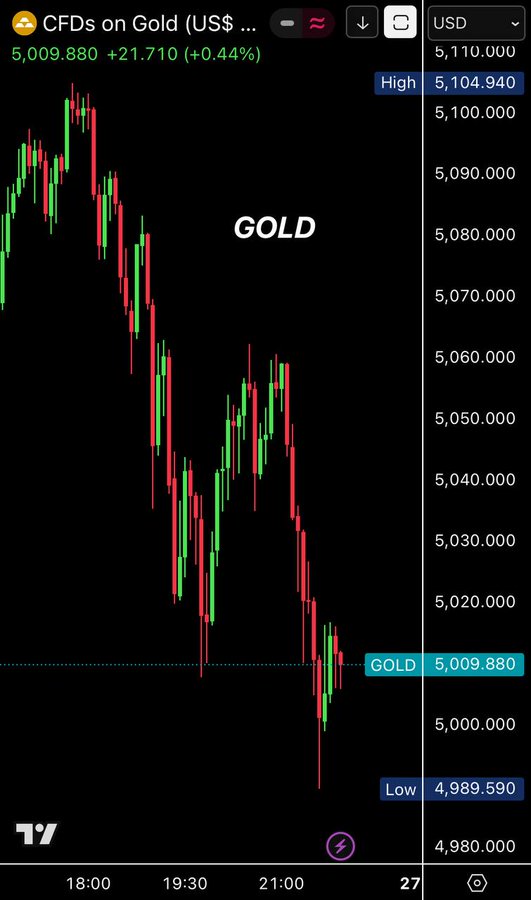
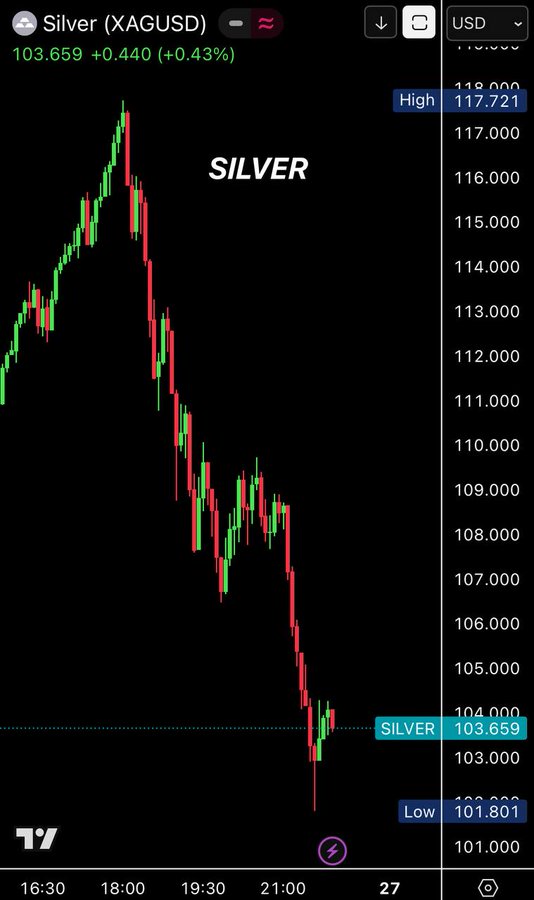
Contrary to traditional finance, crypto makes it exceptionally easy to create new assets and markets. Tokens can be launched in minutes, markets listed globally, and liquidity pools spun up without permission.
This further amplifies the problem of already relatively thin liquidity. As market creation accelerates, available capital gets fragmented across more tokens, venues, and instruments.
This constraint became especially visible last year. We did not see a true altcoin season, and rallies were short lived. The average altcoin rally lasted just 19 to 20 days, a sharp decline from the roughly 60 day average seen in 2024. Moves started, but few had enough sustained liquidity to compound.
In that environment, liquidity naturally chased short term opportunities rather than supporting sustained rotations. Medium and long term trends struggled to form as attention and capital were constantly pulled into new markets.
How This Shows Up in Crypto
Looking at the top 10 spot CEX trading volume, one pattern stands out immediately. Binance is the clear winner, consistently capturing around 40% of total spot trading volume, while the remaining volume is spread relatively evenly across the rest of the top exchanges.
This already shows strong concentration at the top. But the picture becomes more striking when you zoom out.
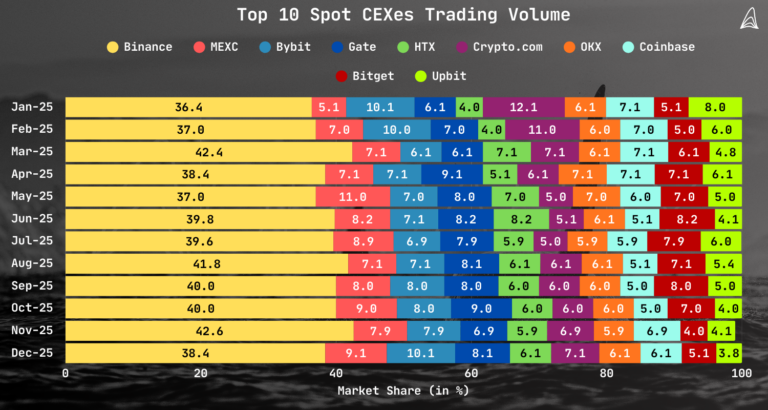
CoinMarketCap tracks 257 spot exchanges. Not all are active, but even if only a fraction are, the implication is clear. Outside the top tier, each exchange captures only a tiny percentage of global spot volume.
Some of these venues serve specific geographies or niches. That part is natural. But the harsher truth is that most of them are effectively dead markets.
The picture does not look very different when it comes to perpetual exchanges. Despite the growing number of venues, trading activity remains heavily concentrated at the top.
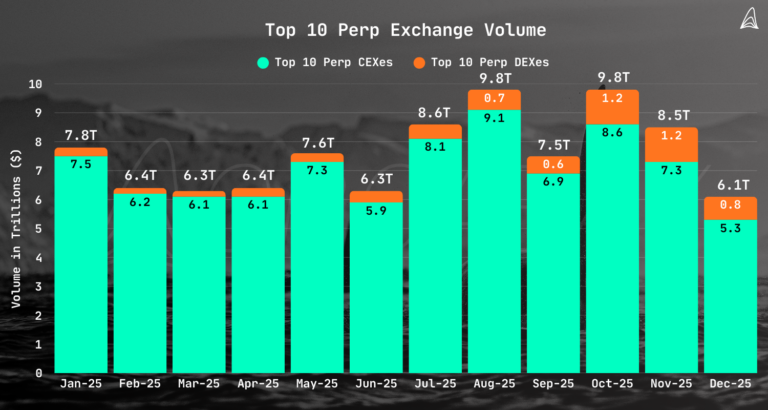
Perp DEXs have been a strong narrative recently, with many new platforms launching and competing for attention. But once again, liquidity has not expanded at the same pace. A small number of venues capture the majority of volume, while most struggle to attract sustained activity.
The result is familiar. Innovation increases choice, but liquidity still selects a few winners.
Hyperliquid was one of the most talked about projects and clearly found the right product market fit. It managed to capture a specific niche of traders and build a vibrant, highly engaged community around it.
Success showed there was clear product-market fit. What followed was an explosion of new perp DEXs, many targeting the same trader profile, the same markets, and the same narratives.
The result was not proportional growth in liquidity, but more venues competing for the same capital. As often happens in crypto, the model was quickly copied, but not meaningfully improved.
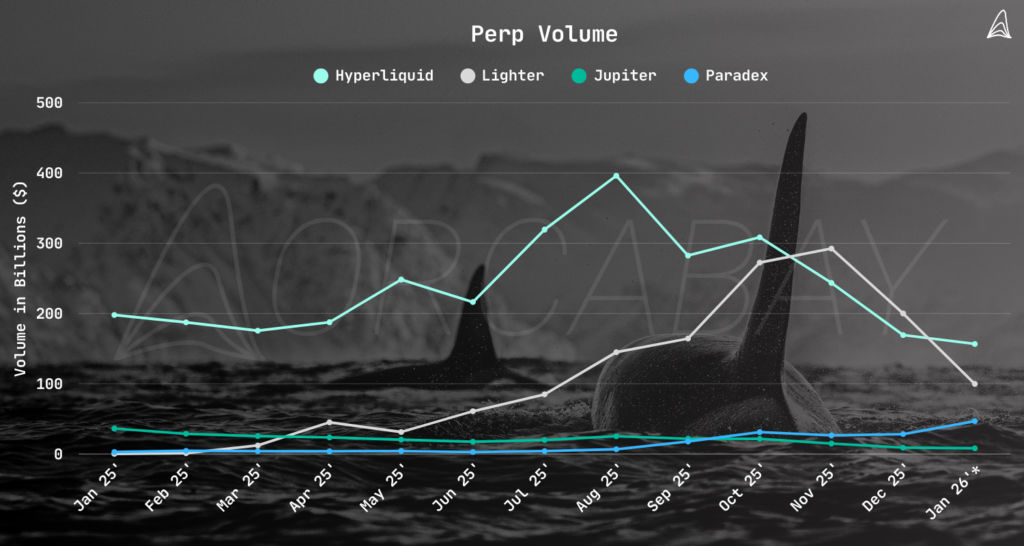
While projects like Hyperliquid, Lighter, Jupiter, Ostium, Paradex and others finding their product market fit and niches is encouraging, the reality is that the majority of perp DEXs still struggle to gain sustained volume or traction.
While projects like Hyperliquid, Lighter, Jupiter, Ostium, Paradex and others finding their product market fit and niches is encouraging, the reality is that the majority of perp DEXs still struggle to gain sustained volume or traction.
Bad Tokenomics
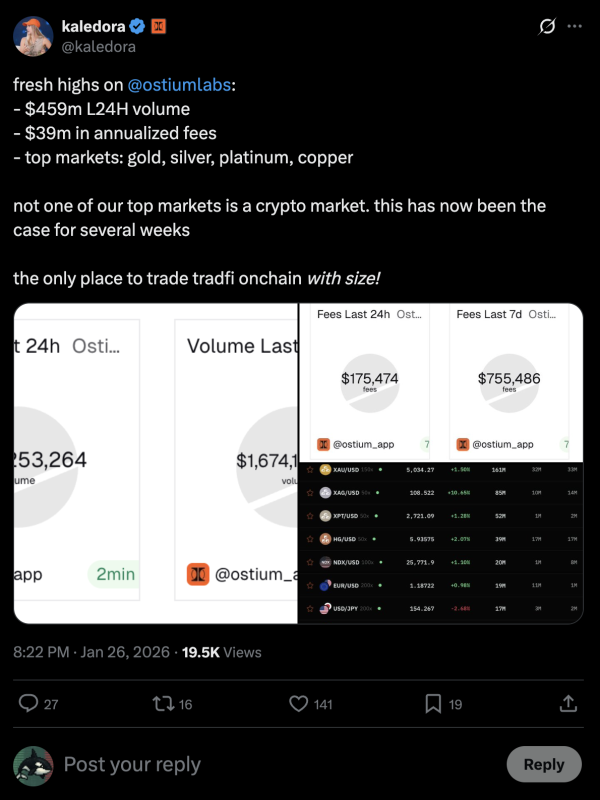
Kaledora, Ostium founder, found its niche by bringing commodities and traditional finance markets onchain.
This is where the problem of abundance reappears. Once PMF is found, imitation accelerates faster than liquidity can follow, leaving too many similar markets competing for the same capital.
How Markets Adapt Over Time
At the end of the day, markets do not decide who wins. Market participants do.
Capital votes continuously, and over time it becomes clear which venues actually work. Retail traders gravitate toward places with good depth, clean execution, low slippage, reliable infrastructure, and sufficient choice. Institutional traders look for the same things, just at a different scale, consistent volume, deep order books, low impact, and the ability to hedge efficiently.
Venues that tick most of these boxes attract both.
That does not mean new venues or markets stop entering the space. Abundance does not suppress innovation, it demands clearer differentiation. New markets only persist when there is either enough room for more liquidity, or a clear reason for traders to change behavior. In practice, this comes down to three distinct questions:
- Scale: can more exist?
- Innovation: can it be improved?
- Narrative: does it matter now?
1. Scale Creates Room
As total market size grows, more liquidity becomes available in absolute terms. This expansion allows additional venues or instruments to exist, even without strong differentiation. What failed at a smaller market size can work once overall demand is larger.
This is why certain market structures only become viable later in a cycle. Scale does not decide who wins, but it determines how many participants the system can support at once.
2. Innovation Creates Advantage
Technical innovation is what actually pulls liquidity toward new venues. Hyperliquid did not just launch another perp DEX, it changed how execution felt on chain by popularising CLOB based trading. That shift reset trader expectations and created a real reason to move liquidity.
In environments of abundance, liquidity follows genuine improvements, not clones. Copying the surface is easy. Replicating the experience is not.
3. Narrative Creates Direction
Narratives shape where liquidity experiments first. Ostium is a good example. As interest in trading commodities resurfaced, it offered exposure in a way that felt timely and relevant, allowing it to capture a niche despite a crowded landscape.
Narratives create localized gravity. Liquidity forms around them temporarily, tests viability, and then either scales or fades depending on execution.
Conclusion
Ironically, the problem of abundance is a self correcting one.
Just as the cure for high prices is high prices, an excess of markets naturally fixes itself. Attention fragments, liquidity thins, and market participants respond by concentrating activity where trading actually works.
Just as the cure for high prices is high prices, an excess of markets naturally fixes itself. Attention fragments, liquidity thins, and market participants respond by concentrating activity where trading actually works.
Abundance creates experimentation. Liquidity decides what survives. Over time, weaker markets fade, stronger ones improve, and overall market structure evolves.
No central coordination is required. Selection happens organically.
This is not a flaw of open markets. It is how they get better.
This is not a flaw of open markets. It is how they get better.
Disclaimer: The information provided in this article is for informational purposes only and does not constitute financial, investment, or other professional advice. All opinions expressed herein are solely those of the author and do not represent the views or opinions of any entity with which the author may be associated. Investing in financial markets involves risk, including the potential loss of principal. Readers should perform their own research and consult with a licensed financial advisor before making any investment decisions. Past performance is not indicative of future results.

Jakob Brezigar
Jakob, an experienced specialist in the field of cryptocurrency market making, boasts an extensive international presence. With Orcabay, he has skillfully managed major operations and deals for a wide array of global stakeholders.