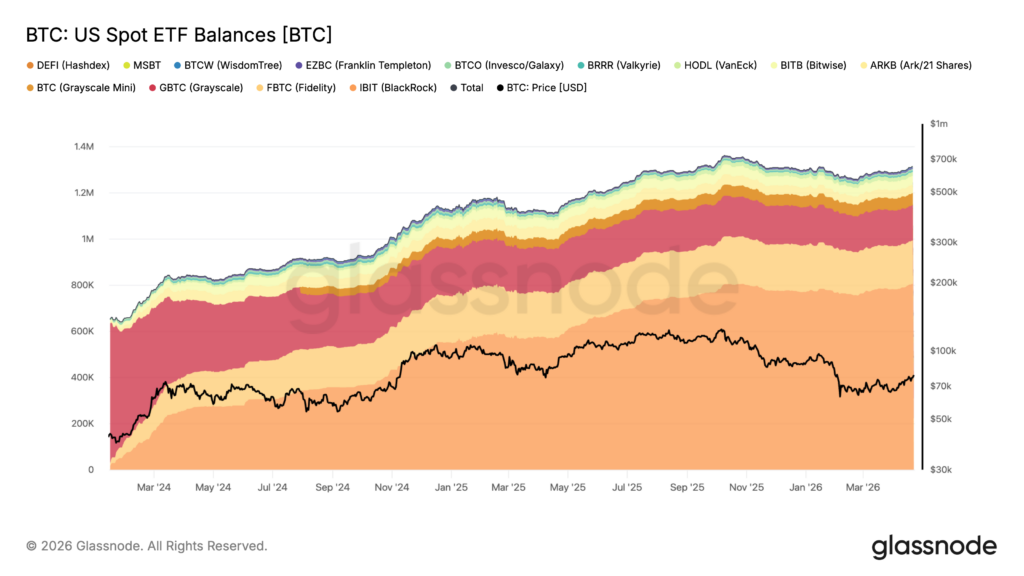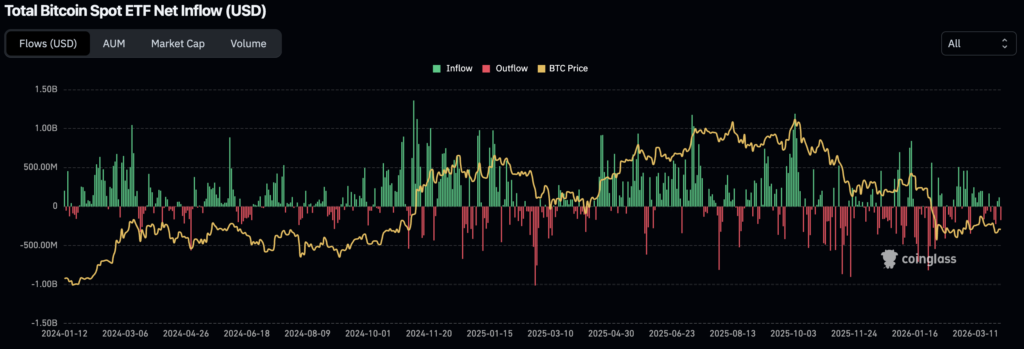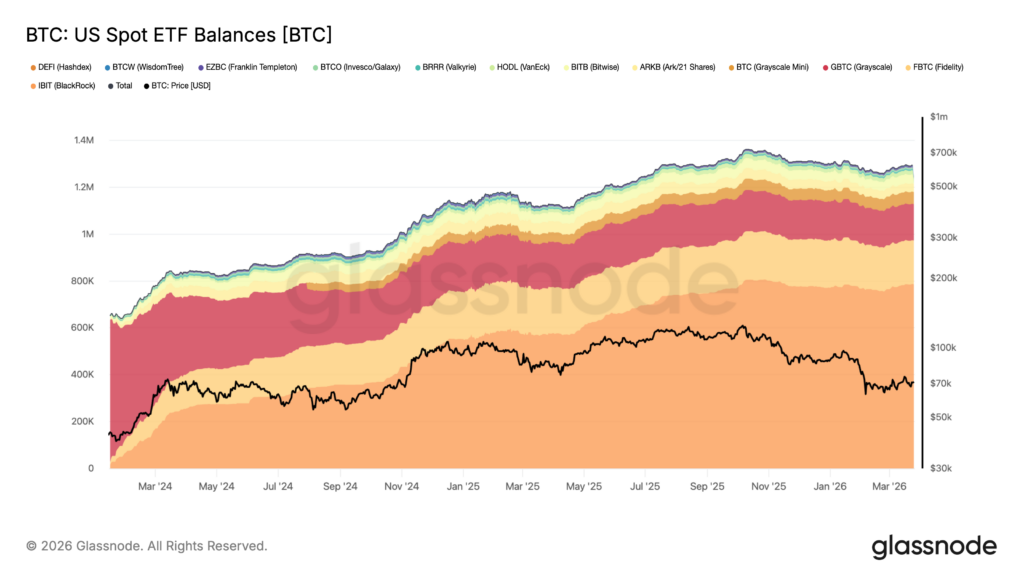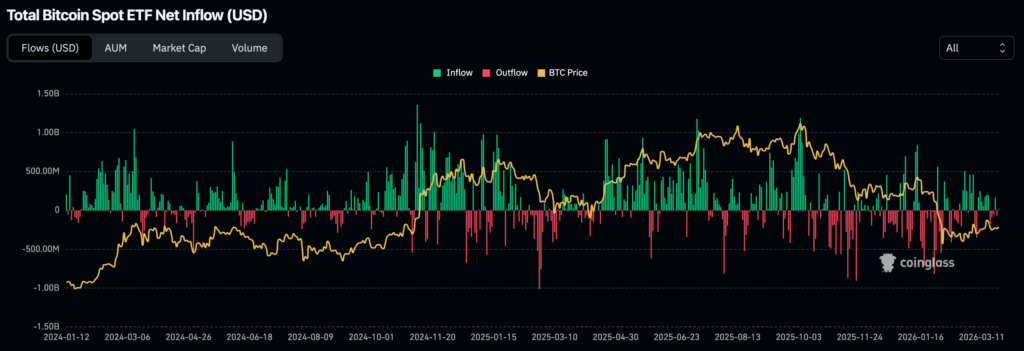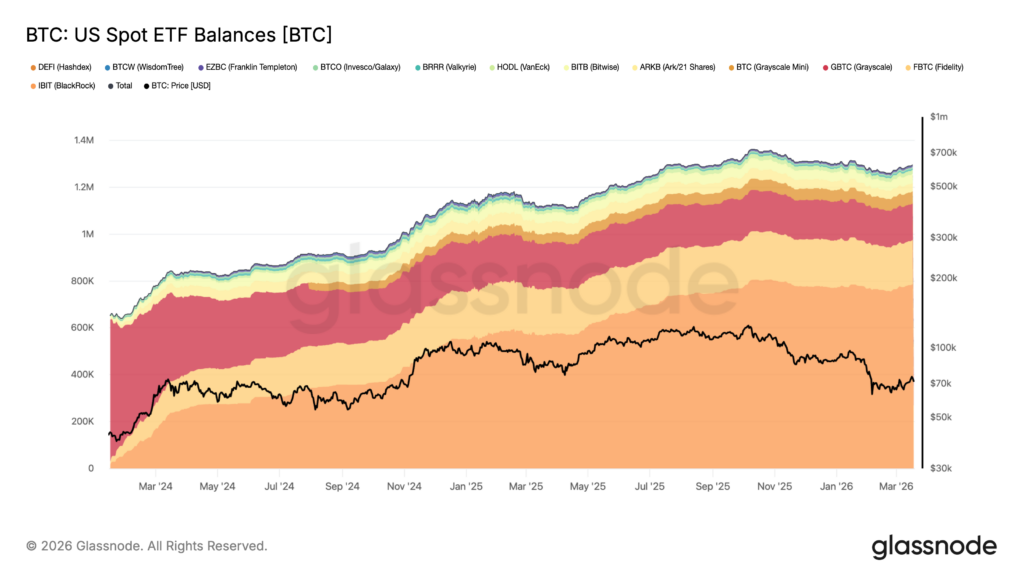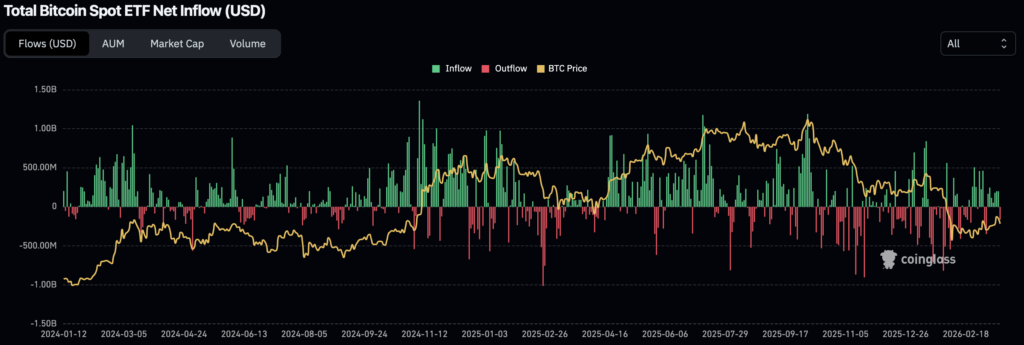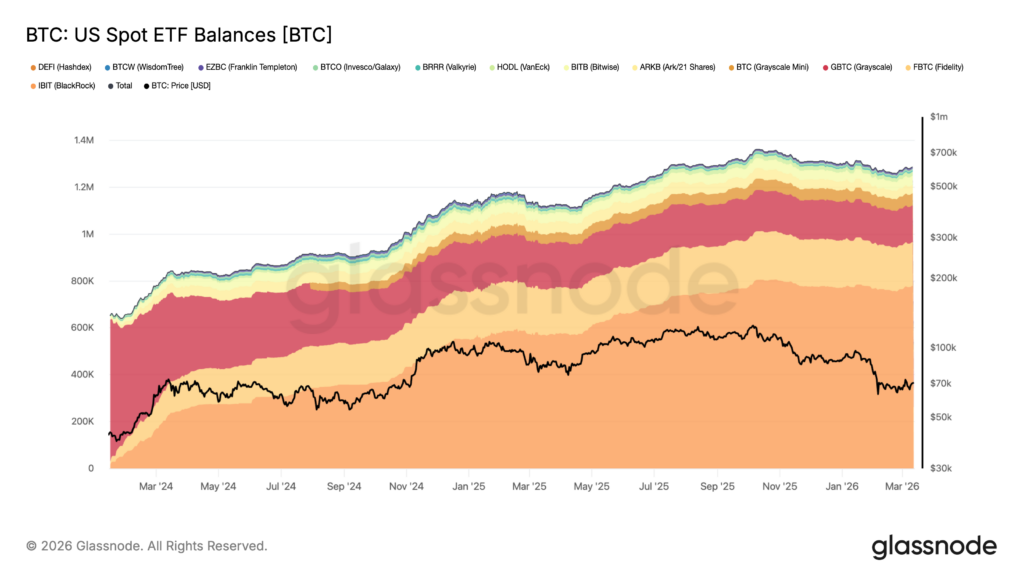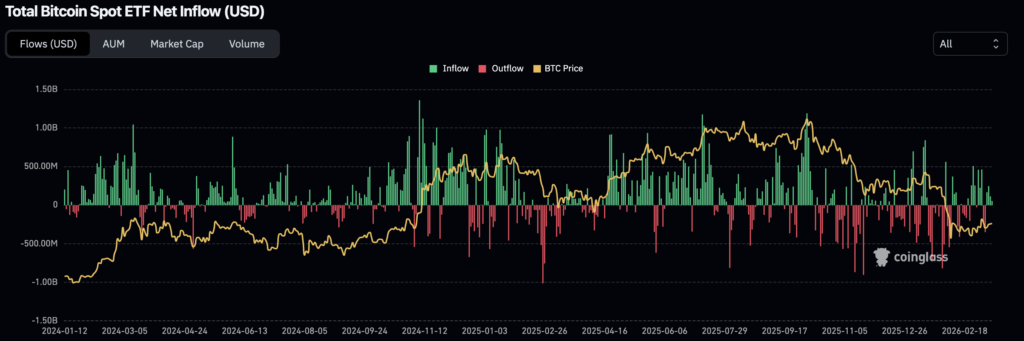
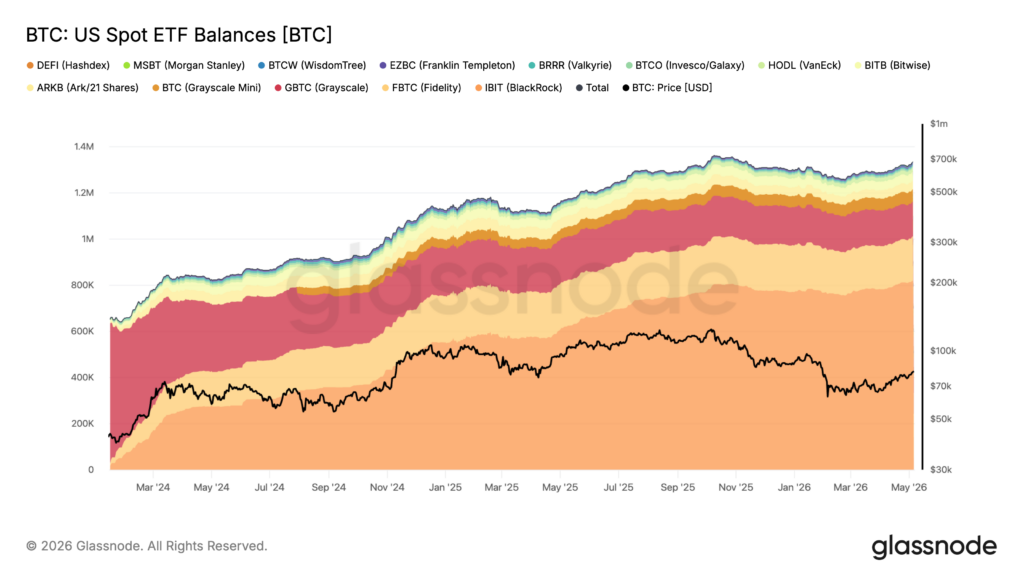
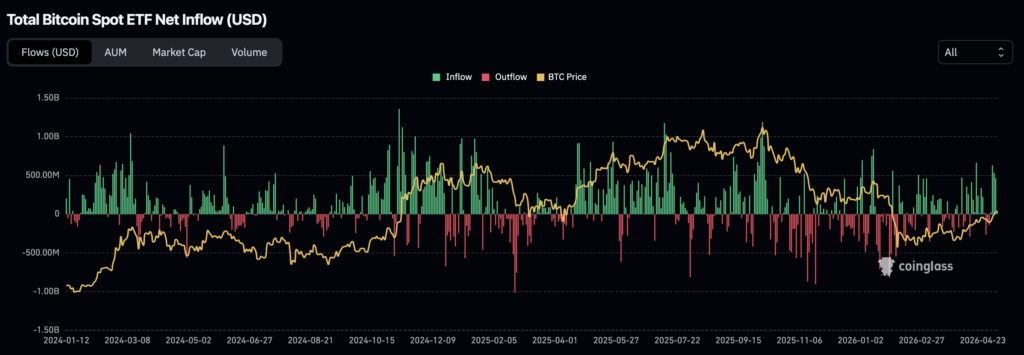


Markets had a strong week, with Bitcoin ($BTC) testing $82K while the S&P 500 and Nasdaq continued trading at all time highs. Sentiment improved after U.S. Secretary of State Marco Rubio stated that America had “achieved its military objectives” and was “not interested in further escalation,” easing geopolitical concerns and pushing crude oil down from $109 to $93. Bitcoin spot ETFs in the U.S. also recorded their fifth consecutive day of inflows, with cumulative net inflows reaching nearly $1.7B.
Institutions remained active across crypto infrastructure and payments. JPMorgan, Ripple, Mastercard and Ondo Finance partnered to enable cross border transfers of tokenized U.S. Treasurys using both blockchain and traditional banking rails. Morgan Stanley began piloting spot crypto trading on E*Trade, while Kraken launched regulated crypto spot margin trading in the U.S. following its Bitnomial deal. Y Combinator also signaled growing interest in the sector, announcing its first New York based crypto and fintech focused startup interviews, while a16z crypto has raised $2.2 billion for its fifth fund as the venture capital firm points to growing use of stablecoins, onchain finance, and improving regulation. In a notable shift, Michael Saylor stated that Strategy “will probably” sell Bitcoin in the future to help cover dividends tied to STRC.
Policy momentum in the U.S. also accelerated. White House digital assets adviser Patrick Witt said the administration is targeting July 4 for House passage of the Clarity Act, with Senate Banking Committee discussions expected later this month. Elsewhere, Nasdaq’s president said the SEC’s evolving crypto stance is allowing markets to “build again,” while the Bank of Italy called on the EU to explore tokenized SEPA payments as interest in digital financial infrastructure continues to grow.
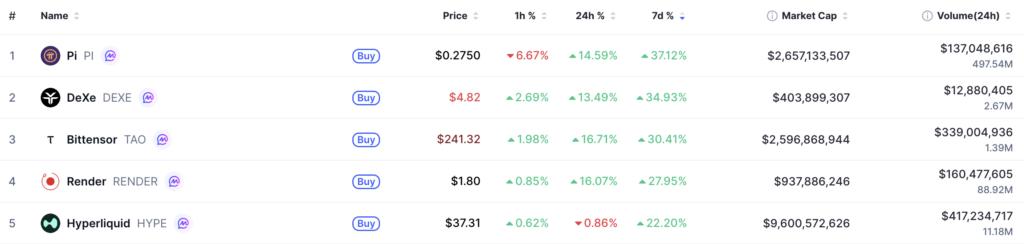
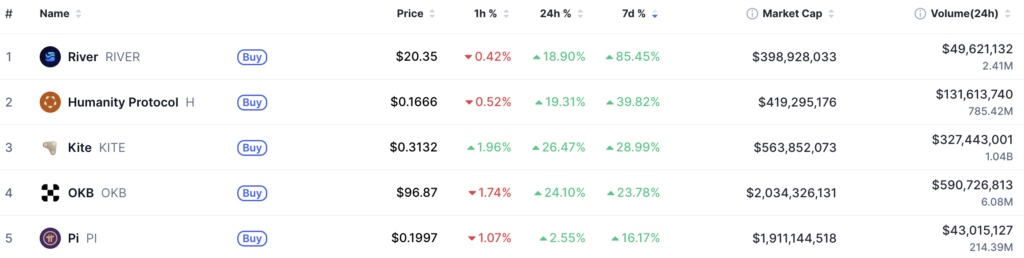
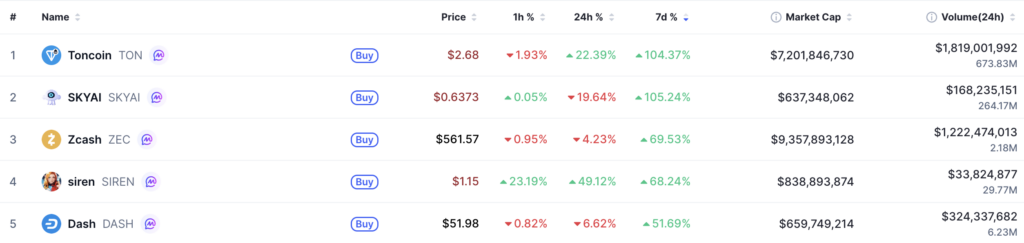
Toncoin ($TON) led the group with a +104.37% weekly gain after Telegram founder Pavel Durov stated that TON leads Layer 1 blockchains in finality time. SKYAI ($SKYAI) followed closely with a +105.24% increase, continuing strong momentum throughout the week. Zcash ($ZEC) advanced +69.53%after Multicoin Capital co founder Tushar Jain revealed the firm has been accumulating the token since February.
Siren ($SIREN) posted a +68.24% weekly rise, maintaining its recent volatility driven momentum. rounded out the top five with a +51.69% gain as privacy focused assets continued to outperform.
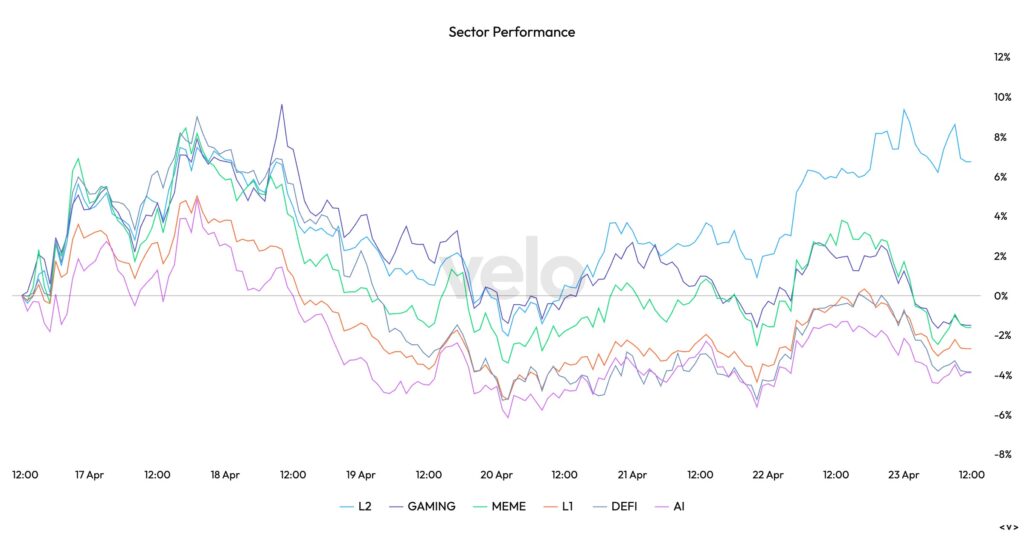
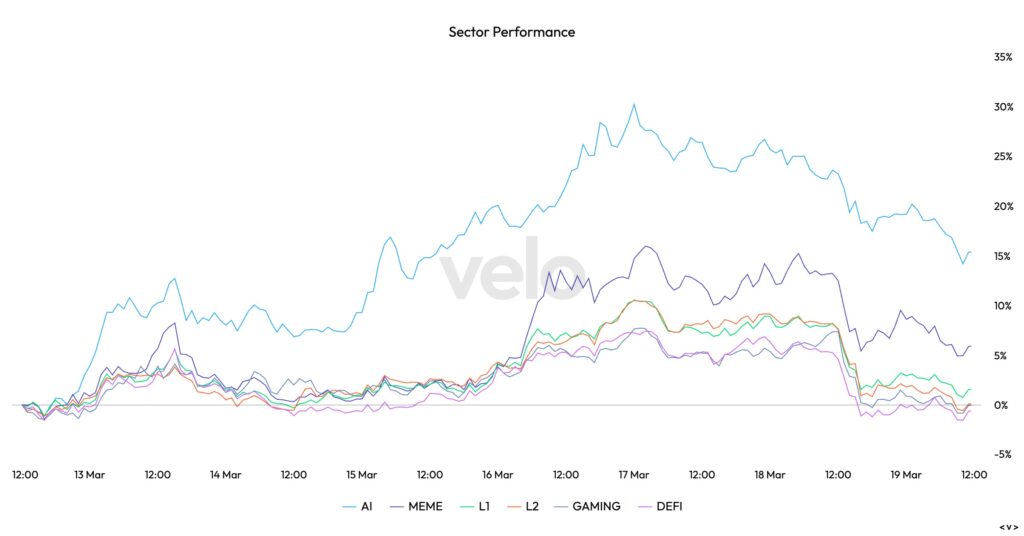
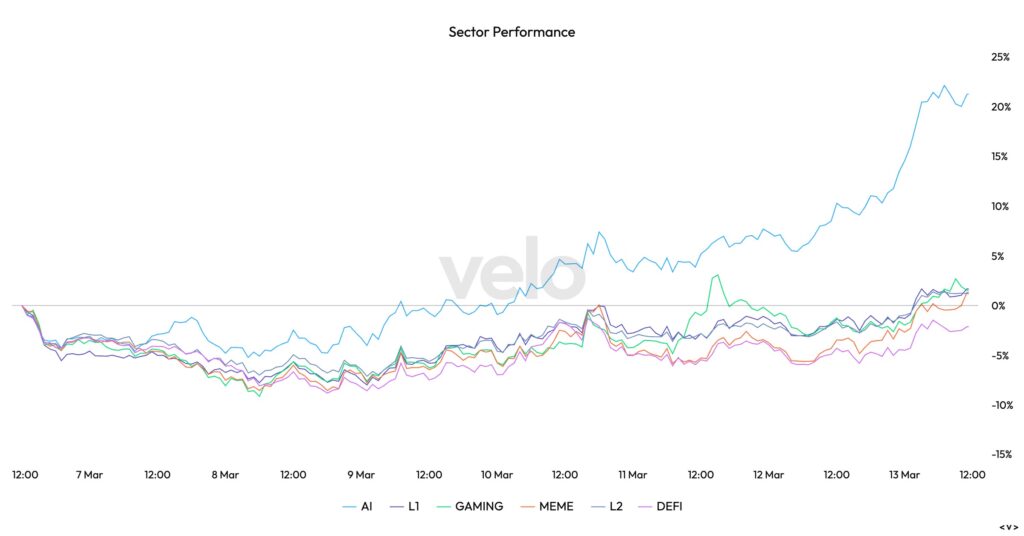
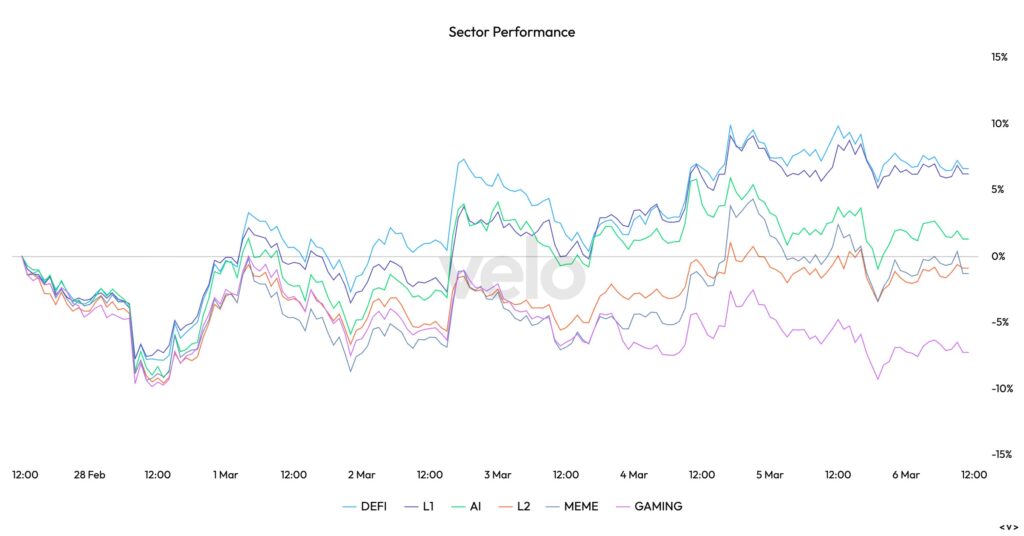
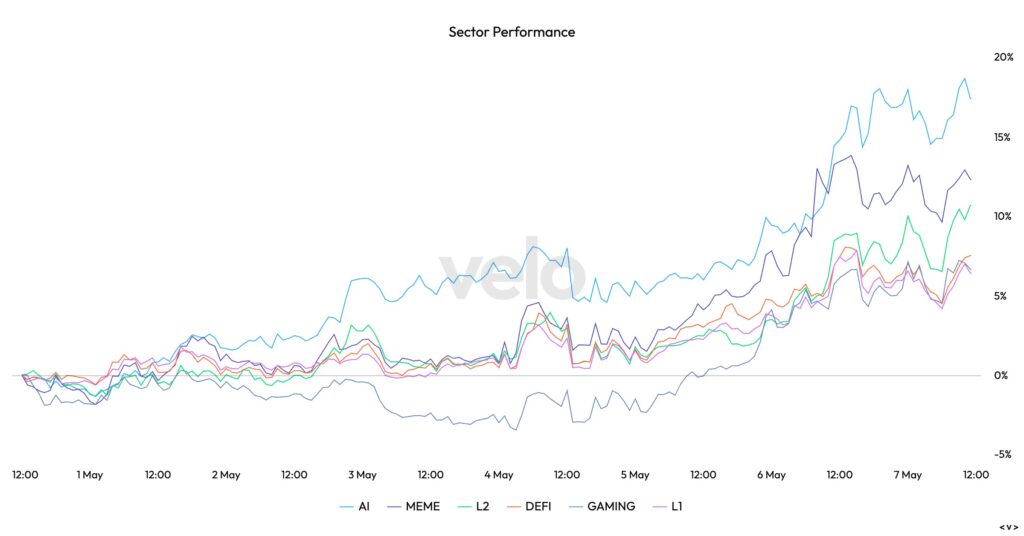
According to GMCI, the GMCI 30, which tracks the top 30 cryptocurrencies, is down 5.72% over the past week. The GMCI Mid Cap is up 11.33%, while GMCI Small Cap is up 9.93%. The rest of the sectors:
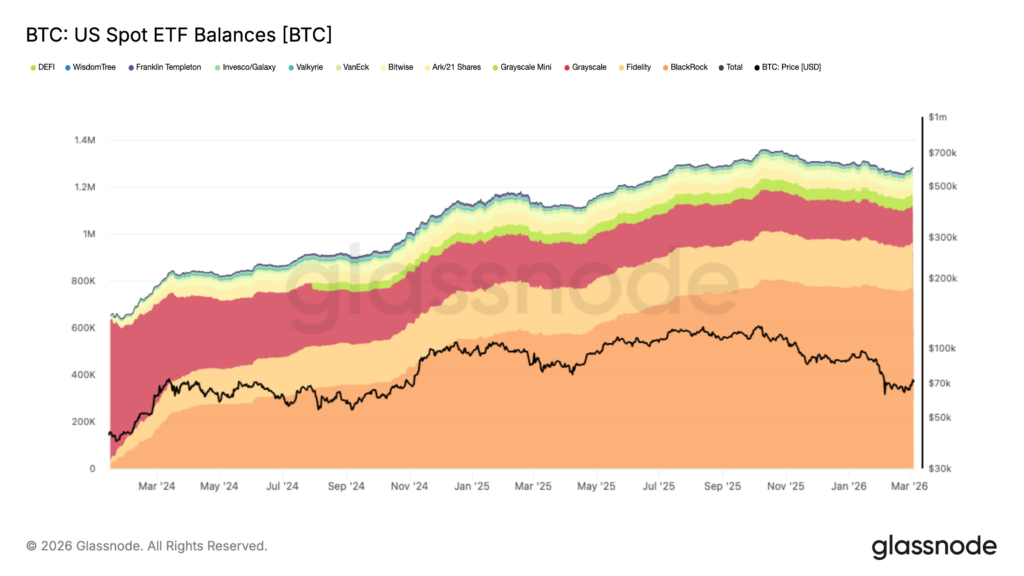
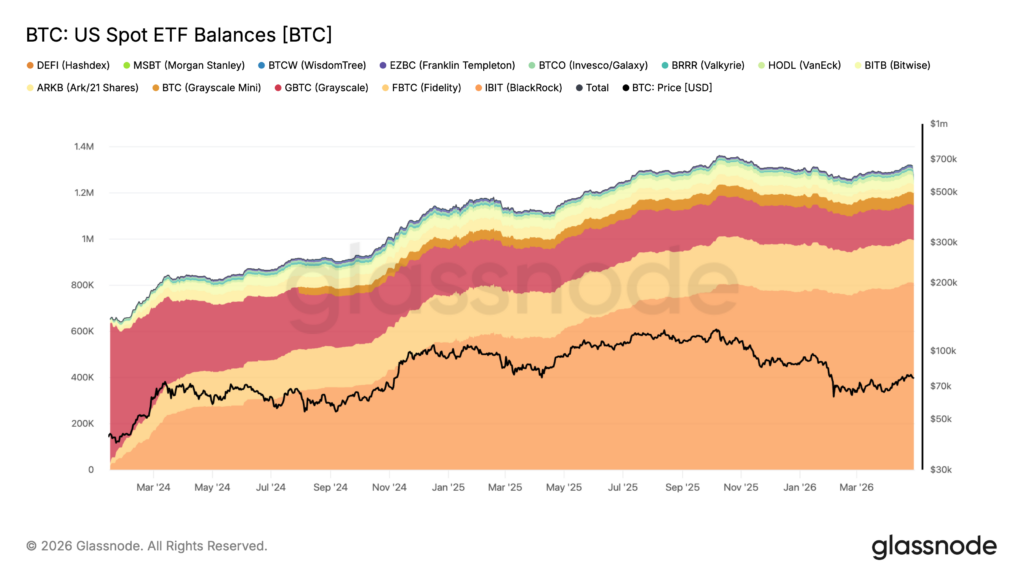
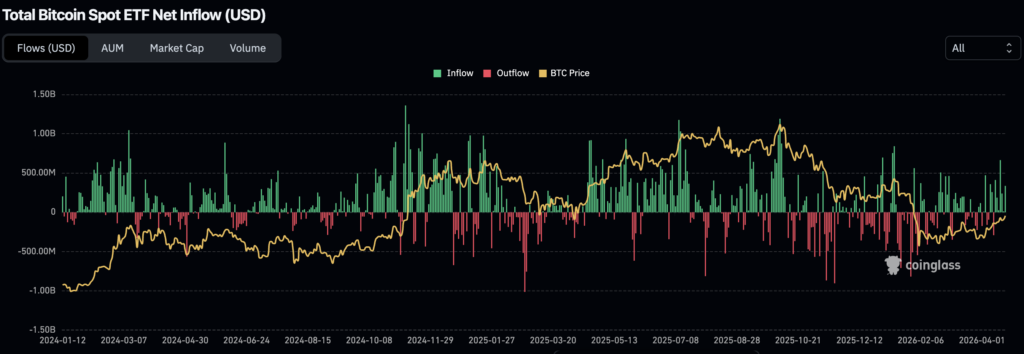
Total Assets Under Management (AUM) = $108.73 Billion
Weekly Net Inflows = $6.59 Billion
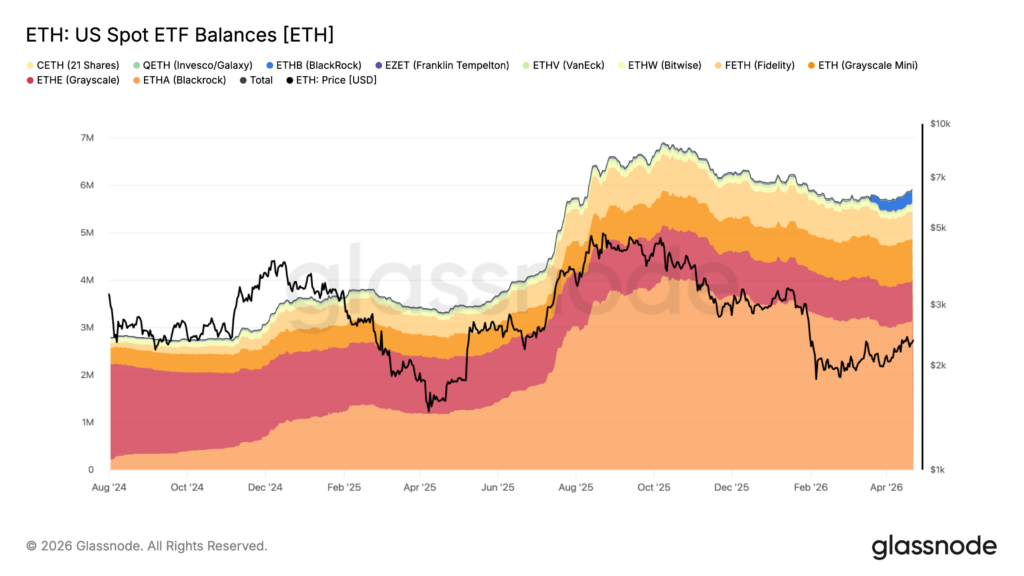
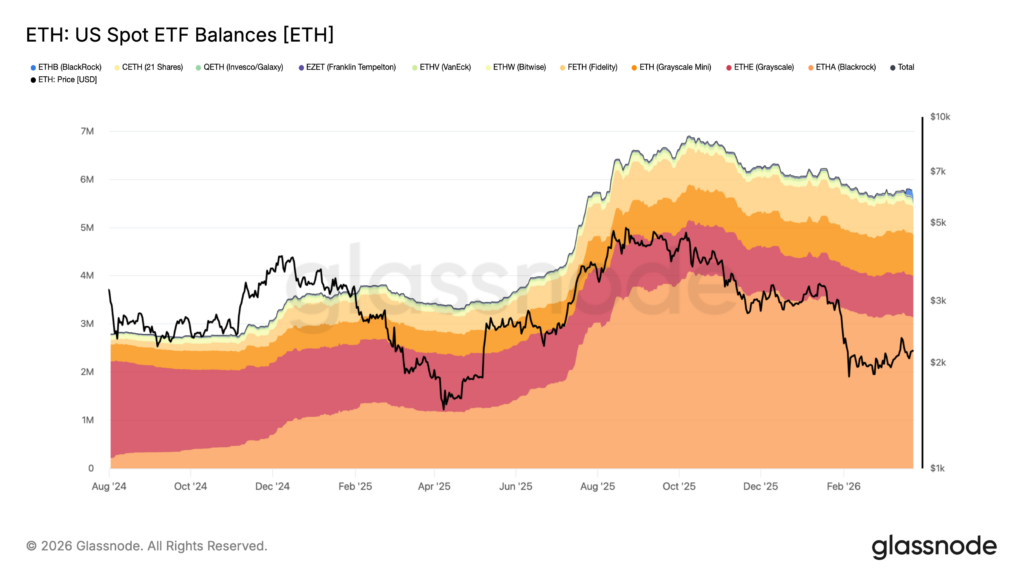
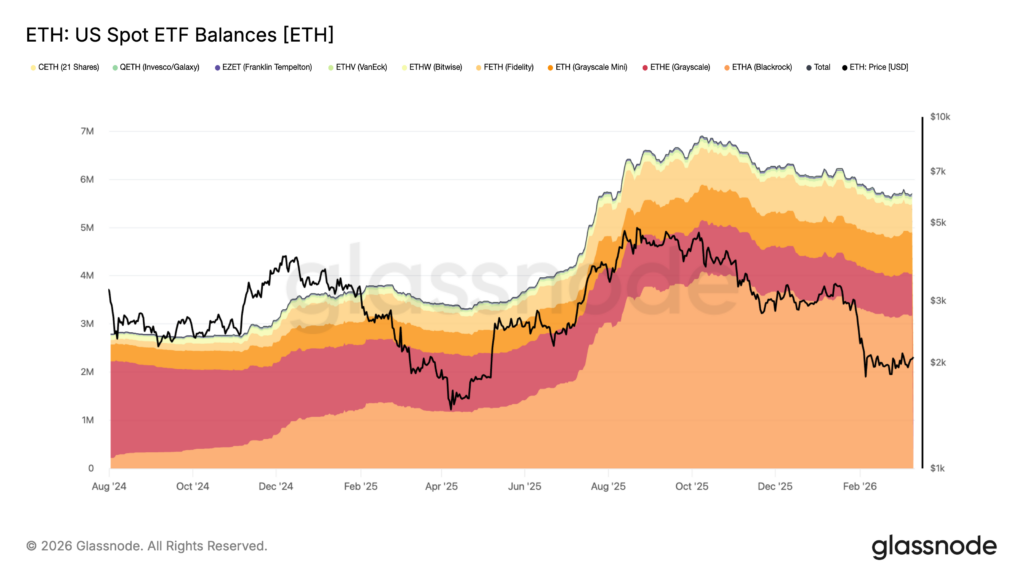
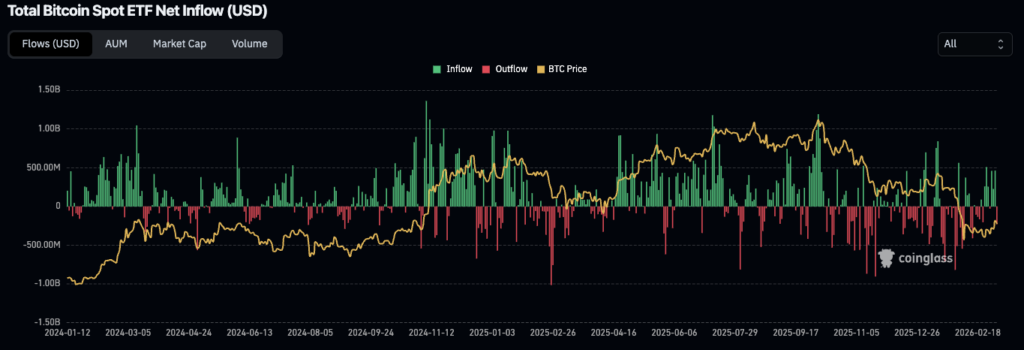
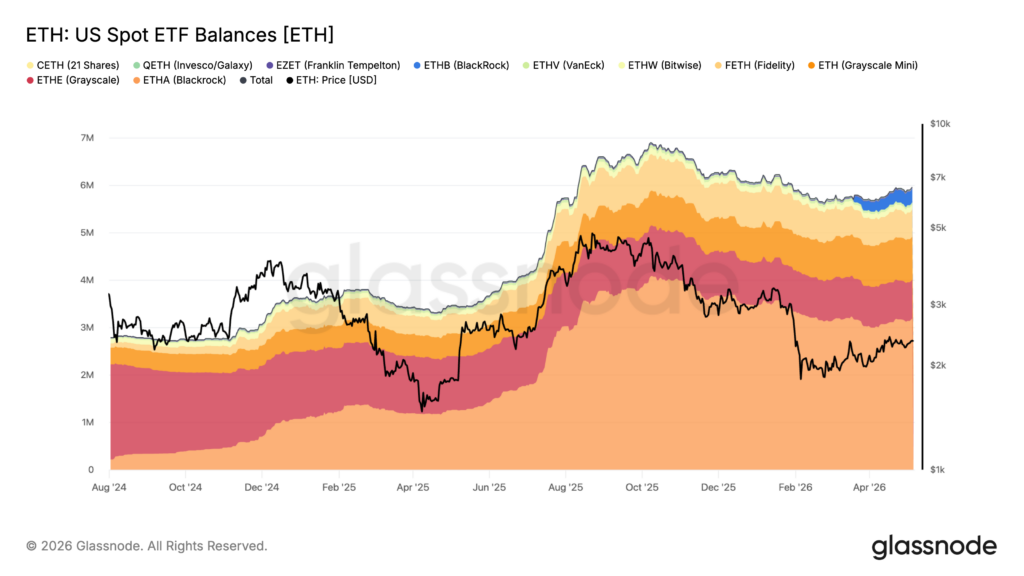
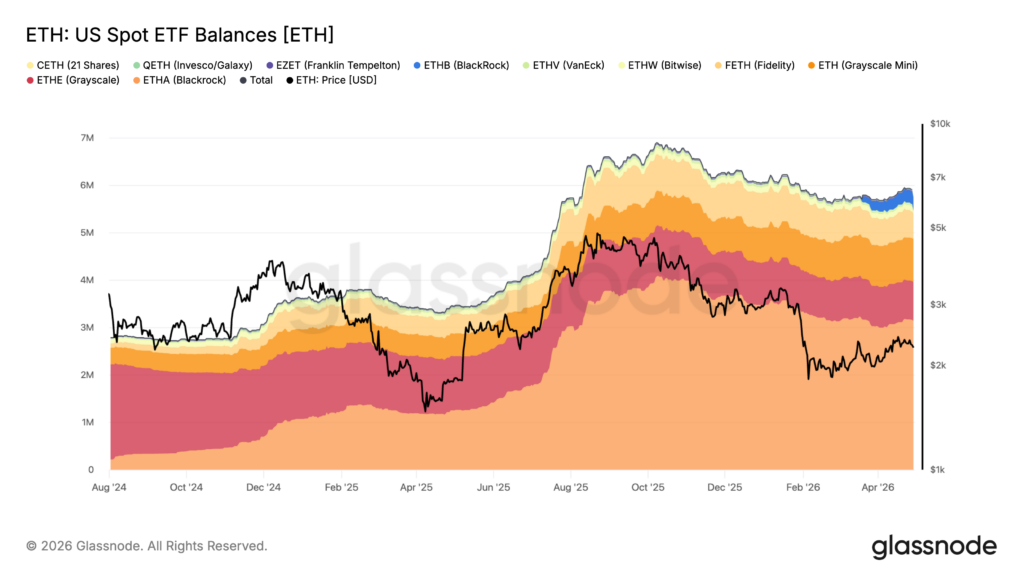
Total Assets Under Management (AUM) = $14.10 Billion
Weekly Net Inflows = $470 Million
*The data for BTC / ETH ETFs can vary, so we use Coinglass as our source.
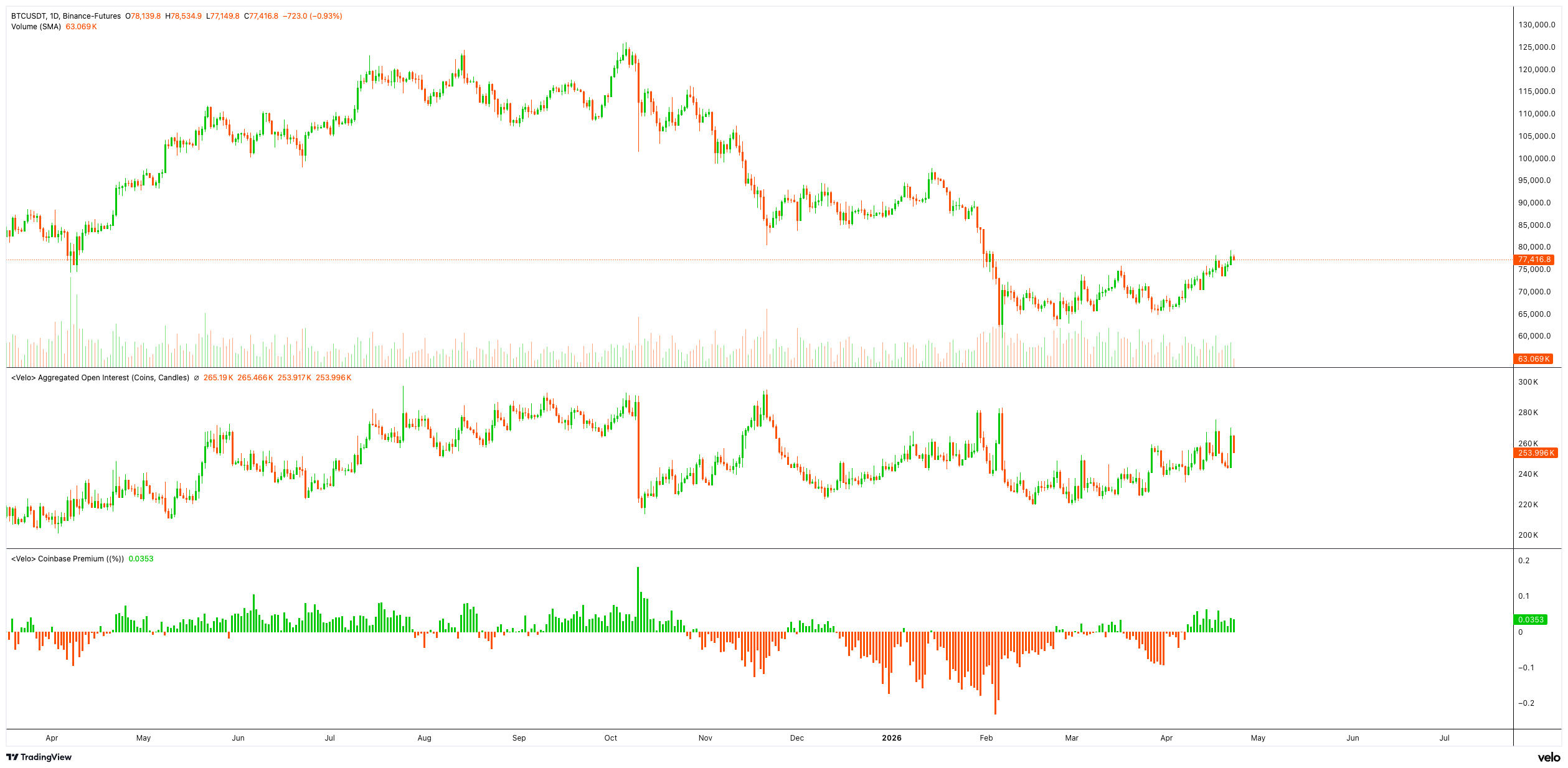
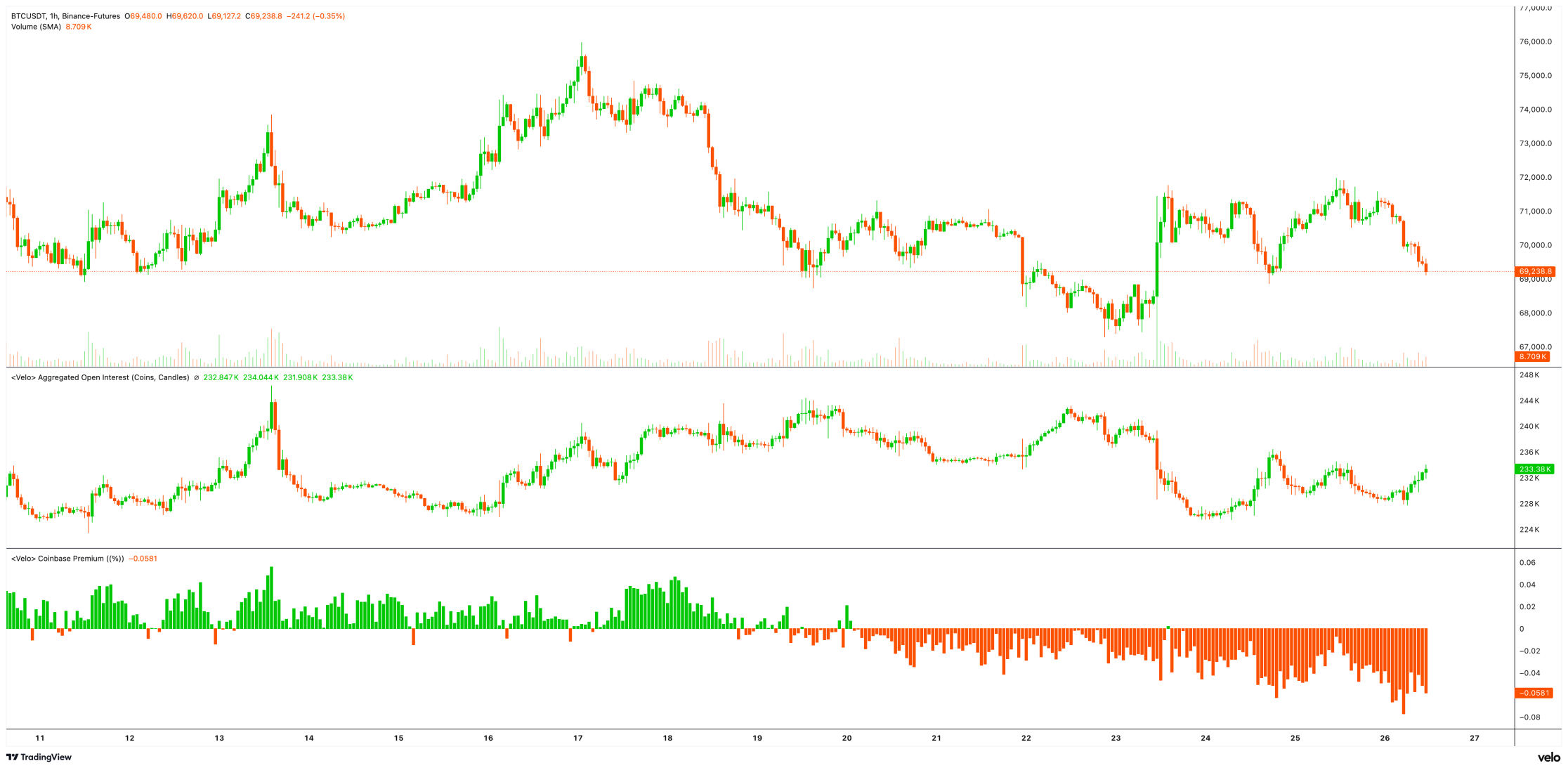
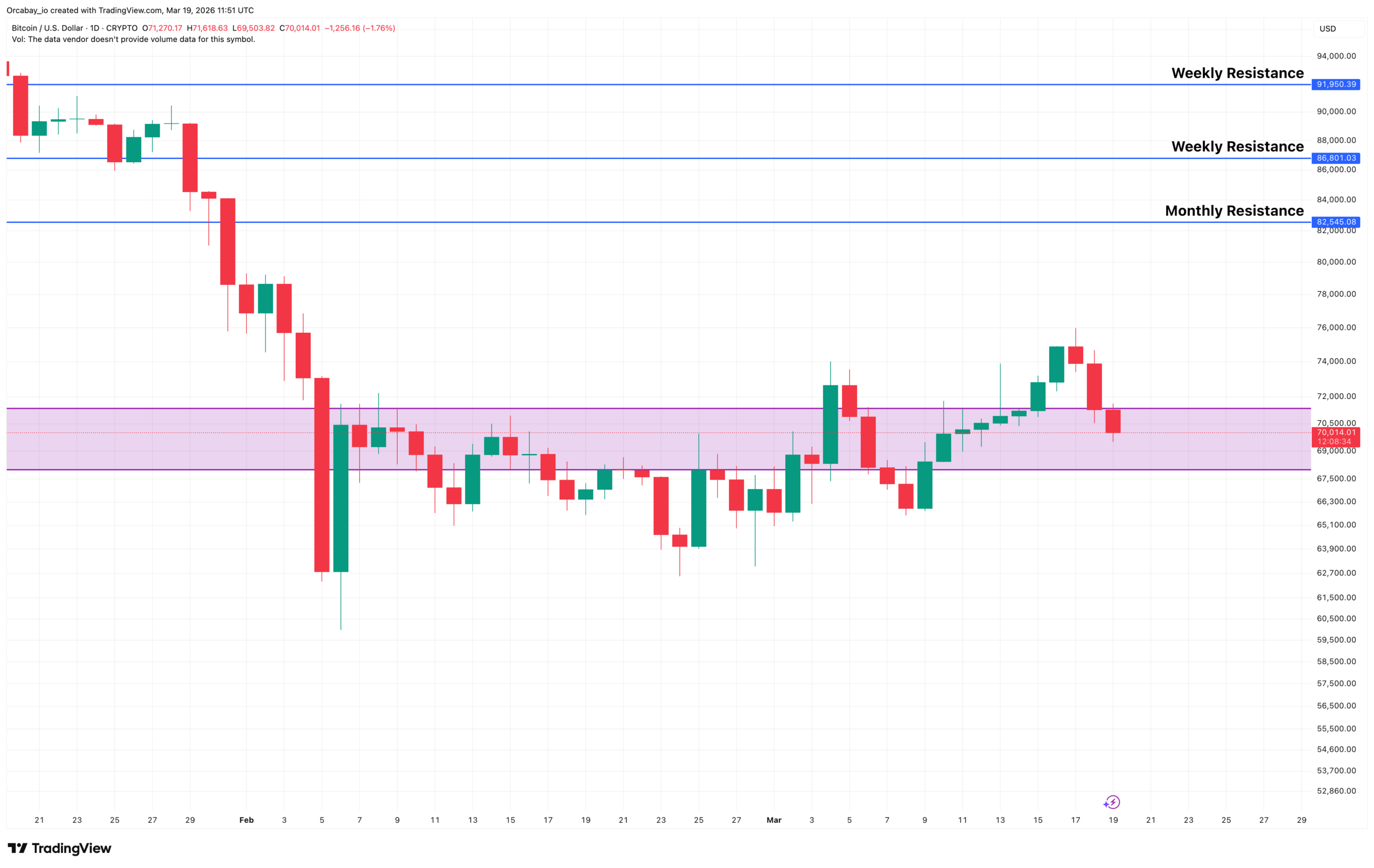
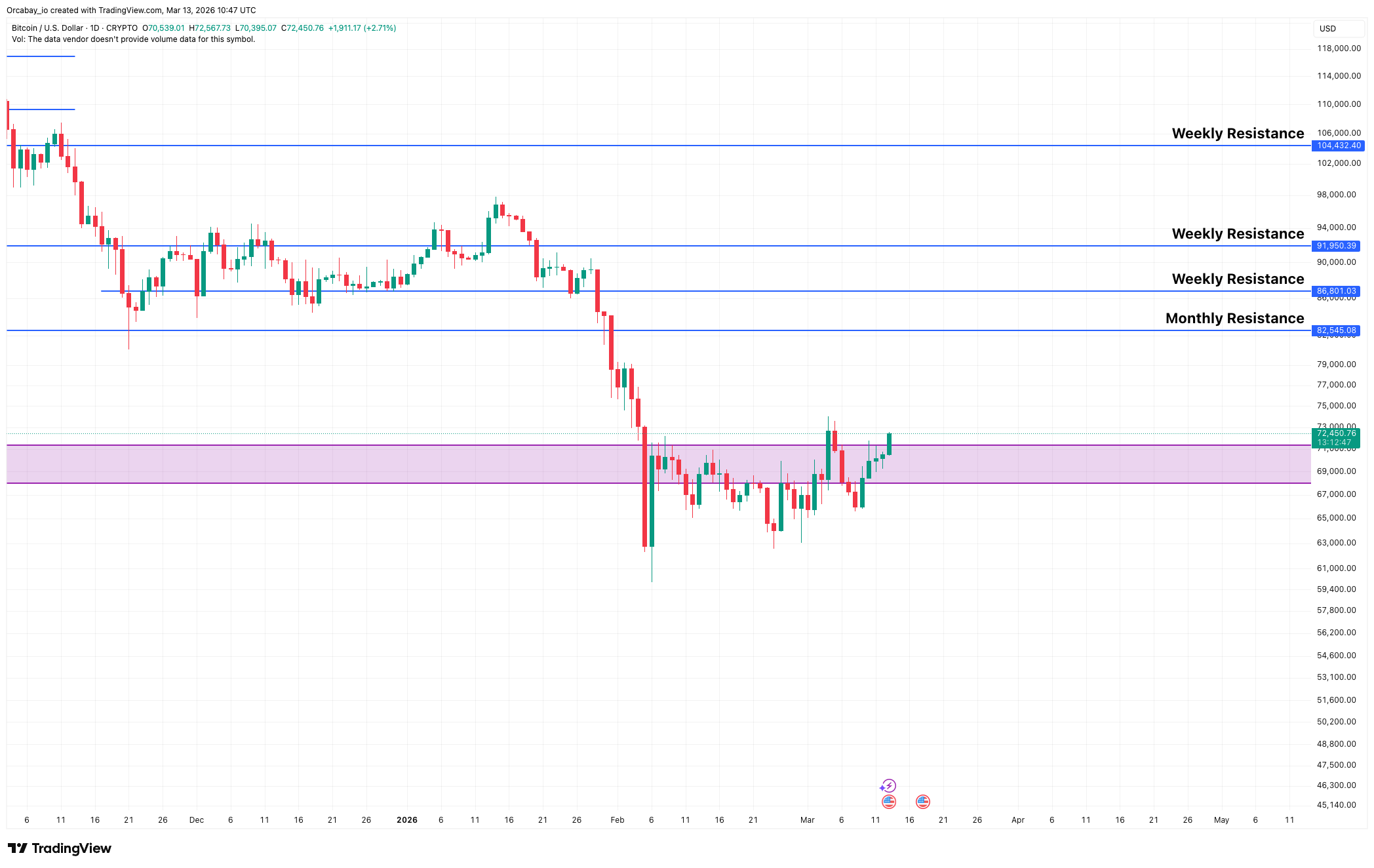
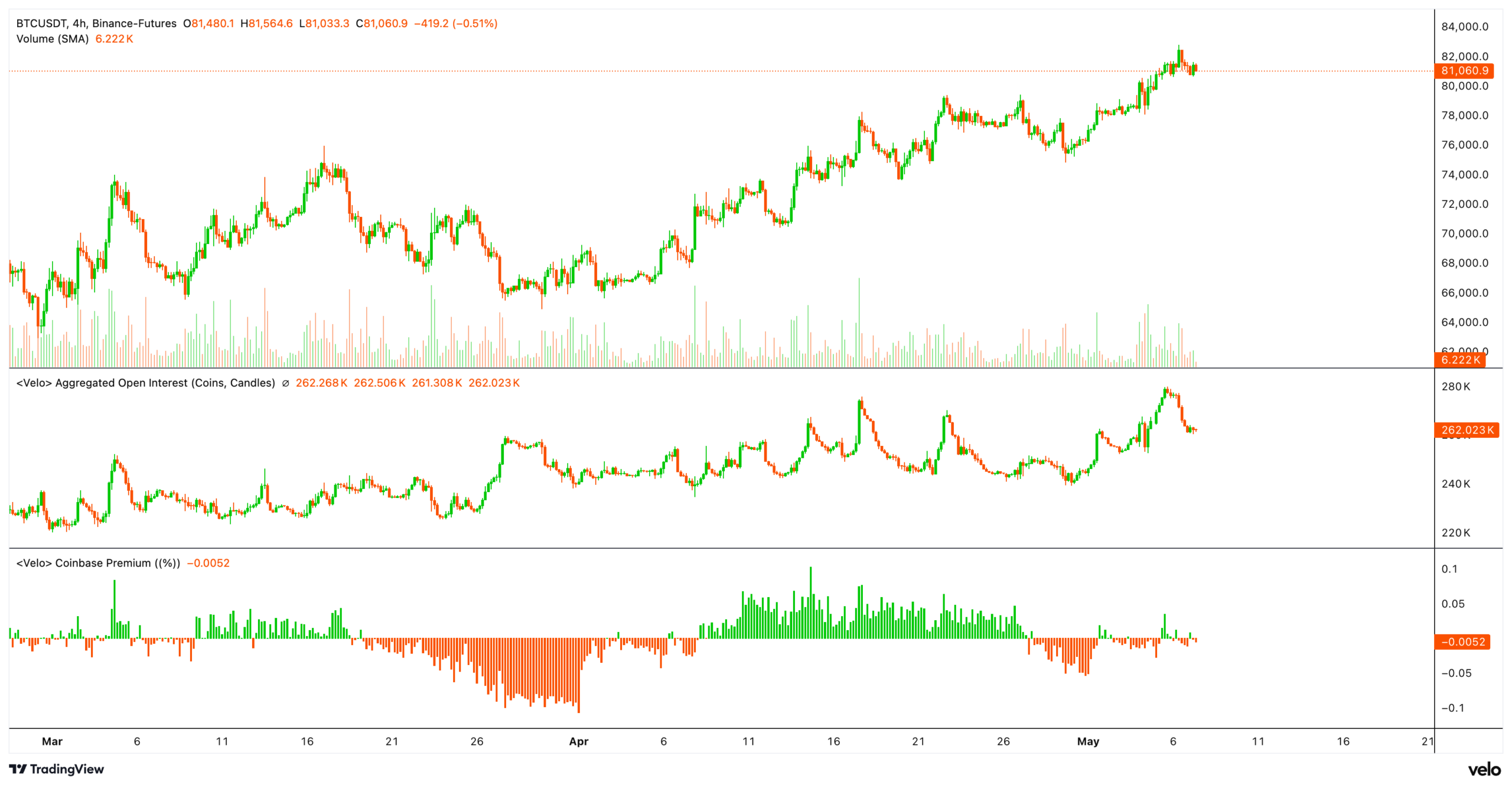
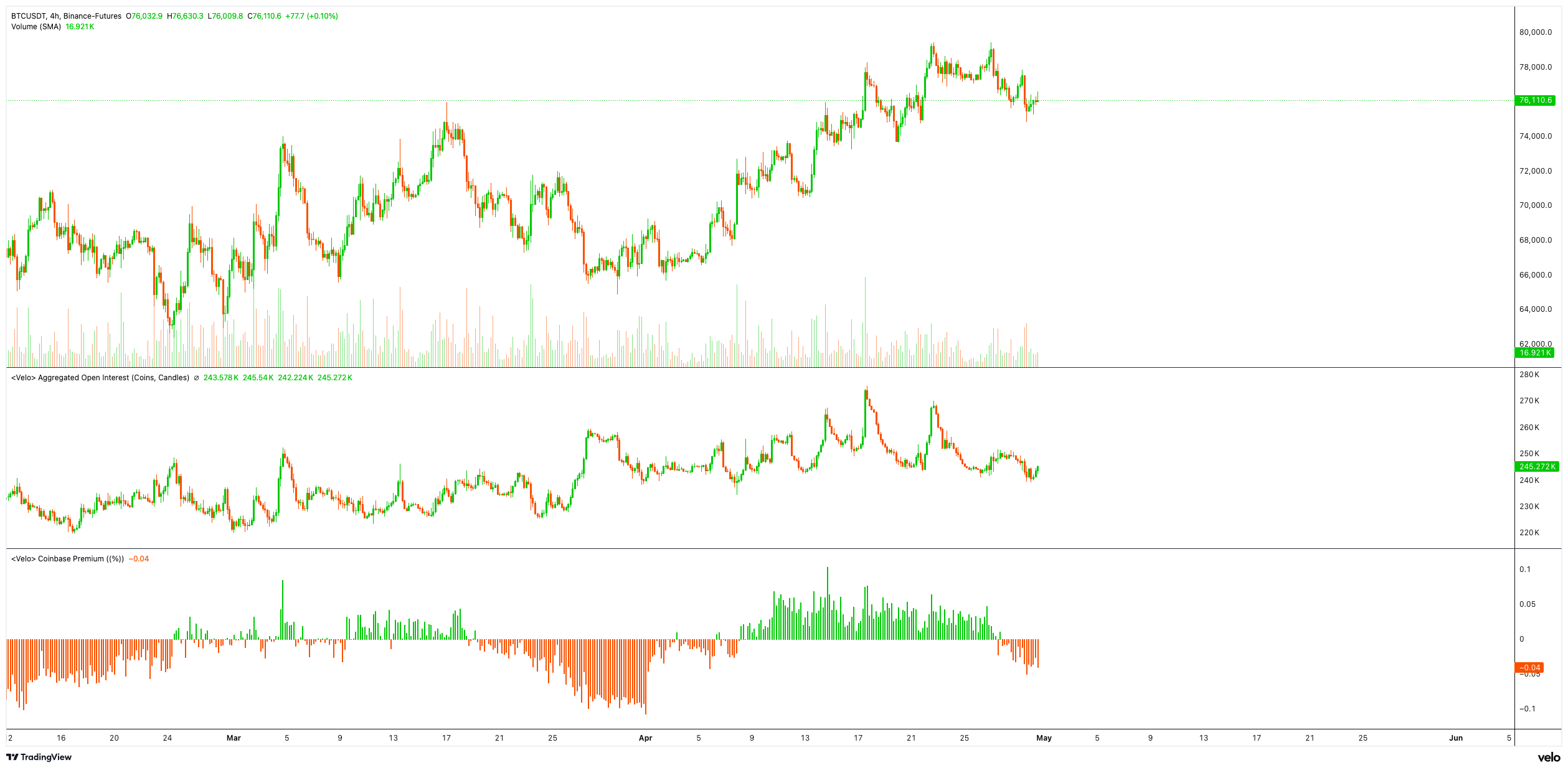
$BTC price action continues to look constructive. Since March 27, BTC has been grinding higher in a steady trend rather than moving vertically, which is typically a healthier structure for continuation.
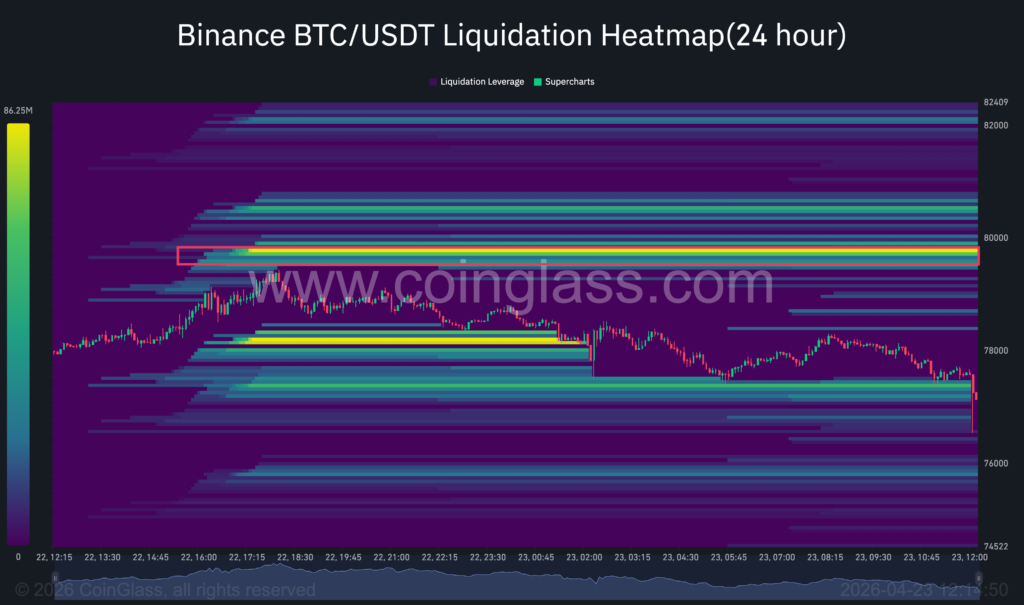
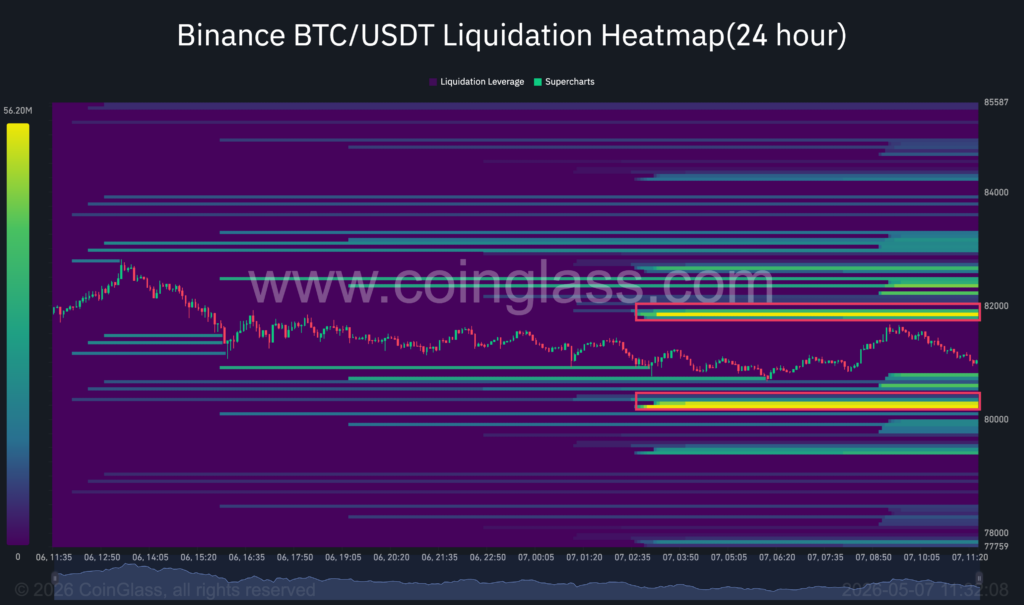
BTC is now trading just below the key $82K monthly resistance zone. A clean breakout above that level could open the door for another leg higher.
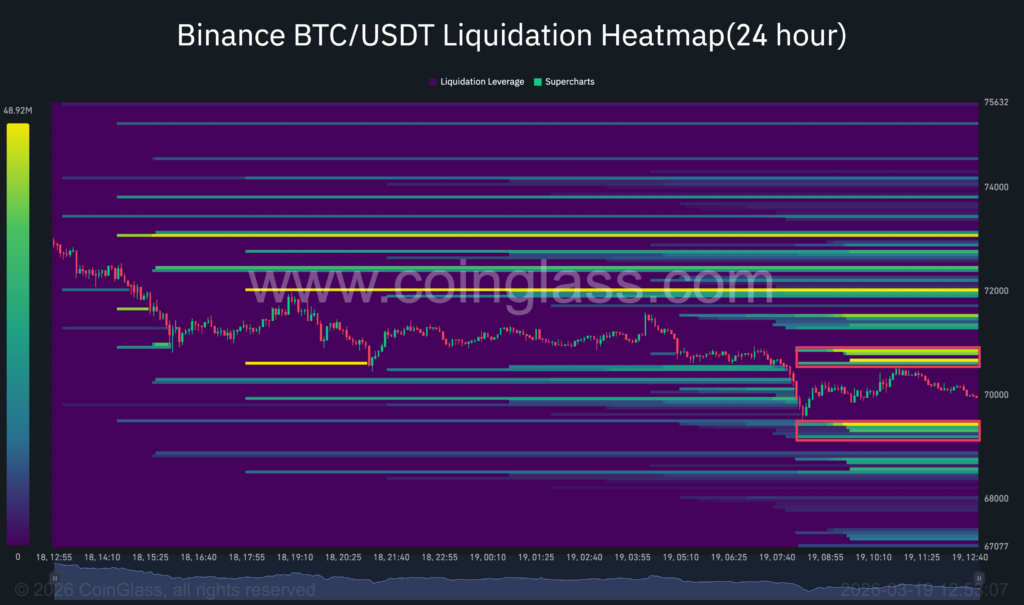
From a positioning perspective, bitcoin futures open interest remains elevated near record highs around 800K BTC. However, perpetual funding rates are still flat to only slightly positive, suggesting the market is not overheated despite the rally.
That is an important distinction.
Usually when markets become crowded, funding spikes aggressively as traders pile into leveraged longs. Right now, the move appears to be driven more by steady spot and institutional demand rather than speculative excess.
CVD also remains strong overall, although it has cooled slightly after the recent push higher, which points more toward consolidation than aggressive distribution.
Overall the setup shows:
BTC looks bullish. If macro conditions cooperate and risk markets remain stable, Bitcoin has room for another expansion move higher.
Ethereum
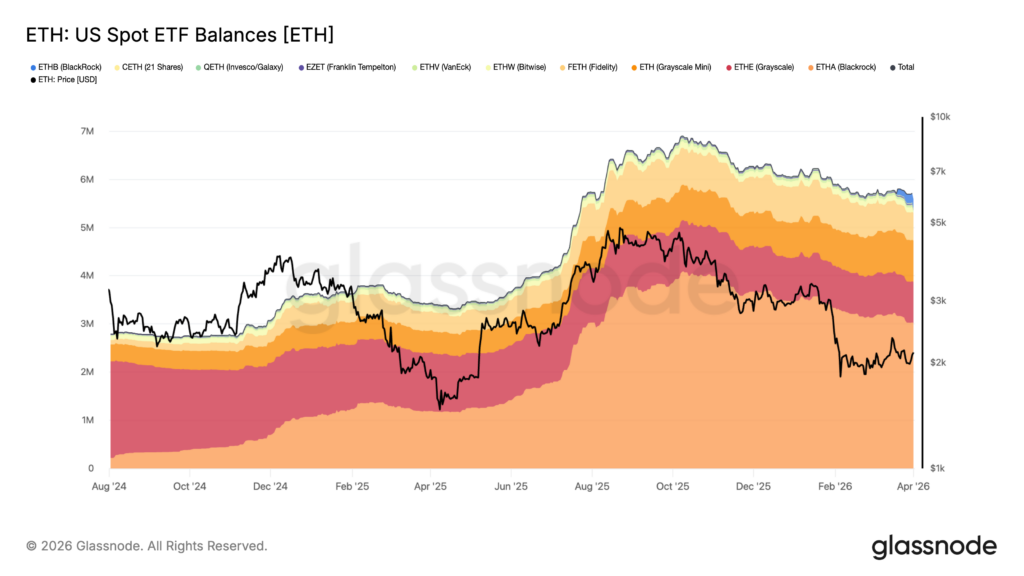
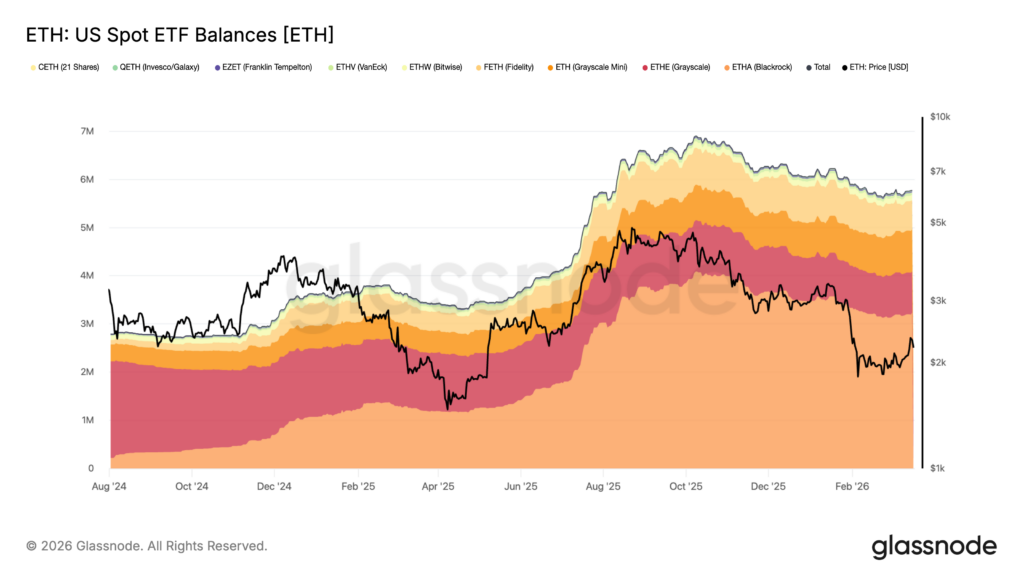
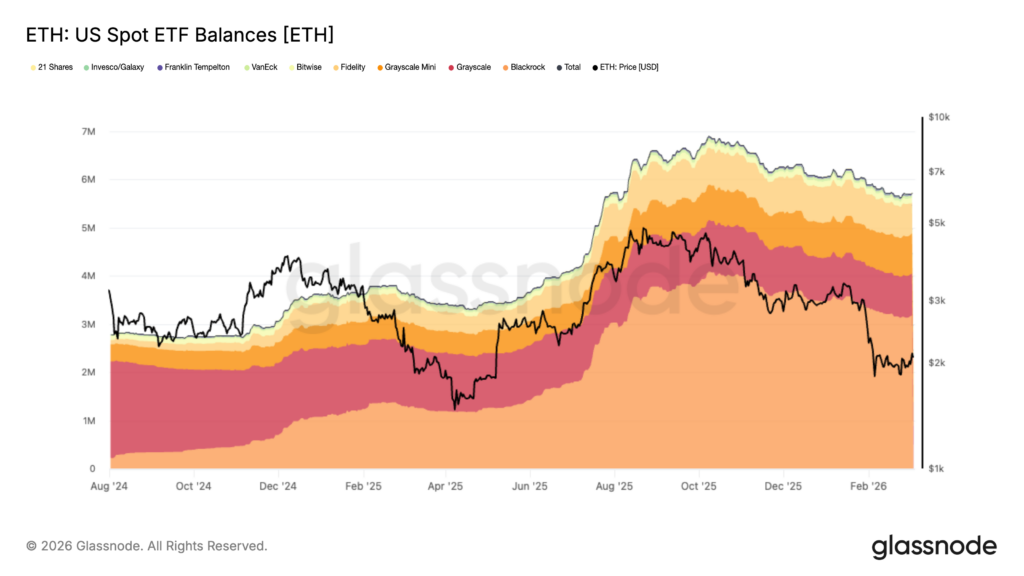
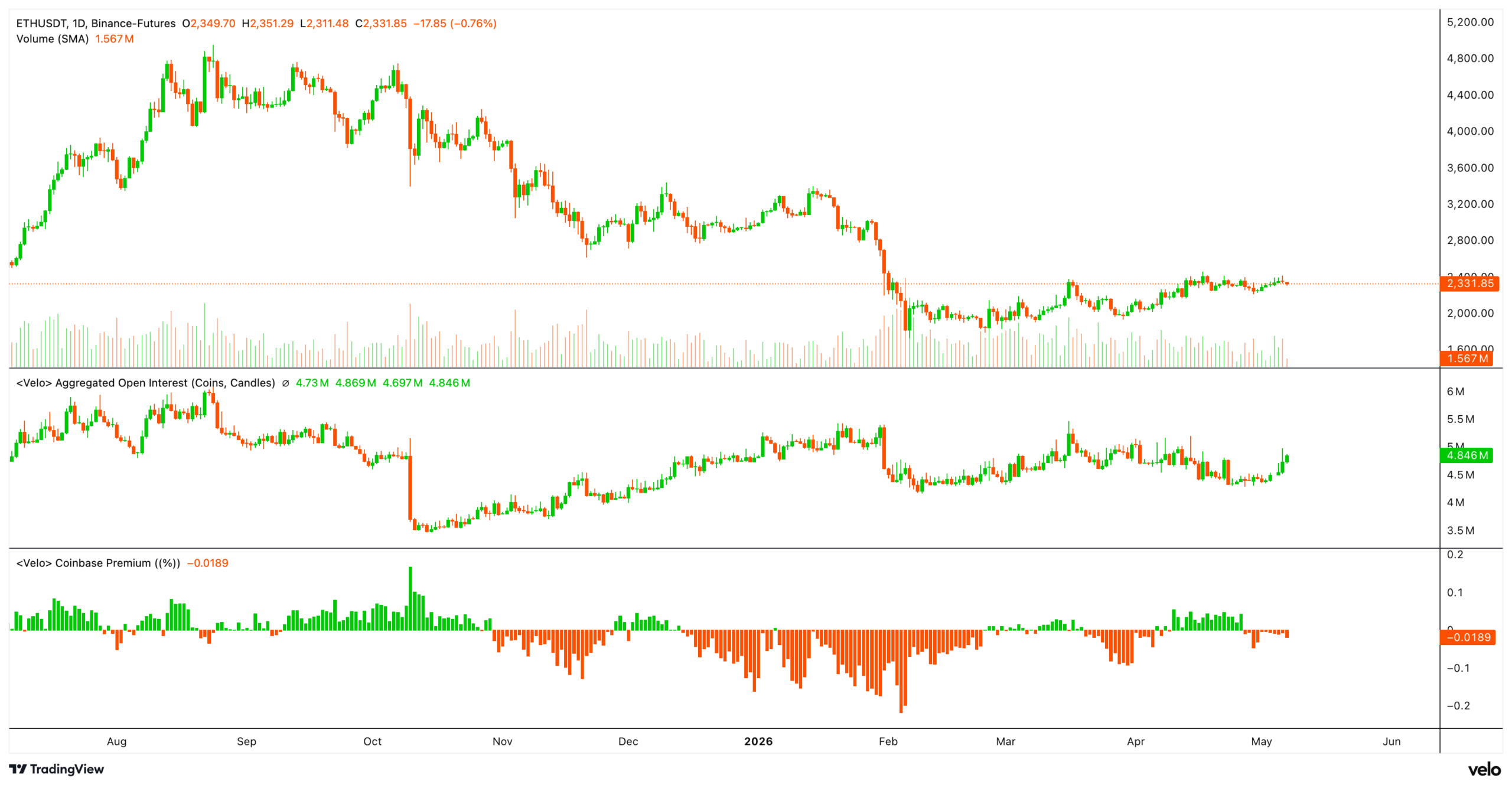
$ETH continues to lag behind Bitcoin, both in price structure and flow strength.
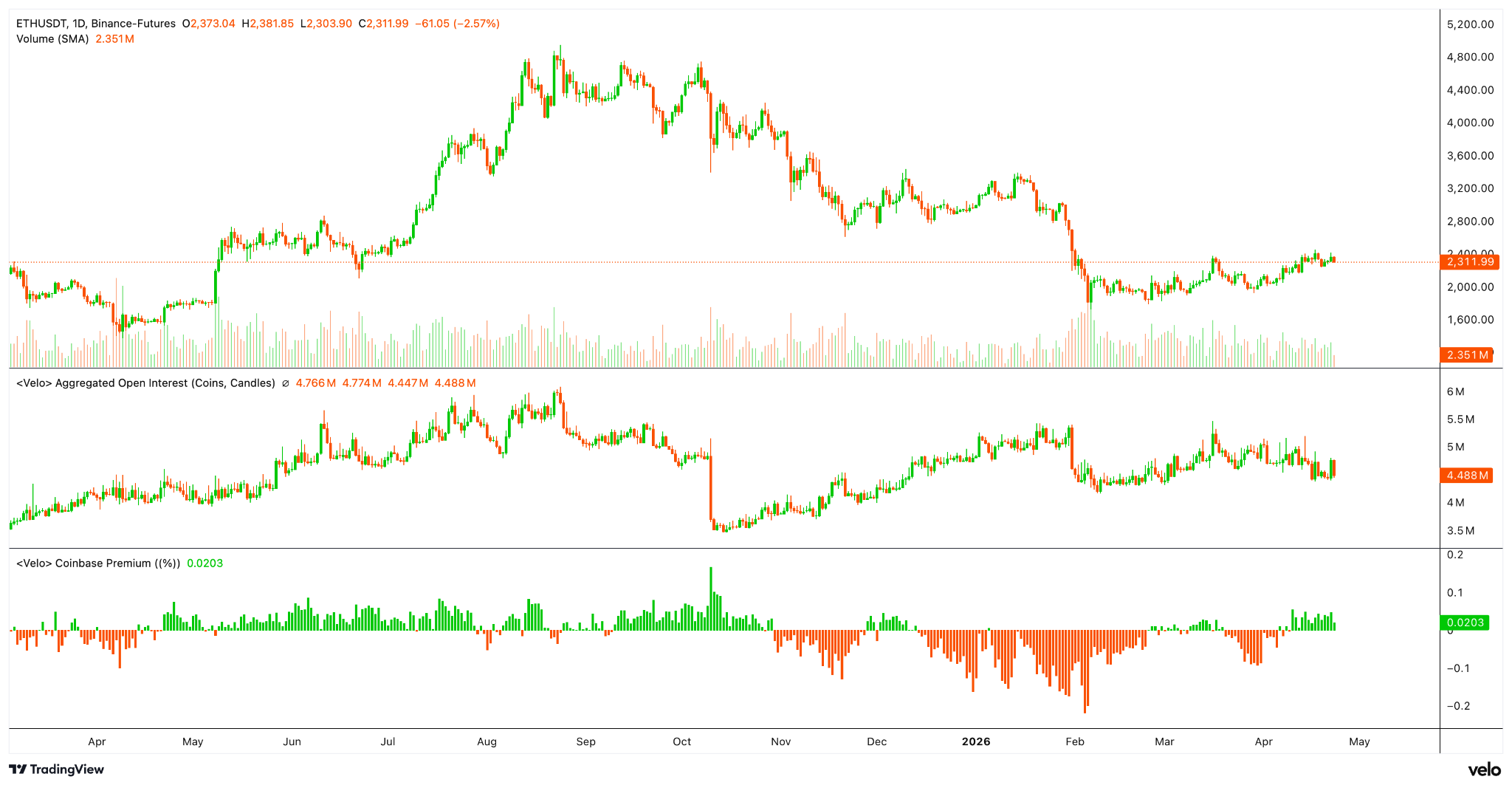
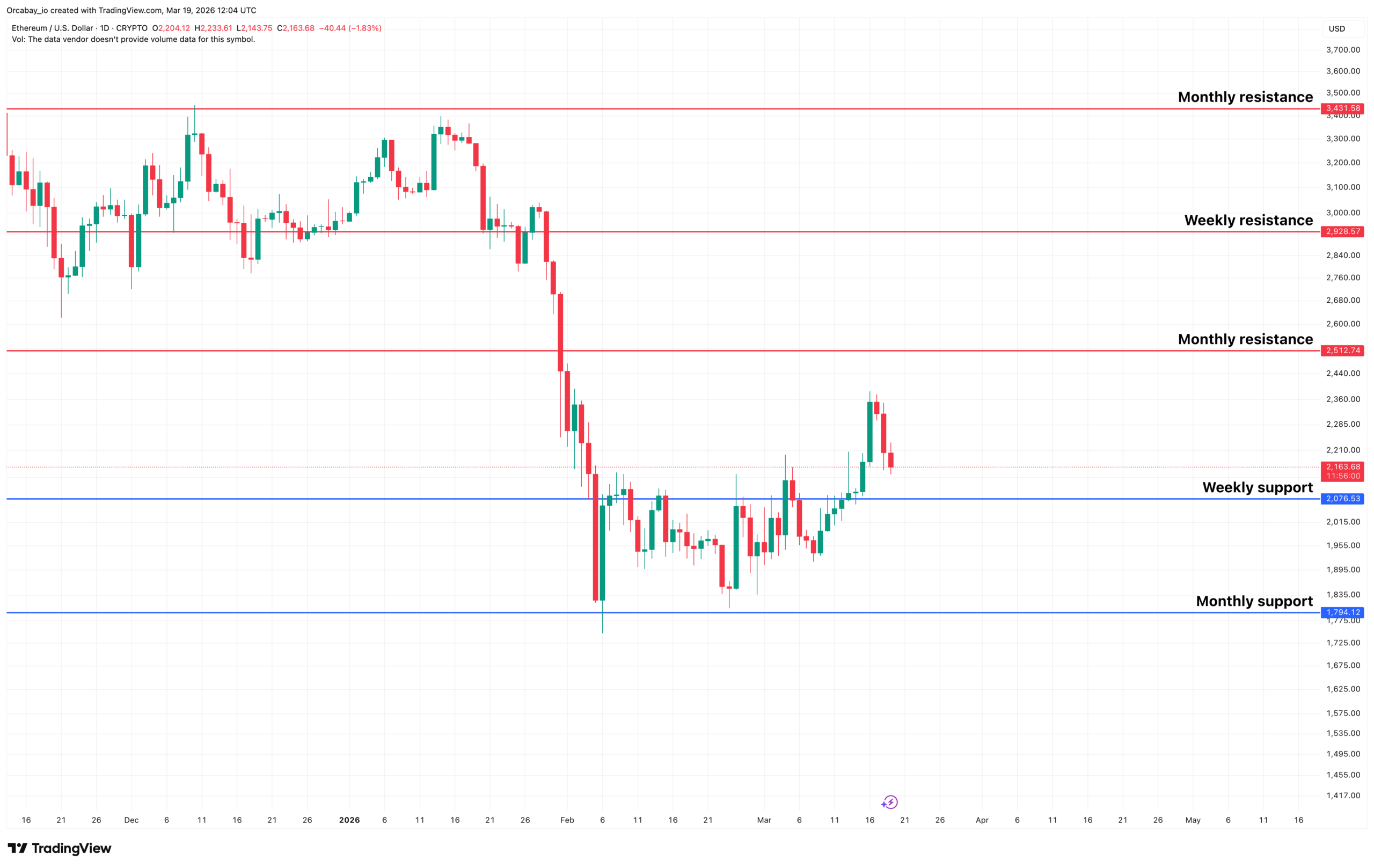
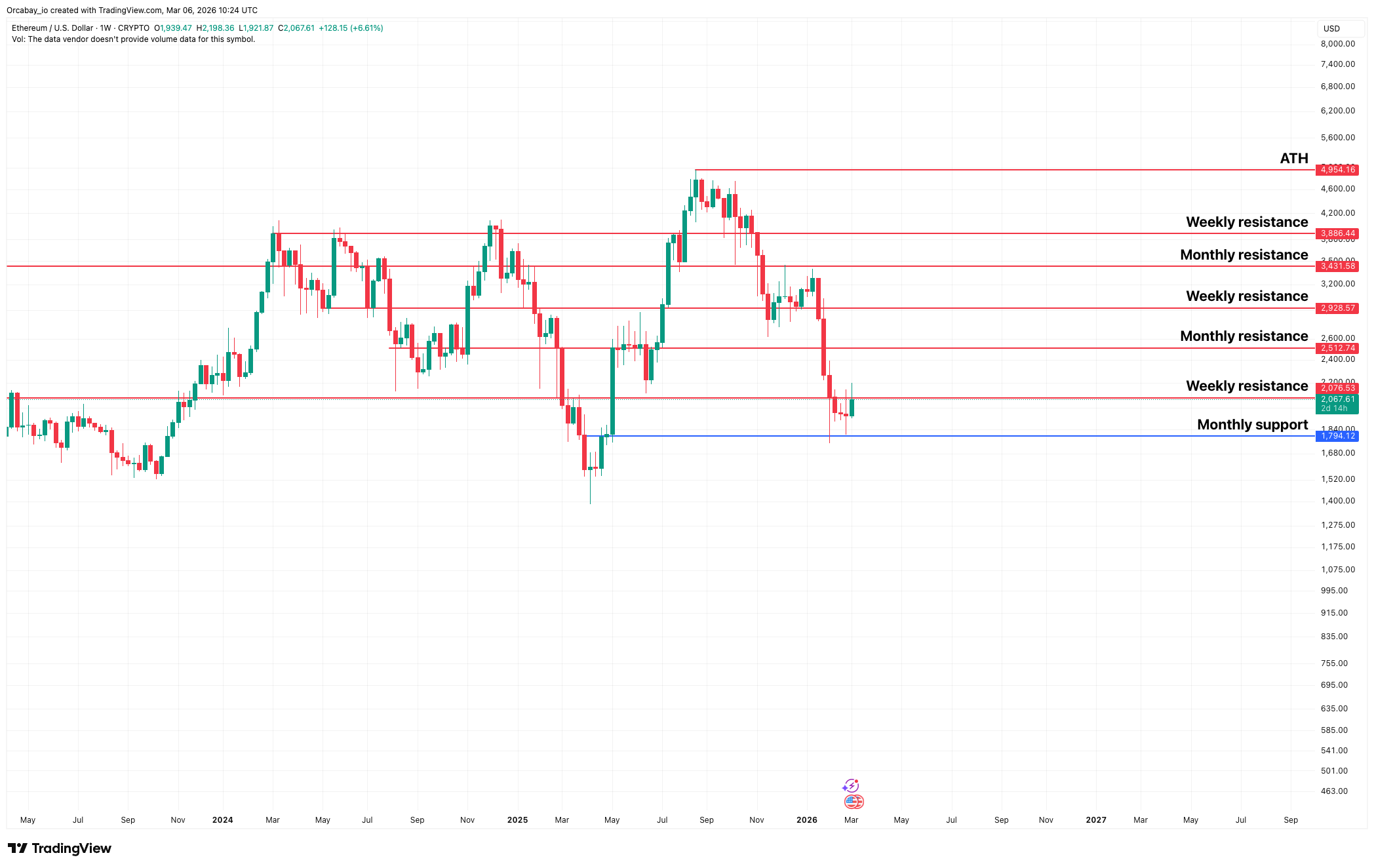
While BTC is pressing against key resistance levels, ETH is still stuck in a broader consolidation range around the $2.3K area without a clean breakout.
From the flow side, the picture also remains weaker compared to Bitcoin. ETH CVD has been mixed across exchanges, with Binance flow recently turning negative again, suggesting spot buyers are still not showing the same conviction seen in BTC.
Coinbase Premium also remains slightly negative, highlighting weaker U.S. spot demand for ETH relative to Bitcoin.
Open interest has started picking up again, but price has not responded meaningfully yet. That suggests positioning is building, though without strong momentum confirmation so far.
Overall:
Historically, ETH tends to lag BTC early in rallies before rotating higher later in the cycle.
Bitcoin dominance remained at 60.4%.
In traditional markets (weekly):
The total crypto market cap stands at $2.69T up 5.49% from $2.55 trillion last week. Fear & Greed Index is at 47 (Neutral).
Geopolitical Whiplash and Fractured Central Banks
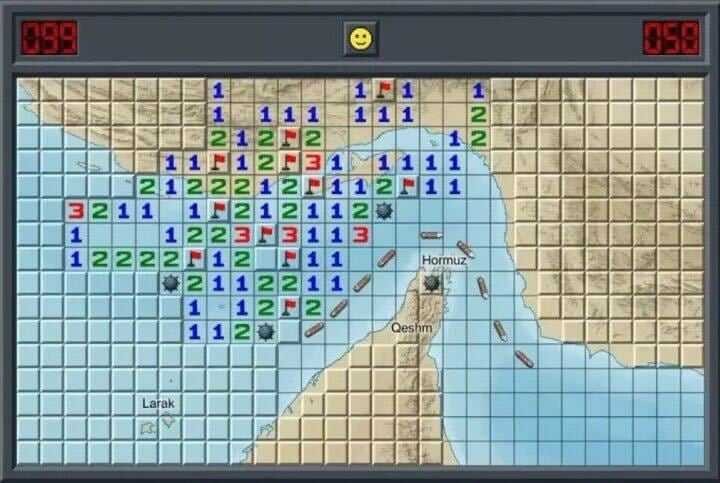
The macroeconomic landscape is currently defined by geopolitical volatility and monetary uncertainty. Tensions in the Middle East have heavily influenced energy markets; earlier U.S. plans to launch “Project Freedom” to escort ships through the Strait of Hormuz caused Brent crude to surge 8.9% near $112.50. However, the recent introduction of a 14-point peace proposal between the U.S. and Iran—and Trump’s pause on the escort plan—has acted as a de-escalation signal, driving oil prices lower and improving global risk appetite.
Meanwhile, central banks are struggling to navigate this inflationary pressure. The FOMC held rates steady at 3.50% to 3.75%, but the decision drew an unusual four dissents from officials. This split reflects a genuinely fractured Fed that is divided on whether the current energy shock is transitory or a structural shift. Compounding these concerns, commodity inflation continues to surge, with the Bloomberg Commodity Index reaching its highest level since February 2013.
Institutional Bids and the $85K Ceiling
Bitcoin is currently exhibiting its most constructive on-chain setup of the year, breaking above key levels such as the True Market Mean ($78.2K) and the Short-Term Holder Cost Basis ($79.1K) to trade in the $80K–$82K range. The asset is now looking toward its next major structural resistance at the Active Realized Price near $85.2K.
A significant driver of this momentum is renewed institutional demand. U.S. Spot ETFs captured $2.6B in inflows during April, and exchange reserves have plummeted to a 7-year low as whales continue accumulating. Further boosting the institutional narrative, Michael Saylor announced during MicroStrategy’s Q1 2026 earnings call that the company may sell some of its Bitcoin to fund dividend payments, leveraging a $2.2 billion tax shield created during earlier pullbacks. In the broader ecosystem, tokenized Real World Assets (RWAs) are exploding, with tokenized U.S. Treasuries hitting $8 billion on Ethereum.
In the derivatives market, Bitcoin has managed to “climb a wall of worry.” Persistent short positioning has resulted in a 66-day streak of negative perpetual funding rates—the longest of this cycle. Additionally, a massive cluster of short gamma positioning around the $82K strike is driving extreme spot sensitivity, meaning small price movements in this zone can trigger outsized hedging reactions from dealers.
The AI Earnings Engine Powers Traditional Markets
Despite the murky macroeconomic backdrop, traditional equities are thriving on the back of relentless artificial intelligence and semiconductor momentum. The S&P 500 and Nasdaq have closed at fresh all-time highs, capping their strongest monthly performances since 2020 following massive Q1 earnings beats from “Magnificent 7” giants like Apple, Alphabet, AWS, and AMD.
This tech exuberance is a global phenomenon. Japan’s stock market surged 6% to an all-time high, led by companies like SoftBank, which saw an 18% daily gain. Private tech markets are also seeing historic valuations; Anthropic’s pre-IPO valuation recently surged to $1.2 trillion, and SpaceX is planning a $55 billion investment into a new semiconductor production facility. However, this rally is increasingly narrow, being carried by a shrinking number of mega-cap names while energy prices diverge from broader equities.
A Fragile Bull Run Tied to the Macro Needle
Both crypto and traditional financial markets are currently riding a wave of exuberance, yet severe cracks lie underneath the surface. Bitcoin is heavily supported by strong ETF inflows, negative funding rates, and dwindling exchange supply. However, the market remains highly reactive and top-heavy.
Ultimately, Bitcoin’s short-term fate is tethered to the broader macro environment. The ongoing stock market rally is spilling over into crypto, meaning if the traditional macro landscape breaks—whether due to a failed U.S.-Iran deal, surging yields, or a reignited energy crisis—Bitcoin will likely suffer a correlated sell-off. Until the Middle East energy shock is fully resolved without stalling the real economy, markets will remain highly susceptible to sudden volatility and headline-driven chop.
We hope you enjoyed this week’s edition of Diary of a Market Maker! Stay tuned for more insights, updates, and market-moving highlights as we continue to keep you informed and entertained in the ever-evolving world of crypto.
In the meantime, follow us on LinkedIn and X (Twitter) for real-time updates and more!
Until next time, happy trading and stay ahead of the curve!
Disclaimer: The information provided in this article is for informational purposes only and does not constitute financial, investment, or other professional advice. All opinions expressed herein are solely those of the author and do not represent the views or opinions of any entity with which the author may be associated. Investing in financial markets involves risk, including the potential loss of principal. Readers should perform their own research and consult with a licensed financial advisor before making any investment decisions. Past performance is not indicative of future results.

Jakob, an experienced specialist in the field of cryptocurrency market making, boasts an extensive international presence. With Orcabay, he has skillfully managed major operations and deals for a wide array of global stakeholders.
The Federal Reserve held rates steady in Jerome Powell’s farewell press conference, while acknowledging that rising energy prices could push near term inflation higher. Bitcoin ($BTC) pulled back from $79K to $76K, while crude oil surged from $96 to $110 following the UAE’s announcement to leave OPEC before retracing to $104. Despite macro uncertainty, traditional markets remain strong, with the S&P 500 and Nasdaq continuing to trade at all time highs.
On the industry side, adoption and institutional activity continue to expand. Meta is rolling out USDC payouts to creators on Solana ($SOL) and Polygon ($MATIC), while Visa’s stablecoin settlement volume has reached a $7B annualized run rate as its pilot expands across multiple blockchains. Prediction markets are also gaining traction, with monthly volume surpassing $25B and the potential launch of the first prediction markets ETFs next week. Meanwhile, Ark Invest increased exposure to Robinhood, reflecting continued interest in crypto linked equities.
Security remains a key concern. Syndicate and Wasabi Protocol were both hit by exploits, while data shows North Korea accounts for 76% of crypto hack losses in 2026, with cumulative thefts exceeding $6B since 2017. On the regulatory front, Gemini secured a Derivatives Clearing Organization license, Polymarket is reportedly seeking CFTC approval to re enter the U.S. market, and Kevin Warsh advanced through the Senate Banking Committee in the process to become the next Federal Reserve chair.
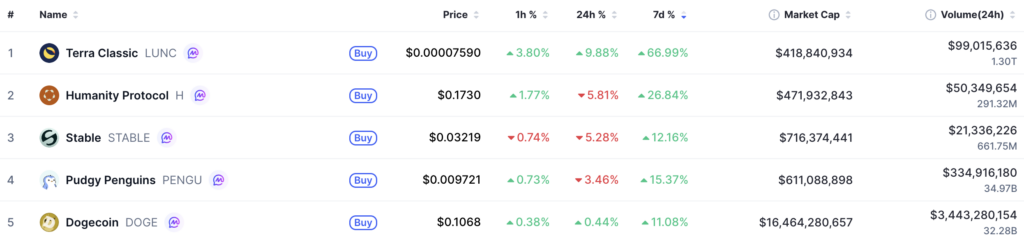
Looking at this week’s performers takes us back to 2022. Terra Classic ($LUNC) led the group with a strong +66.99% weekly gain, as legacy tokens saw renewed speculative interest. Humanity Protocol ($H) followed with a +26.84% increase, maintaining steady momentum. Stable ($STABLE) advanced +12.16% on the week.
Pudgy Penguins ($PENGU) posted a +15.37% weekly rise, reflecting continued activity around the ecosystem. Dogecoin ($DOGE) rounded out the top five with a +11.08% gain.
Pudgy Penguins ($PENGU) posted a +13.44% weekly rise, reflecting continued activity around the project. edgeX ($EDGE) rounded out the top five with a +8.76% gain, holding onto gains following its recent TGE.
According to GMCI, the GMCI 30, which tracks the top 30 cryptocurrencies, is down 1.99% over the past week. The GMCI Mid Cap is down 1.19%, while GMCI Small Cap is down 0.15%. The rest of the sectors:
Total Assets Under Management (AUM) = $102.14 Billion
Weekly Net Inflows = -$440 Million
Total Assets Under Management (AUM) = $13.63 Billion
Weekly Net Inflows = -$570 Million
*The data for BTC / ETH ETFs can vary, so we use Coinglass as our source.
Bitcoin
$BTC is trading around $76K after the Fed held rates steady, still capped below the $78K to $79K resistance zone.
On the flow side, CVD shows heavy selling earlier that is now stabilizing, suggesting the aggressive sell pressure has cooled. At the same time, price holding steady despite negative CVD earlier points to absorption, not weakness.
Open interest has been drifting lower, which signals deleveraging rather than aggressive short buildup. This reduces downside risk from crowded positioning, but also means less fuel for a sharp upside move.
Coinbase Premium recently flipped negative after a strong streak, indicating U.S. spot demand is softening at the margin, even though it had been a key driver before.
RSI is turning higher after the post Fed retrace, showing momentum is rebuilding, but still not at breakout strength.
Overall the setup looks like
Bull case: If BTC reclaims and holds above $78K to $79K, with improving CVD and premium turning positive again, the move likely continues higher with momentum.
Bear case: Failure to break resistance combined with weak spot demand could lead to a pullback, especially if flows roll over again.
Bottom line This is a consolidation under resistance, not rejection yet. The next move will likely be decided by whether real demand steps back in, not leverage.
Ethereum
$ETH is trading around $2.25K after failing to hold the recent push higher, with price now drifting sideways under local resistance.
Structure looks weaker than BTC.
On the flow side, CVD has been trending lower across major venues, showing sustained selling pressure rather than absorption. Unlike BTC, this suggests sellers are still in control.
Open interest has also been declining, pointing to deleveraging and positions being closed, not aggressive new positioning. This removes some downside risk, but also highlights lack of conviction from buyers.
Coinbase Premium has flipped negative again, indicating weak U.S. spot demand, which has been a consistent theme for ETH compared to BTC.
Overall the setup shows • sideways price under resistance • persistent sell pressure in CVD • deleveraging environment • weak spot demand
Bull case If ETH can reclaim higher levels with CVD stabilizing and turning positive, it would signal buyers stepping back in and open the door for continuation.
Bear case Continued negative CVD and weak premium increase the risk of downside, especially if BTC stalls or pulls back.
Bottom line ETH is lagging and lacks strong demand right now. Until flows improve, any upside is likely to remain slow and fragile rather than impulsive.
Bitcoin dominance remained at 60.0%.
In traditional markets (weekly):
The total crypto market cap stands at $2.55 trillion down 1.17 form last week’s 2.58. The Fear & Greed Index is down to 29 (Fear) from 46 (Neutral).
Macroeconomic Contradictions and Geopolitical Friction
The current macroeconomic environment is characterized by stark contradictions, with the S&P 500 and Nasdaq hitting all-time highs despite consumer sentiment plunging to an unprecedented low of 49.8. Inflation is accelerating once again, marked by March PCE printing at 3.5% and core PCE at 3.2%, representing the highest levels since late 2023. A major catalyst for this inflationary pressure is the worsening geopolitical landscape, highlighted by a continued U.S. naval blockade and the collapse of U.S.-Iran negotiations mediated by Pakistan. These supply chain shocks have driven oil prices significantly higher, with Brent crude surging above $120 per barrel.
In response to persistent inflation, the Federal Reserve held rates steady at 3.50% to 3.75%. However, an unexpected hawkish dissent from three voting officials, who pushed to remove easing language, signals that higher-for-longer rates are likely. Consequently, the 10-year Treasury yield climbed back above 4.40%, and the 30-year Treasury yield reached 5% for the first time since July 2025, significantly tightening financial conditions.
Bitcoin and the Digital Asset Dilemma
Bitcoin (BTC) is currently trading in the mid-$75,000s, consolidating above a key support level of $76,000. The asset faces heavy resistance approaching $80,000, driven by a concentration of call options on Deribit that forces market makers to sell into price rallies, alongside persistent sell walls around $80,500 to $82,000.
Despite the resistance, underlying institutional metrics appear robust. U.S. spot Bitcoin ETFs recently logged eight consecutive days of net inflows totaling approximately $2 billion, and exchange reserves have plummeted to a seven-year low, signaling that coins are moving into long-term storage. However, market sentiment reveals this is broadly a “hated rally” driven more by forced short covering and negative funding rates than by genuine macro conviction.
The surge in bond yields presents a major headwind for crypto, as a risk-free 5% return on Treasuries incentivizes capital rotation out of non-yielding risk assets like Bitcoin. Elsewhere in the crypto ecosystem, altcoin correlations are breaking down, and DeFi security is under severe pressure, with the industry suffering ~$624 million in protocol exploits over 30 days, making April the most hacked month in crypto history. On the regulatory front, there is optimism as U.S. crypto legislation progresses, with the Clarity Act narrowing its focus to finalize protections for DeFi and non-custodial developers.
Traditional Finance and the AI Tech Dominance
The traditional stock market is heavily skewed toward artificial intelligence and semiconductors, which now account for a record 41.9% of the S&P 500’s information technology sector market cap. This concentrated AI earnings momentum—led by massive surges from companies like Alphabet—is currently powerful enough to absorb the drag of rising energy costs and keep indexes afloat.
However, tech leadership is showing fractures. Meta erased over $170 billion in market capitalization in its worst daily decline since October 2025, despite posting strong earnings. Beyond U.S. equities, global markets are experiencing heightened volatility; Japan recently intervened in the FX market to prop up the Yen, and South Korea’s total market cap surged 45% year-to-date to overtake the UK as the world’s 8th-largest stock market.
Conclusion: A Fragile Balance
The global financial system is currently walking a tightrope between a relentless AI-driven equity boom and the tightening reality of surging inflation, energy shocks, and hawkish central bank policies.
For the digital asset sector, the coming weeks will serve as the ultimate test of Bitcoin’s macroeconomic identity. If the tech rally falters under the weight of 5% Treasury yields and rising oil prices, Bitcoin’s ability to hold its ground against a Nasdaq sell-off will definitively prove whether it has matured into a true store of value, or if it remains bound to traditional risk-on correlations. Until either the geopolitical tensions ease or central banks officially pivot, both traditional and crypto markets will remain fragile and highly susceptible to sudden volatility.
We hope you enjoyed this week’s edition of Diary of a Market Maker! Stay tuned for more insights, updates, and market-moving highlights as we continue to keep you informed and entertained in the ever-evolving world of crypto.
In the meantime, follow us on LinkedIn and X (Twitter) for real-time updates and more!
Until next time, happy trading and stay ahead of the curve!
Disclaimer: The information provided in this article is for informational purposes only and does not constitute financial, investment, or other professional advice. All opinions expressed herein are solely those of the author and do not represent the views or opinions of any entity with which the author may be associated. Investing in financial markets involves risk, including the potential loss of principal. Readers should perform their own research and consult with a licensed financial advisor before making any investment decisions. Past performance is not indicative of future results.

Jakob, an experienced specialist in the field of cryptocurrency market making, boasts an extensive international presence. With Orcabay, he has skillfully managed major operations and deals for a wide array of global stakeholders.
Bitcoin ($BTC) broke out of its local range this week, rallying toward $79K and now sitting roughly 18% above its March lows. Traditional markets mirrored the move, with the S&P 500 returning to all time highs, while crypto linked equities also saw strong upside. Strategy ($MSTR) gained 10%, Circle ($CRCL) rose 9%, and Coinbase ($COIN) added 6%, with miners MARA Holdings ($MARA) and Riot Platforms ($RIOT) up 6%–7%. The move comes as the U.S.–Iran situation shifts into a fragile stalemate, with the U.S. extending the ceasefire while negotiations remain unresolved.
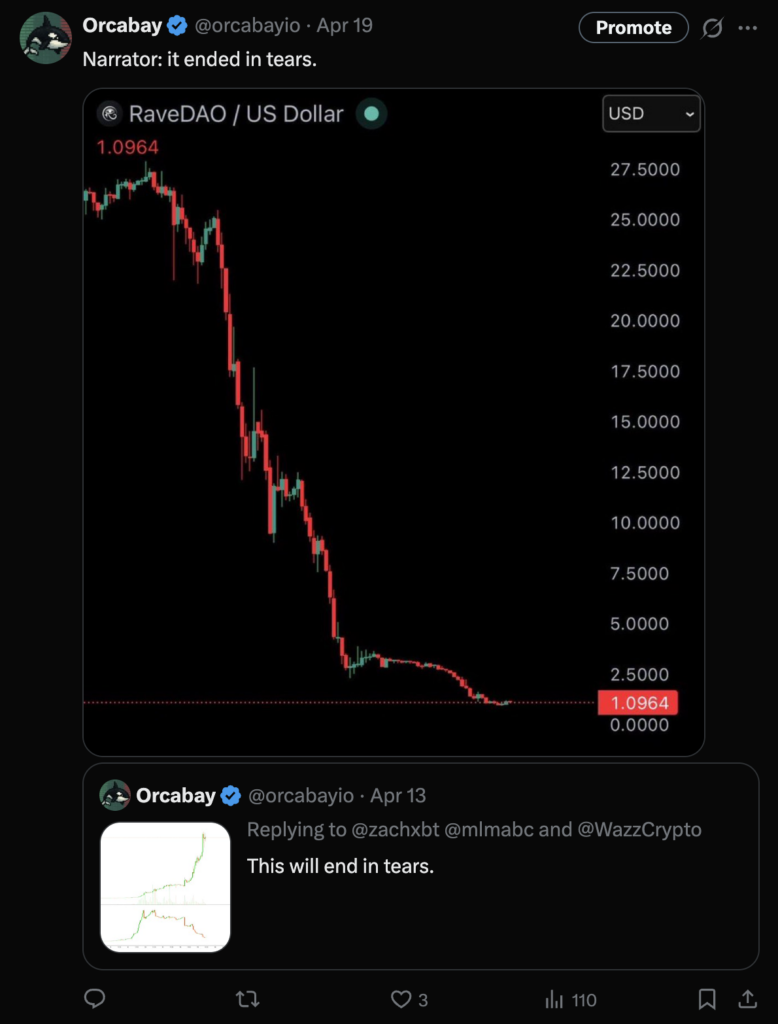
On the industry side, markets were shaken by the largest exploit of 2026, with roughly $292M drained from Kelp DAO, triggering broader DeFi stress and exposing Aave to potential losses of up to $230M. But exploits were not the only concern this week. Rug pulls and questionable price action also became a major talking point, with RaveDAO collapsing and wiping out $6.6B in value. In a widely shared summary of the RAVE 95% price drop, ZachXBT also pointed to several other tokens with highly questionable recent price action, including SIREN, MYX, COAI, M, PIPPIN and RIVER. Despite this, institutional activity remained strong, with Strategy adding $2.5B in Bitcoin, BitMine acquiring over 100K ETH, and a Trump backed American Bitcoin stock surging after the firm activated 11K BTC miners.
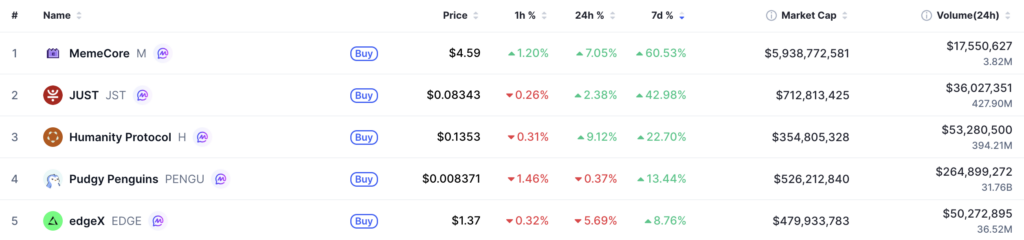
MemeCore ($M) led the group with a strong +60.53% weekly gain, continuing its upward momentum. JUST ($JST) followed with a +42.98% increase, extending its recent trend higher. Humanity Protocol ($H) advanced +22.70%, maintaining steady performance throughout the week.
Pudgy Penguins ($PENGU) posted a +13.44% weekly rise, reflecting continued activity around the project. edgeX ($EDGE) rounded out the top five with a +8.76% gain, holding onto gains following its recent TGE.
According to GMCI, the GMCI 30, which tracks the top 30 cryptocurrencies, is up 0.94% over the past week. The GMCI Mid Cap is down 1.37%, while GMCI Small Cap is down 1.70%. The rest of the sectors:
Total Assets Under Management (AUM) = $102.14 Billion
Total Assets Under Management (AUM) = $14.20 Billion
*The data for BTC / ETH ETFs can vary, so we use Coinglass as our source.
Bitcoin
$BTC broke out of the local range but got rejected near $80K, failing to hold the breakout and pulling back.
Despite that, the underlying demand tells a different story. Coinbase Premium has been positive for 15 consecutive days since April 8, showing consistent U.S. spot buying supporting the move.
From the flow side, CVD remains elevated, meaning buyers are still active even after the rejection. At the same time, open interest is rebuilding, suggesting positioning is coming back after the earlier flush.
Overall the setup shows:
If price stabilizes and reclaims highs, this rejection can turn into continuation rather than distribution.
Ethereum
$ETH is trying to stabilize around $2.3K after a prolonged downtrend, but the structure is still fragile. Price has been grinding higher, yet it hasn’t broken any major higher timeframe levels, so this looks more like a relief move than a confirmed reversal.
From the flow side, the picture is mixed.
CVD has recently turned positive, showing buyers stepping in, but the move lacks consistency across venues and already started to fade on some exchanges.
At the same time, open interest is rising, which suggests new positioning is building into this bounce rather than it being purely spot driven.
is slightly positive, but not strong enough to signal aggressive U.S. demand.
Overall the setup shows:
Unless ETH reclaims key levels with stronger spot support, this still looks like a bounce within a broader weak structure, not a full trend shift.
Bitcoin dominance increase to 60.0%.
In traditional markets (weekly):
The total crypto market cap stands at $2.58 trillion. The Fear & Greed Index is up to 46 (Fear).
The Geopolitical Blockade and Stagflationary Reality
Following a brief 24 hour reopening, the Iranian Revolutionary Guard Corps shut the Strait of Hormuz back down, with Iranian gunboats firing on commercial vessels and the United States maintaining a strict naval blockade. This binary geopolitical escalation has sent Brent crude recovering above $95 per barrel.
The structural damage of a prolonged closure is compounding daily, threatening to entrench a stagflationary environment. Central banks are paralyzed by this energy driven inflation. The Federal Reserve cannot cut rates into rising inflation, while the United Kingdom ten year bond yield is blowing up toward 5 percent. Capital preservation remains paramount, as global central banks now hold roughly 38,666 tons of gold, while total sovereign and corporate bond issuance is projected to hit a record $28.8 trillion.
Spot Exhaustion and Derivative Coiling
Despite macroeconomic headwinds, Bitcoin is exhibiting a narrow, derivative skeptical bid. The asset briefly approached $79,388 before easing to $77,794, standing out as the only major digital asset in positive territory while Ethereum and Solana faded on profit taking.
From an on chain perspective, Bitcoin has reclaimed the True Market Mean at $78,100, signaling a transition from deep bear market conditions. However, the market faces a formidable supply wall at the Short Term Holder Cost Basis of $80,100. Pushing toward $80,000 places over 54 percent of recent buyers into profit, a threshold that historically triggers peak distribution. This is corroborated by Short Term Holder Realized Profit spiking to $4.4 million per hour, nearly three times the historical warning threshold for a local top
The CryptoQuant Bull Score Index recently flipped to a neutral 50 for the first time since the $126,000 peak, indicating improving network conditions. Yet, history offers a severe warning, as a similar neutral reading in March 2022 preceded a deep capitulation event.
Derivatives data paints a picture of extreme compression. Funding rates have remained negative for roughly 47 consecutive days, representing one of the longest stretches of bearish positioning on record. Implied volatility continues to drift lower, with 30 day realized volatility compressing to 40.7 percent. Crucially, a massive concentration of negative dealer gamma sits in the $75,000 region. While the heavy short bias provides fuel for an upside squeeze, a slide below $76,000 risks accelerating downside hedging flows.
Underneath this fragile derivative structure, institutional accumulation remains aggressive. Spot exchange traded funds generated $1.1 billion in net inflows last week, pushing BlackRock holdings to a record 806,700 BTC. MicroStrategy has accumulated 815,061 BTC, bringing its $61.5 billion portfolio back to breakeven. The decentralized finance sector is also expanding violently, with total value locked crossing $100 billion and stablecoin market capitalization breaching $320 billion.
Corporate Divergence and Artificial Intelligence Mindshare
Traditional finance is experiencing a profound rotation into artificial intelligence infrastructure. The Taiwan stock market capitalization surged to $4.14 trillion, surpassing the United Kingdom, driven almost entirely by semiconductor exports. Simultaneously, OpenAI pre IPO instruments trading on chain imply a record $1 trillion valuation. Tesla also demonstrated resilience, surging 5 percent following stronger than expected first quarter earnings.
However, retail risk appetite shows extreme regional divergence. While United States margin debt dropped by $32 billion to $1.22 trillion, South Korean margin loans jumped to a record $23 billion. In the digital asset equity proxy space, distress is materializing, highlighted by Pantera Capital urging Satsuma Technology to liquidate its remaining Bitcoin holdings after a 99 percent share collapse.
The Terminal Equilibrium
The market is currently trapped in a tight liquidity sandwich, pinned between an uncompromising geopolitical timeline and a massive overhead supply ceiling. Bitcoin has proven its resilience, maintaining an elevated Sharpe ratio while equities whipsaw on Hormuz headlines.
The immediate forward trajectory depends entirely on spot demand absorption. A clean breakout above the $80,100 short term holder cost basis is required to flip overhead supply into structural support. Conversely, if organic bid absorption fails to digest the $4.4 million per hour profit taking, the market will likely slide below $76,000, triggering the negative gamma pocket at $75,000 and forcing a violent liquidation event. Patience and capital preservation remain the defining strategies in this catalyst driven regime.
We hope you enjoyed this week’s edition of Diary of a Market Maker! Stay tuned for more insights, updates, and market-moving highlights as we continue to keep you informed and entertained in the ever-evolving world of crypto.
In the meantime, follow us on LinkedIn and X (Twitter) for real-time updates and more!
Until next time, happy trading and stay ahead of the curve!
Disclaimer: The information provided in this article is for informational purposes only and does not constitute financial, investment, or other professional advice. All opinions expressed herein are solely those of the author and do not represent the views or opinions of any entity with which the author may be associated. Investing in financial markets involves risk, including the potential loss of principal. Readers should perform their own research and consult with a licensed financial advisor before making any investment decisions. Past performance is not indicative of future results.

Jakob, an experienced specialist in the field of cryptocurrency market making, boasts an extensive international presence. With Orcabay, he has skillfully managed major operations and deals for a wide array of global stakeholders.
Crypto and equities rallied sharply on Wednesday after President Trump announced a provisional ceasefire agreement with Iran, pushing Bitcoin ($BTC) back above $71K while roughly $1.5 trillion was added to the U.S. stock market in a single session. Trump later stated the U.S. would work closely with Iran and discuss tariffs and sanctions relief, with reports suggesting Iran may accept tariffs in cryptocurrencies. However, with continued reports of bombing in the region, questions remain about how durable the ceasefire agreement actually is.
On the industry side, infrastructure and payments developments continued to accelerate. Circle launched a USDC payments platform allowing users to pay without directly holding stablecoins, while CME Group announced plans to introduce 24/7 crypto derivatives trading starting May 29, including new Avalanche ($AVAX) and Sui ($SUI) contracts. Polymarket revealed plans for a major trading engine overhaul and native stablecoin, while Polygon Labs is reportedly seeking to raise up to $100 million for a stablecoin payments business.
Flows and regulatory developments remain mixed. Spot Bitcoin ETFs saw net outflows despite $34 million of inflows into Morgan Stanley’s product, while the crypto card sector reached $600 million in monthly transaction volume as USDC continues gaining share against USDT. On the policy front, the U.S. Treasury unveiled proposed stablecoin rules targeting money laundering and sanctions risks, South Korea signaled plans to regulate RWAs and stablecoins within existing financial frameworks, and the Blockchain Association challenged Citadel over the SEC’s proposed innovation exemption.
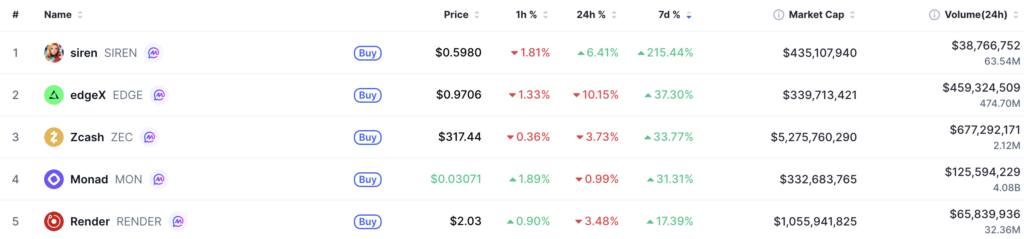
Siren ($SIREN) led the group with a remarkable +215.44% weekly gain, significantly outperforming the broader market. edgeX ($EDGE) followed with a +37.30% increase, continuing strong momentum after its recent TGE, with the token up roughly 60% since launch.
Zcash ($ZEC) advanced +33.77% as the privacy narrative regained attention across the market. posted a +31.31% weekly rise, maintaining steady demand following recent ecosystem growth. Render ($RENDER) rounded out the top five with a +17.39% gain.
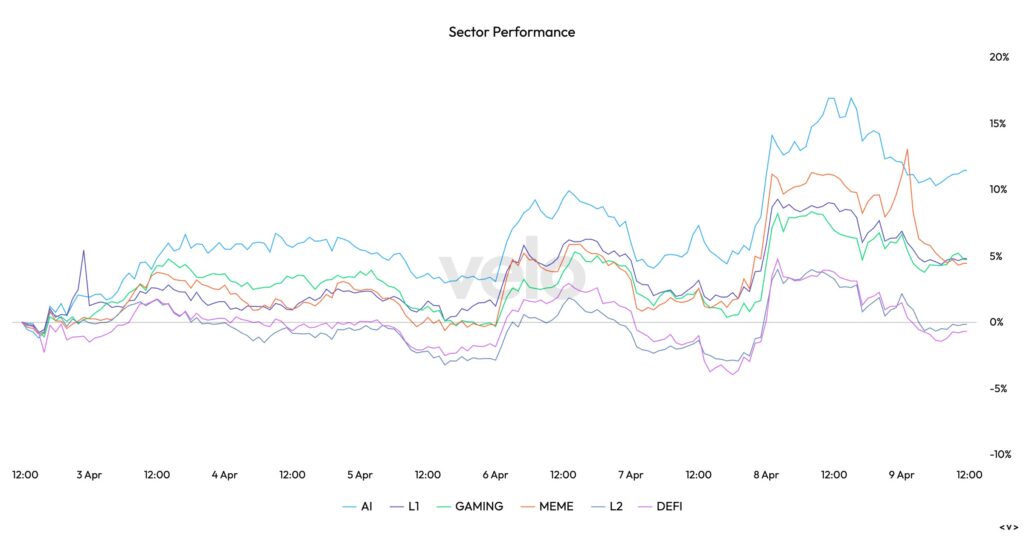
According to GMCI, the GMCI 30, which tracks the top 30 cryptocurrencies, is up 4.80% over the past week. The GMCI Mid Cap is up 4.36%, while GMCI Small Cap is up 3.37%. The rest of the sectors:
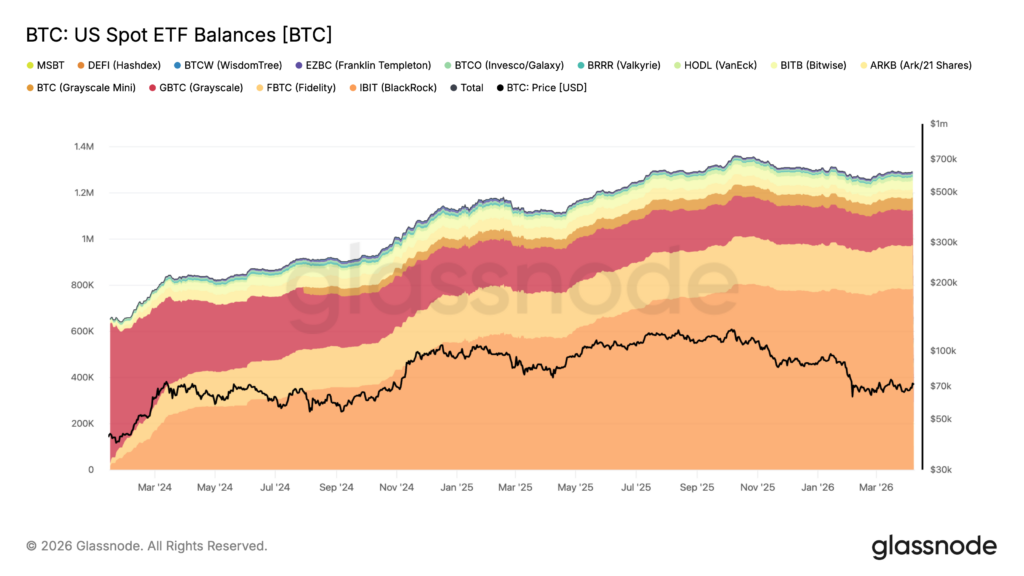
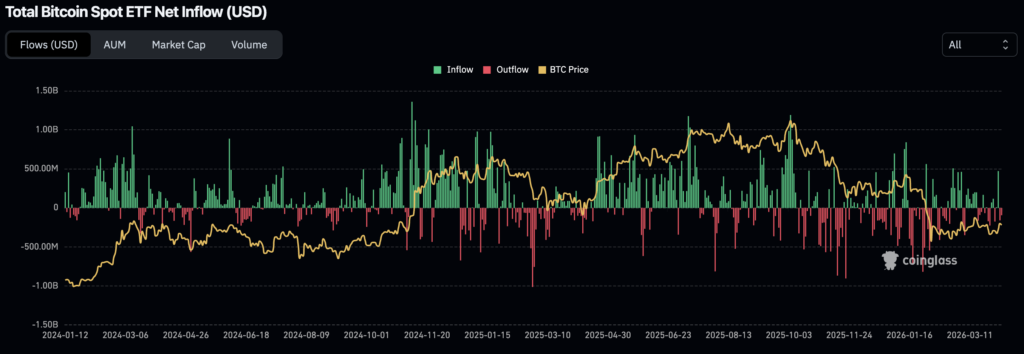
Total Assets Under Management (AUM) = $92.56 Billion
Weekly Inflows = +$2.90 Billion
Total Assets Under Management (AUM) = $13.23 Billion
Weekly Inflows = +$180Million
*The data for BTC / ETH ETFs can vary, so we use Coinglass as our source.
Bitcoin
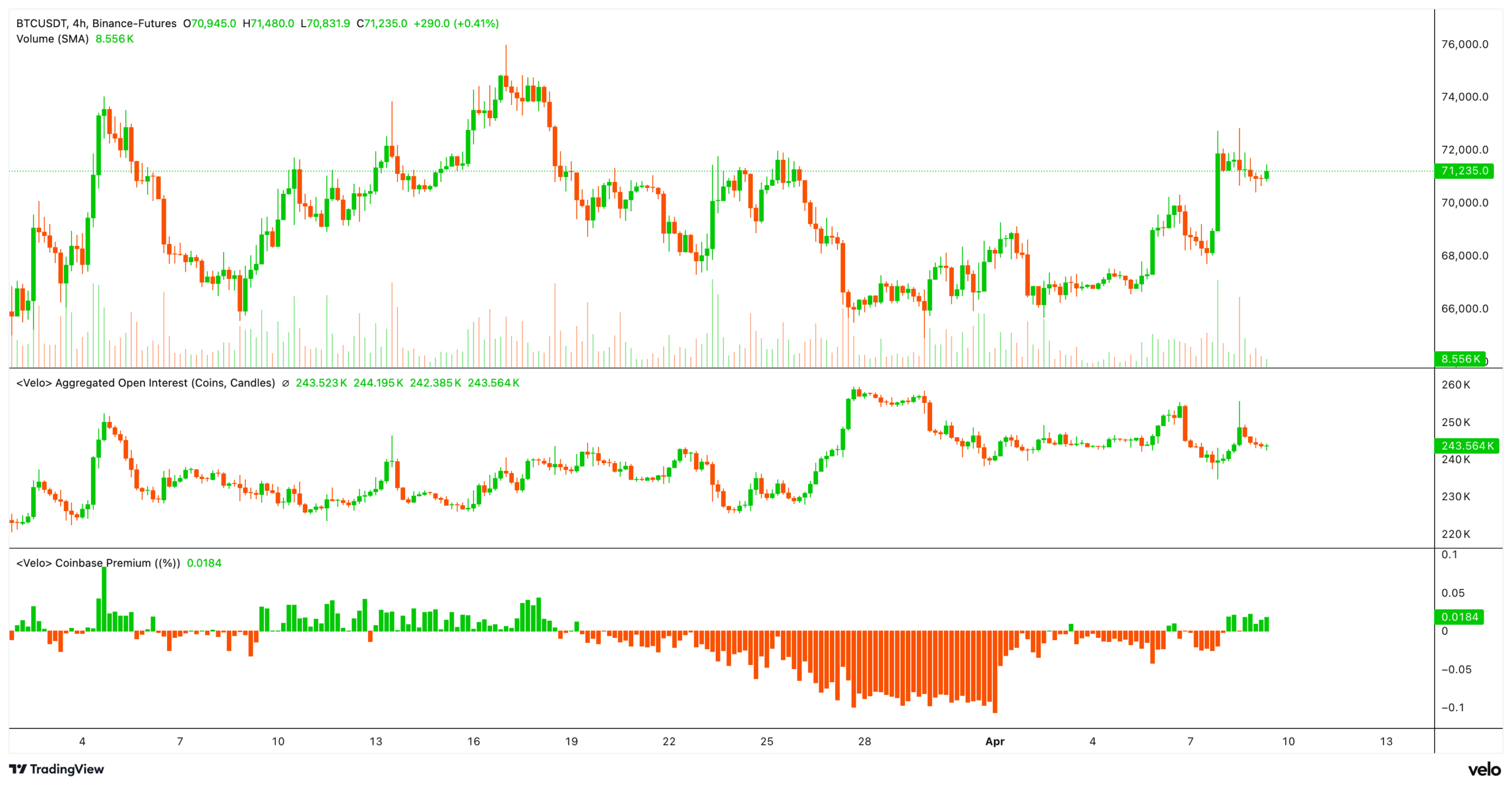
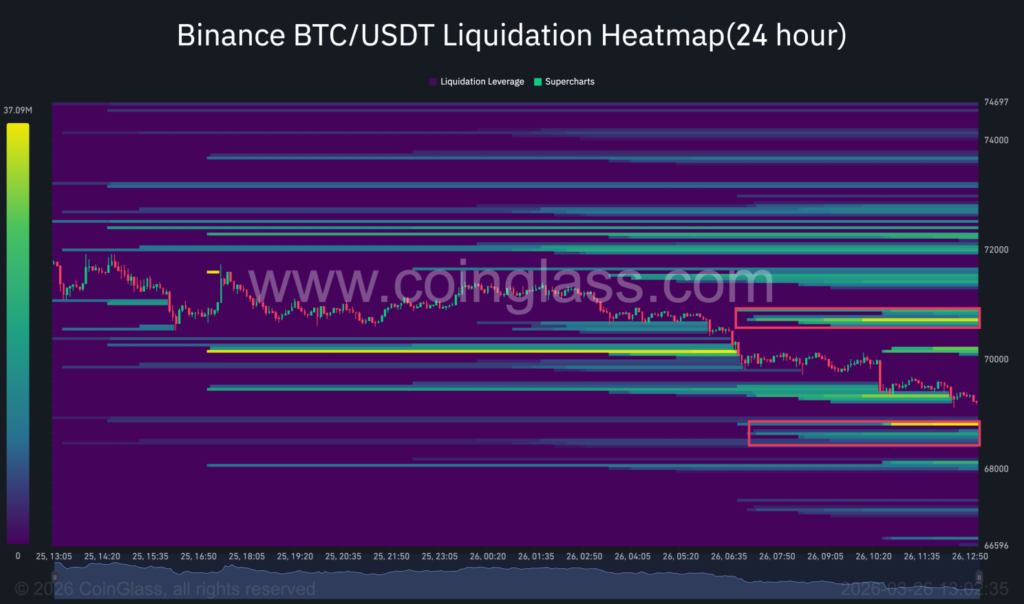
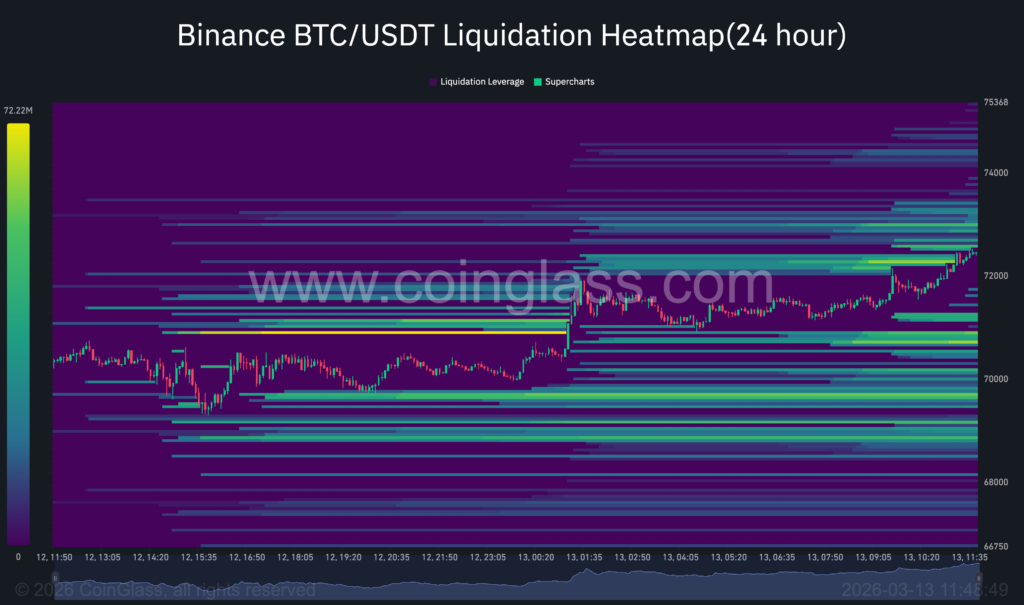
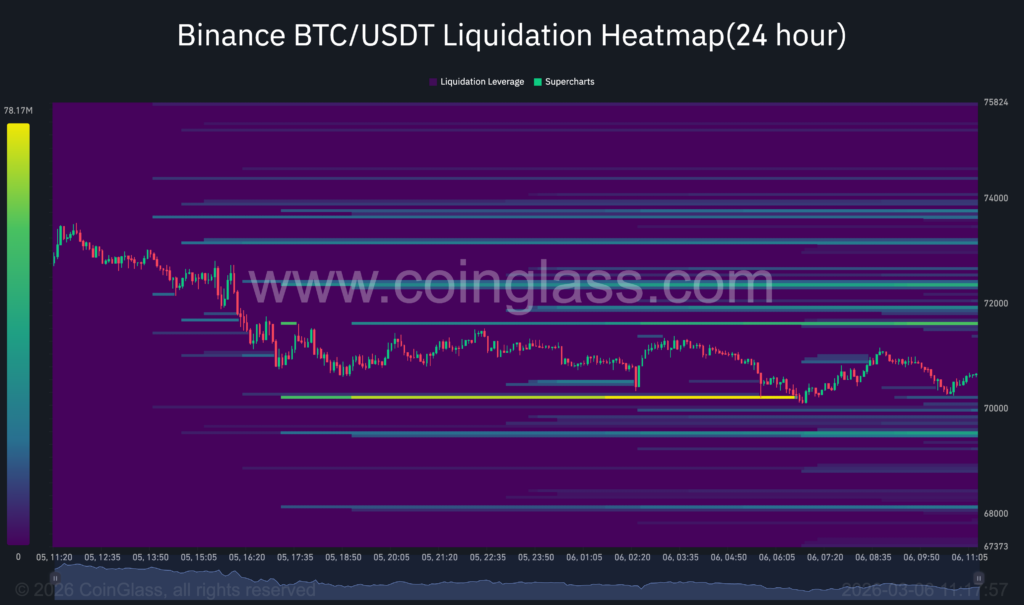
$BTC pushed toward the top of the range near $72K after buyers stepped in on news of a potential U.S.–Iran ceasefire, which triggered a broad risk-on move across global markets.
The move appears to be driven largely by positioning rather than strong structural demand. CVD across major venues turned strongly positive, showing aggressive buyers entering the market. At the same time, open interest has not expanded meaningfully, suggesting the move was driven by short covering and liquidations rather than fresh long positioning.
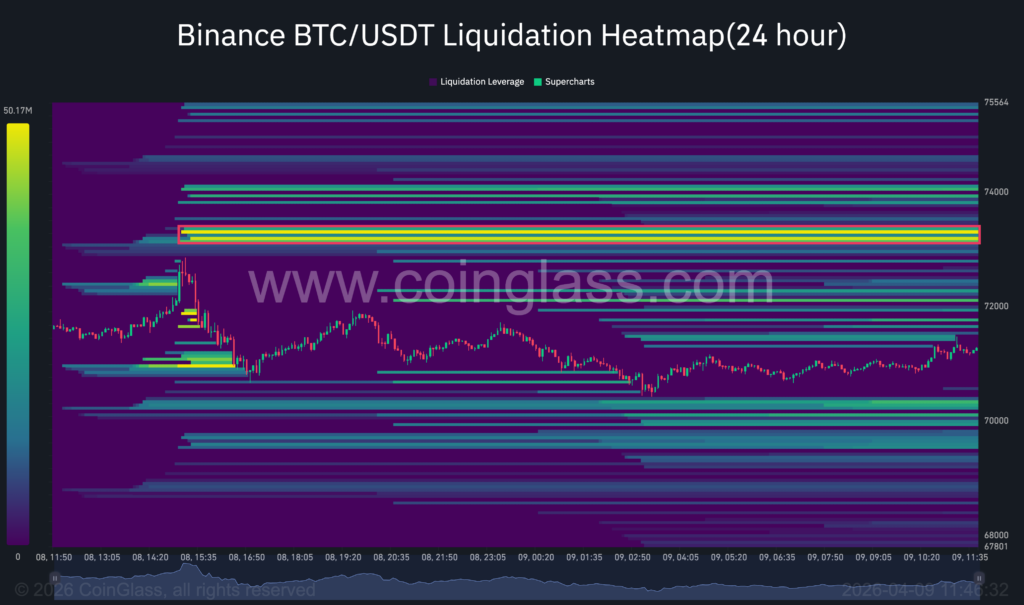
Large amounts of short positions were indeed liquidated during the rally, amplifying the upside move as shorts were forced to buy back BTC.
For now the structure still looks like a relief bounce within the broader range, with the market waiting to see how the geopolitical situation develops. A sustained breakout would likely require new leverage entering alongside stronger spot demand, otherwise price may continue to trade inside the existing range.
Ethereum
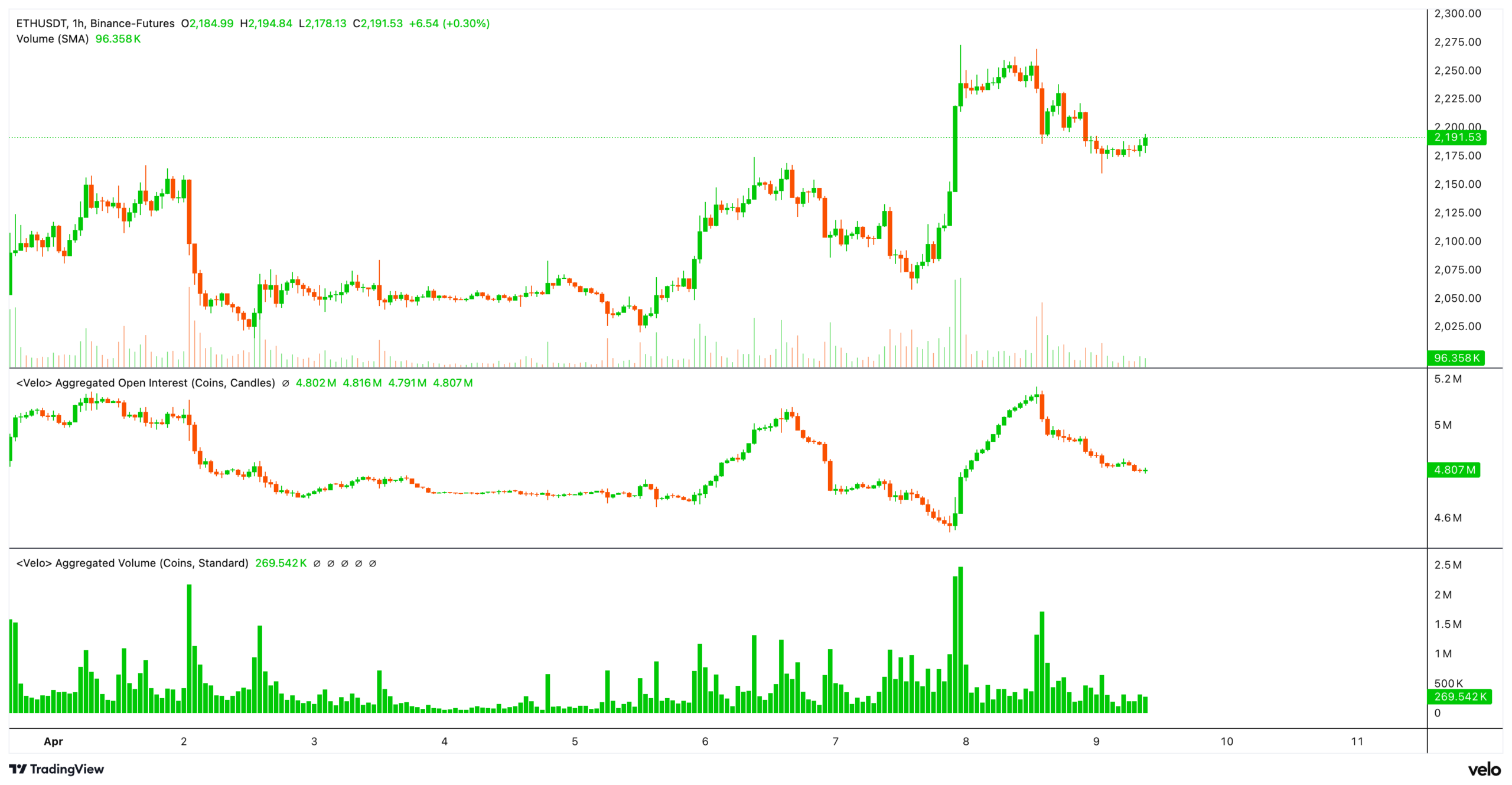
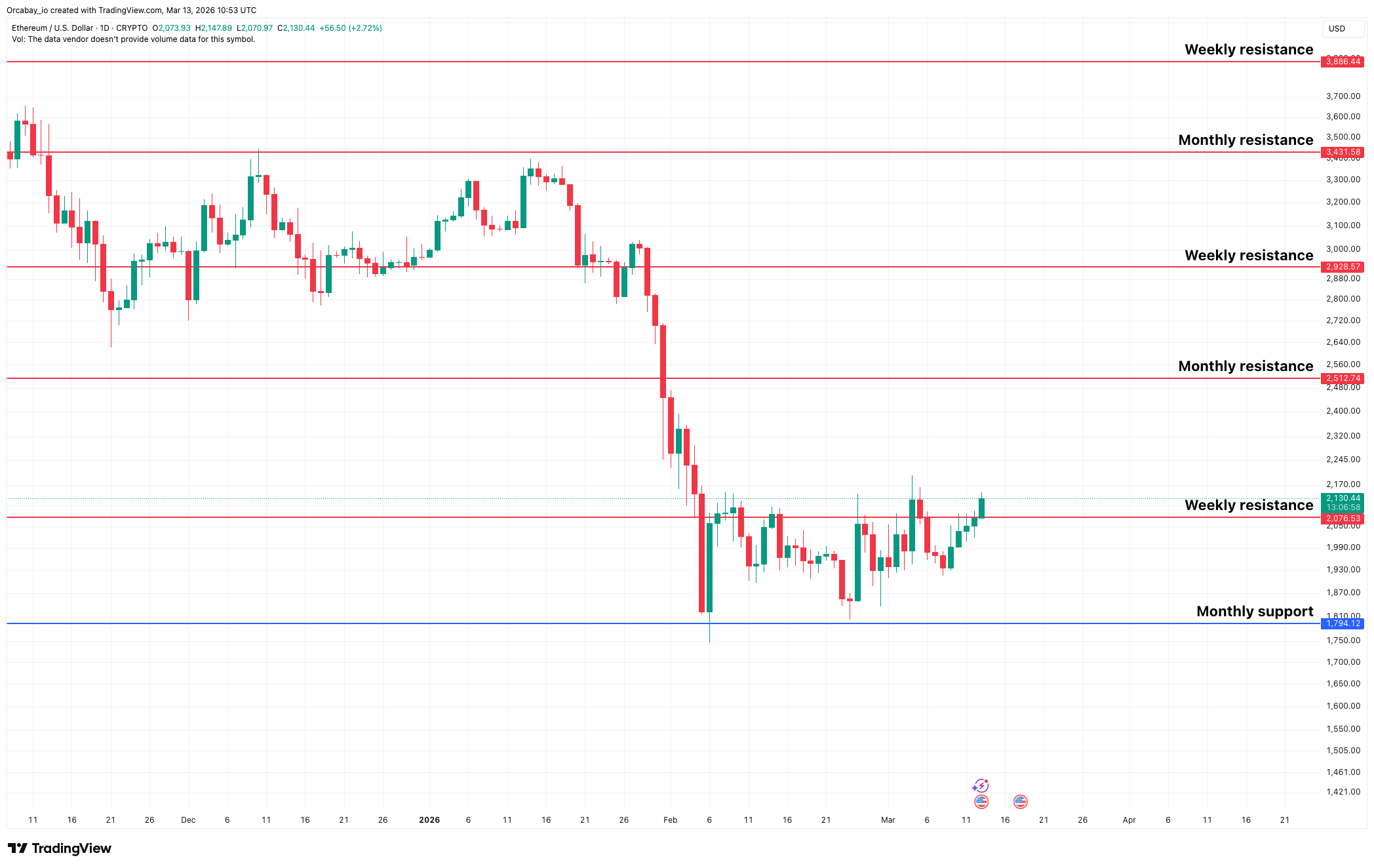
$ETH continues to grind higher after defending the $2K support zone, which aligns closely with weekly support around $2,075. Price has been slowly recovering within the range and is now pushing higher after the recent bounce.
CVD turned strongly positive across major venues, indicating aggressive buyers lifting offers. However, open interest declined slightly during the move, suggesting the rally was driven more by short covering and position cleanup rather than fresh long leverage entering the market.
A more convincing bullish continuation would require:
That combination would indicate new longs entering the market rather than shorts simply closing positions, increasing the probability of a move toward the $2.5K resistance zone.
For now the move still looks like a relief bounce within the broader range structure.
Bitcoin dominance increase to 59.0% (+1.0% weekly).
In traditional markets:
The total crypto market cap stands at $2.42 trillion, up +6.13% from $2.28 trillion. The Fear & Greed Index is up to 14 (Extreme Fear), from last week’s 12 (Extreme Fear).
The Geopolitical Ceasefire and Stagflationary Tensions
The global macroeconomic framework is currently navigating a fragile geopolitical pause following the announcement of a two week ceasefire between the United States and Iran. This truce is explicitly tied to the reopening of the Strait of Hormuz, prompting a sharp retracement in energy markets where crude oil dropped from intraday highs near $118 per barrel down toward the $93 to $97 range. However, structural frictions persist as Iran plans to mandate crypto denominated transit fees of approximately $1 per barrel for oil tankers, directly linking global energy flows to digital asset rails. Furthermore, Iranian media reports indicate transit is being restricted to roughly 12 ships per day, underlining the precarious nature of this de escalation.
While the United States Economic Surprise Index has climbed to 0.338, the highest level since October 2023, the underlying composition is deteriorating. The ISM Services PMI fell to 54.0, missing expectations, with its employment sub index plunging deep into contraction territory at 45.2. Concurrently, the number of Americans unemployed for 15 weeks or longer has surged to 3.3 million, marking the highest level since September 2021. In response to this uncertainty, global central banks are maintaining defensive postures, purchasing 19 tonnes of gold in February to mark their 23rd consecutive month of accumulation.
Spot Exhaustion and Derivative Compression
Digital assets absorbed the geopolitical relief, with Bitcoin staging a bounce from the $67,000 liquidity pocket to reclaim the $72,000 threshold. However, the underlying market structure reveals a distinct lack of conviction. Spot activity remains exceptionally soft, with 30 day relative volume on Binance sitting below the 1.0 baseline, indicating this recovery is largely driven by derivative positioning rather than organic spot demand. This anemic network activity is further evidenced by Bitcoin transaction fees collapsing to near 2011 lows of roughly 2 to 3 BTC per day.
The options market is currently pricing in a significant volatility compression. Implied volatility has moved lower across the curve, with short dated tenors dropping into the low 40s and the six month tenor hovering near 45 percent. Despite this compression, 25 delta skew remains firmly tilted toward puts, reflecting a persistent defensive bias where institutional participants are willing to pay a premium for downside protection. Dealer gamma positioning has evolved to provide local support, with a long gamma pocket forming between $69,000 and $71,500. However, the upside remains capped by severe on chain resistance. Price action is currently trapped beneath the True Market Mean at $78,000 and the critical Short Term Holder Cost Basis at $81,600. Until the market can decisively reclaim this cost basis, the asset remains structurally within a bear market value zone.
Institutional Plumbing and Equity Divergence
Underneath the surface of cautious spot markets, traditional finance is aggressively expanding its digital asset infrastructure. The FDIC has proposed draft guidelines for banks issuing stablecoins, providing critical regulatory scaffolding by clarifying that tokenized deposits will retain their status as traditional deposits. This institutionalization is accelerating across multiple fronts, highlighted by Morgan Stanley launching Wall Street’s first bank led Bitcoin exchange traded fund. Additionally, Amazon Web Services has open sourced an architecture that bridges SWIFT messaging directly to on chain settlement via Chainlink, structurally intertwining legacy financial plumbing with decentralized rails.
Conversely, traditional equities are exhibiting deep internal divergence and systemic stress. Retail speculation has collapsed, with daily net call option purchases by retail investors plummeting to their lowest levels since January 2024. The portfolios of the wealthiest investors are also showing weakness, as the ratio tracking billionaire stock holdings against the S&P 500 has fallen to its lowest point since April 2025. Credit stress continues to fracture the commercial real estate sector, with commercial mortgage backed securities delinquencies unexpectedly soaring back to levels not seen since the Covid liquidity crisis.
The Fragile Equilibrium
The current market regime is defined by a highly reactive, headline driven equilibrium. The geopolitical ceasefire has provided a temporary reprieve for risk assets, but the structural foundations of a durable bull market remain absent. With futures volumes contracting and implied volatility compressing, the market is trapped in a low engagement consolidation phase.
Until sustained spot demand materializes to absorb the heavy distribution walls clustered overhead, rallies will likely remain fragile and susceptible to sudden liquidation sweeps. Participants should expect continued range bound chop as traditional capital continues to build out compliant on chain rails while navigating a deteriorating macroeconomic and labor landscape.
We hope you enjoyed this week’s edition of Diary of a Market Maker! Stay tuned for more insights, updates, and market-moving highlights as we continue to keep you informed and entertained in the ever-evolving world of crypto.
In the meantime, follow us on LinkedIn and X (Twitter) for real-time updates and more!
Until next time, happy trading and stay ahead of the curve!
Disclaimer: The information provided in this article is for informational purposes only and does not constitute financial, investment, or other professional advice. All opinions expressed herein are solely those of the author and do not represent the views or opinions of any entity with which the author may be associated. Investing in financial markets involves risk, including the potential loss of principal. Readers should perform their own research and consult with a licensed financial advisor before making any investment decisions. Past performance is not indicative of future results.

Jakob, an experienced specialist in the field of cryptocurrency market making, boasts an extensive international presence. With Orcabay, he has skillfully managed major operations and deals for a wide array of global stakeholders.
Every trade you make goes through a liquidity mechanism. That mechanism determines your spread, your slippage, your order size fulfillment, your final price, and who you trade against. Every mechanism creates different incentives for the actors around your trade — market makers, institutions, pools, and retail all behave differently depending on the rules of the game.
There are three dominant models in crypto today: the Central Limit Order Book (CLOB), the Automated Market Maker (AMM), and Request for Quote (RFQ). Understanding the difference is understanding where value leaks — or stays in your pocket.
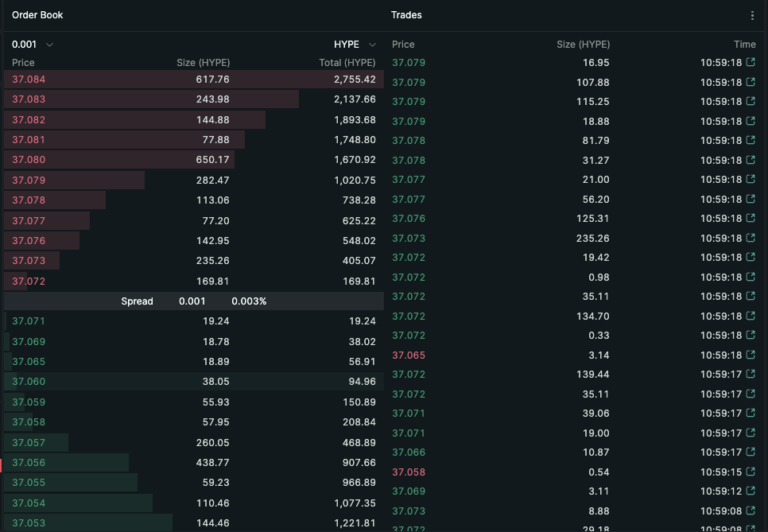
A Central Limit Order Book (CLOB) is the most common liquidity mechanism in both traditional finance and crypto. Market makers, LPs, and traders post resting bids and asks into a public book. NYSE, Coinbase, Kraken, Binance and a majority of other CEXs operate on this model — and on-chain, Hyperliquid brings CLOB infrastructure to DeFi.
Two roles define the CLOB:
The full order book is publicly visible at all times, giving traders complete transparency into available liquidity and price depth.
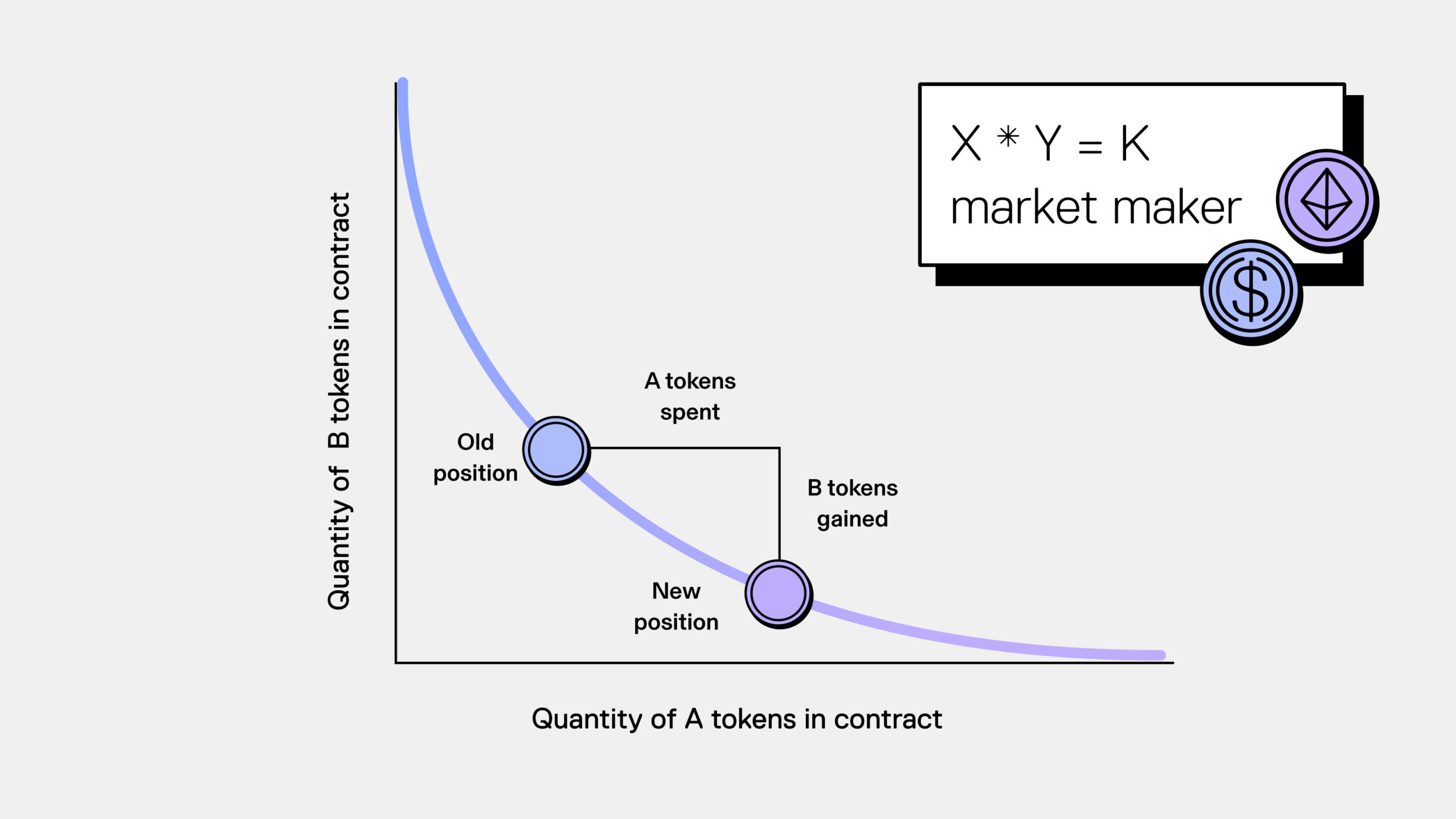
An Automated Market Maker (AMM) replaces the order book with a smart contract that holds a pool of assets and prices trades algorithmically. There are no market makers, no resting orders — just a pool and a formula. Uniswap, Curve, and Bancorhttps://bancor.network/ are the most widely used AMMs in DeFi.
Traders swap directly against the pool. LPs deposit assets to provide liquidity and earn yield on trading fees. Arbitrageurs monitor the pool continuously and trade against it whenever prices drift from fair value on other venues — this is what keeps AMM prices aligned with the broader market.
The core pricing formula is X · Y = K. The product of the two asset quantities in the pool must remain constant. The more you buy, the higher the price per token — slippage is not an edge case, it is the mechanism itself.
*MEV (Maximal Extractable Value) and sandwich attacks deserve particular attention. When you submit a swap, your transaction sits in the public mempool before it executes. MEV bots monitor this queue and insert trades ahead of yours — buying before your buy, selling into your execution, and pocketing the difference at your expense. This extraction happens at scale and is a persistent, invisible cost for AMM traders.
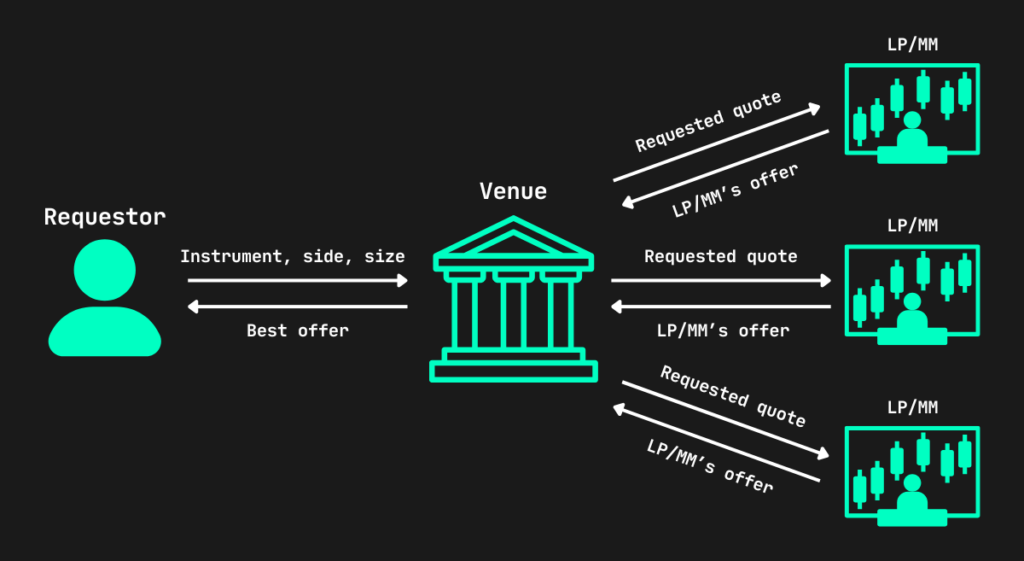
Request for Quote (RFQ) is a liquidity mechanism that works like a blind auction. Instead of hitting an order book or swapping against a pool, the trader specifies an asset and size and requests prices from multiple market makers directly. Those market makers compete to offer the best price — without seeing each other’s quotes.
The best offer wins. Price is locked at the moment of acceptance — no slippage, no frontrunning, and full order size filled. RFQ is used by Ostium, Hashflow, Paradigm, CoW Protocol, and 1inch Fusion, among others. It is primarily used by larger traders and institutions, though on-chain RFQ protocols are beginning to bring this mechanic to a wider audience.
On-chain RFQ is still early but growing fast. Protocols like CoW Protocol and 1inch Fusion run competitive quote auctions on-chain, giving retail traders access to a mechanism previously reserved for institutional block trading.
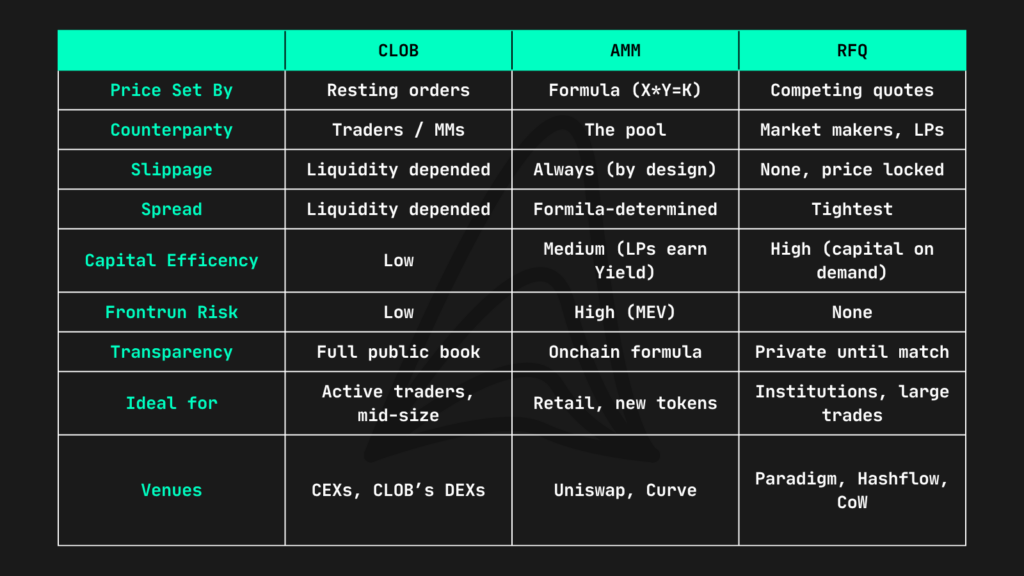
CLOB, AMM, and RFQ are three different answers to the same question: how do you match buyers and sellers efficiently? Each has tradeoffs. Each serves a different type of trader.
The CLOB is best for active traders who want transparency and control in liquid markets.
The AMM is best for retail traders and long-tail tokens where permissionless liquidity matters more than execution quality.
RFQ is best for large or complex trades where price certainty and full fill are the priority.
The mechanism is never neutral. It determines who profits from your trade and who pays for the infrastructure. Understanding which model you are trading within is the first step to understanding where your execution costs are actually coming from.
Disclaimer: The information provided in this article is for informational purposes only and does not constitute financial, investment, or other professional advice. All opinions expressed herein are solely those of the author and do not represent the views or opinions of any entity with which the author may be associated. Investing in financial markets involves risk, including the potential loss of principal. Readers should perform their own research and consult with a licensed financial advisor before making any investment decisions. Past performance is not indicative of future results.

Jakob, an experienced specialist in the field of cryptocurrency market making, boasts an extensive international presence. With Orcabay, he has skillfully managed major operations and deals for a wide array of global stakeholders.
Risk assets weakened this week as geopolitical tensions escalated after President Trump vowed to “hit Iran hard,” sending oil briefly to $110 per barrel. Crypto, gold, silver and U.S. stock futures all moved lower during Thursday trading. Bitcoin ($BTC) printed a sharp move down from around $69K to $66K, and the asset is now closing the first quarter down nearly 24%, marking its weakest Q1 performance since 2018.
On the industry side, the biggest story came from Drift, the largest open sourced perpetual futures exchange on Solana, which disclosed that a $280 million exploit likely stemmed from attackers obtaining multisig approvals in advance through social engineering. Institutional momentum around digital assets continues to build as CoinShares entered U.S. public markets through a $1.2B SPAC merger, Franklin Templeton agreed to acquire crypto firm 250 Digital to expand its investment offerings, and Interactive Brokers launched crypto trading across the EEA including Bitcoin ($BTC), Ethereum ($ETH), Solana ($SOL) and XRP ($XRP). Market maker Keyrock also raised fresh funding at a $1.1B valuation led by Standard Chartered’s SC Ventures.
Policy and structural developments remain active. Coinbase CLO Paul Grewal indicated that the Clarity Act may be close to reaching agreement on stablecoin yield provisions, while U.S. prosecutors charged ten individuals tied to multiple crypto firms in connection with wash trading and pump and dump schemes uncovered through an FBI sting operation. Australia also advanced its regulatory framework, passing legislation that requires crypto exchanges to obtain financial services licenses as global jurisdictions continue building oversight around the industry.
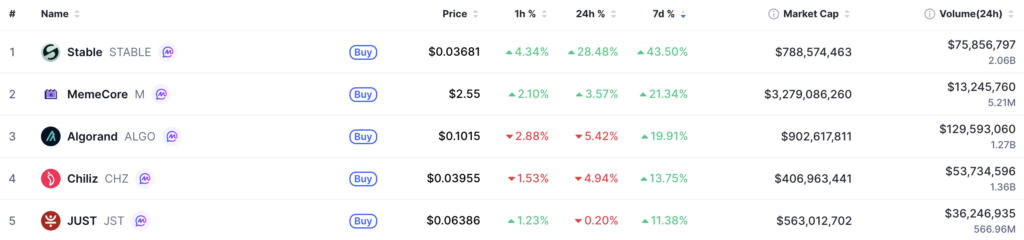
Stable ($STABLE) led the group with a +43.50% weekly gain, significantly outperforming the broader market during a volatile week for digital assets. MemeCore ($M) followed with a +21.34% increase. Algorand ($ALGO) advanced +19.91%, gaining attention after a Google whitepaper highlighted it as an example of a real world post quantum blockchain.
Chiliz ($CHZ) posted a +13.75% weekly rise as activity around fan tokens increased ahead of the upcoming FIFA World Cup. JUST ($JST) rounded out the top five with a +11.38% gain.
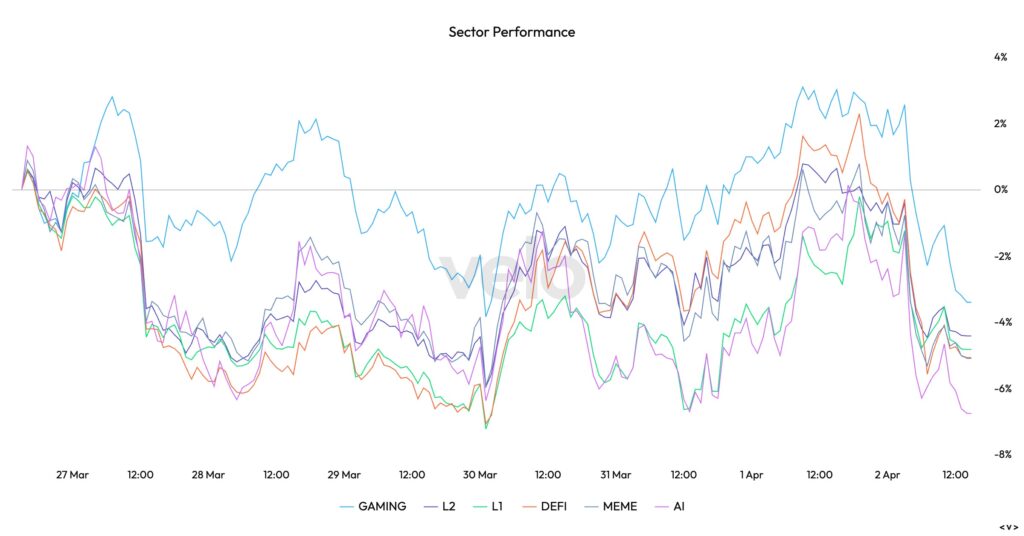
According to GMCI, the GMCI 30, which tracks the top 30 cryptocurrencies, is down 6.10% over the past week. The GMCI Mid Cap is down 4.73%, while GMCI Small Cap is down 6.72%. The rest of the sectors:
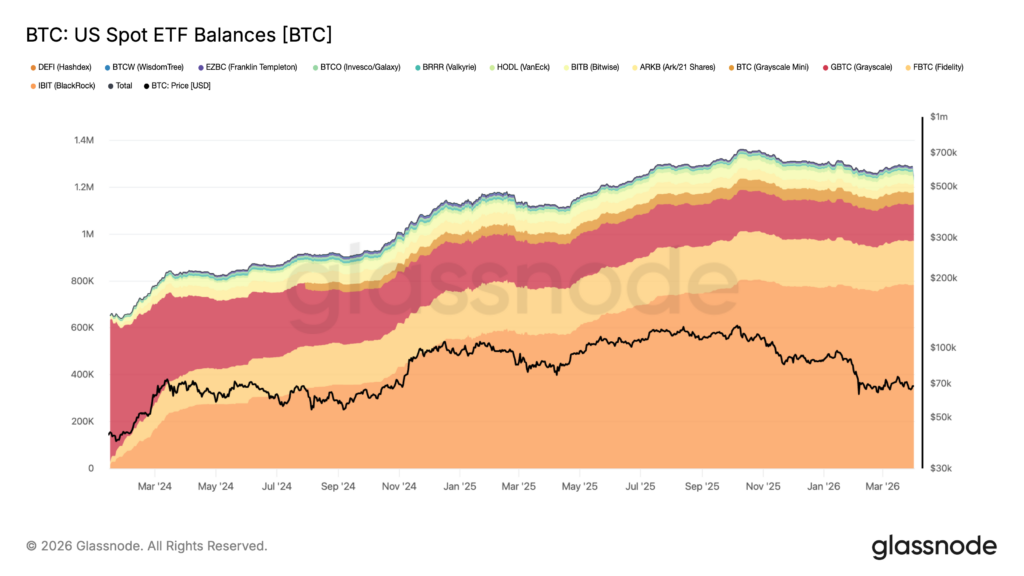
Total Assets Under Management (AUM) = $89.66 Billion
Weekly Inflows = -$7.94 Billion
Total Assets Under Management (AUM) = $13.05 Billion
Weekly Inflows = -$620 Million
*The data for BTC / ETH ETFs can vary, so we use Coinglass as our source.
Bitcoin
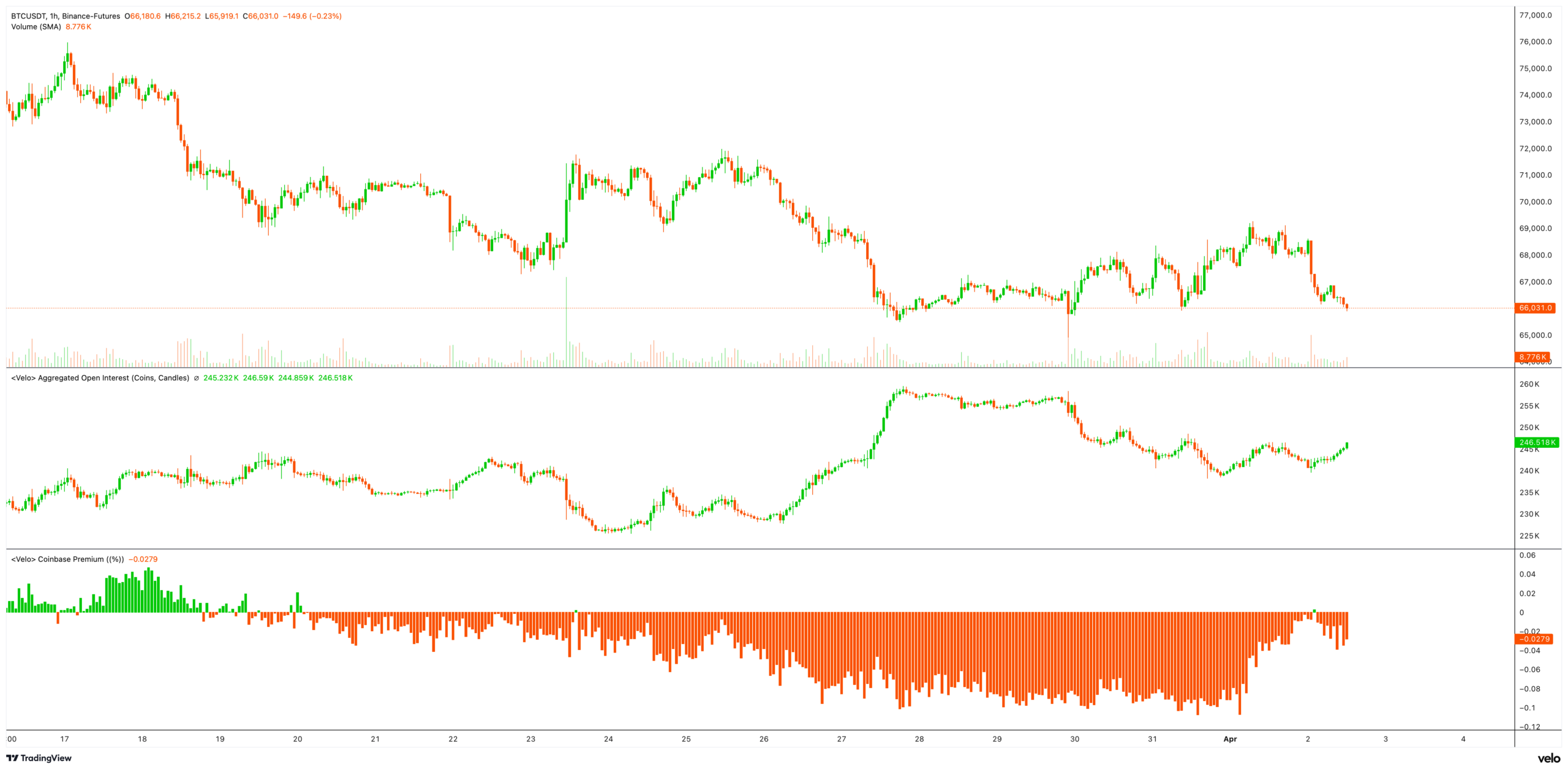
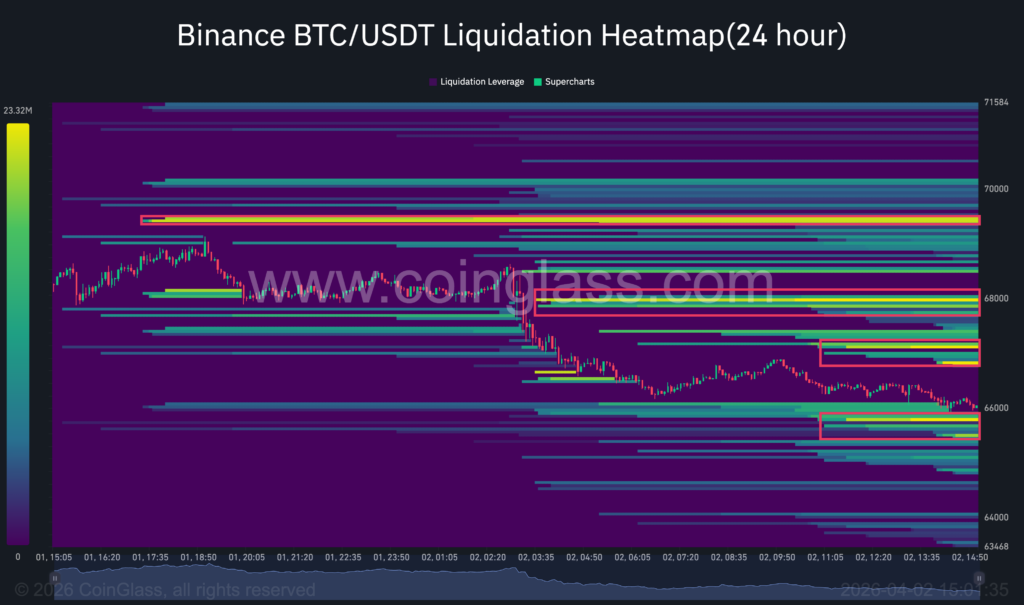
$BTC is trading near the bottom of the $70K to $66K range, with price repeatedly testing support around $66K.
While price is drifting lower, open interest is increasing, which typically signals new short positions entering the market rather than longs closing. This suggests traders are leaning bearish and building leverage into weakness.
At the same time, Coinbase Premium remains negative, indicating limited U.S. spot demand. Without strong spot buyers stepping in, derivatives positioning continues to dominate short term price action.
CVD across major venues also remains deeply negative, confirming that aggressive selling is still leading the order flow.
The combination of price decreasing + OI increasing + negative CVD usually means shorts are pressing the market. If support at $66K breaks, the move could accelerate as the market unwinds leverage built inside the range.
Ethereum
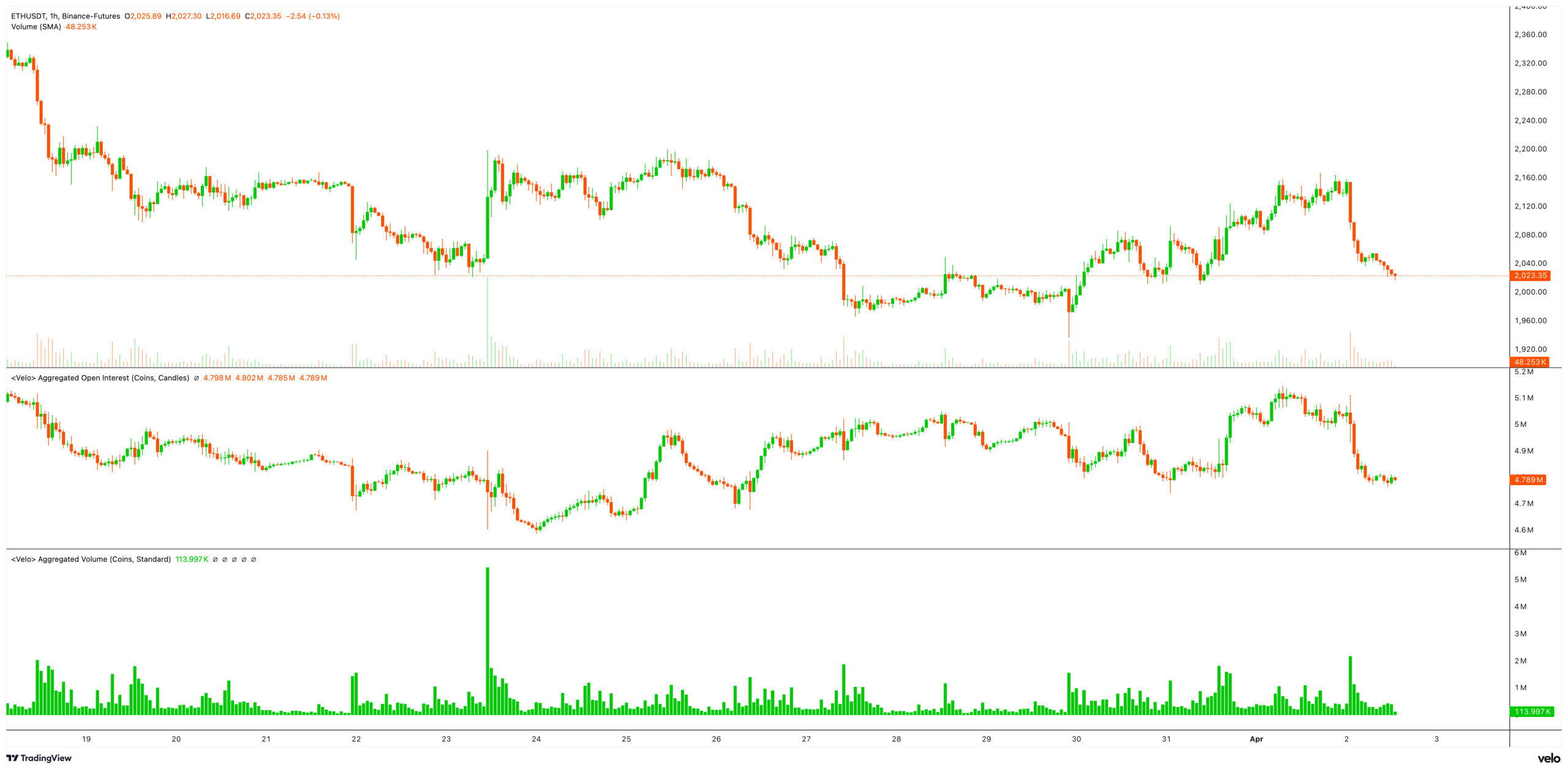
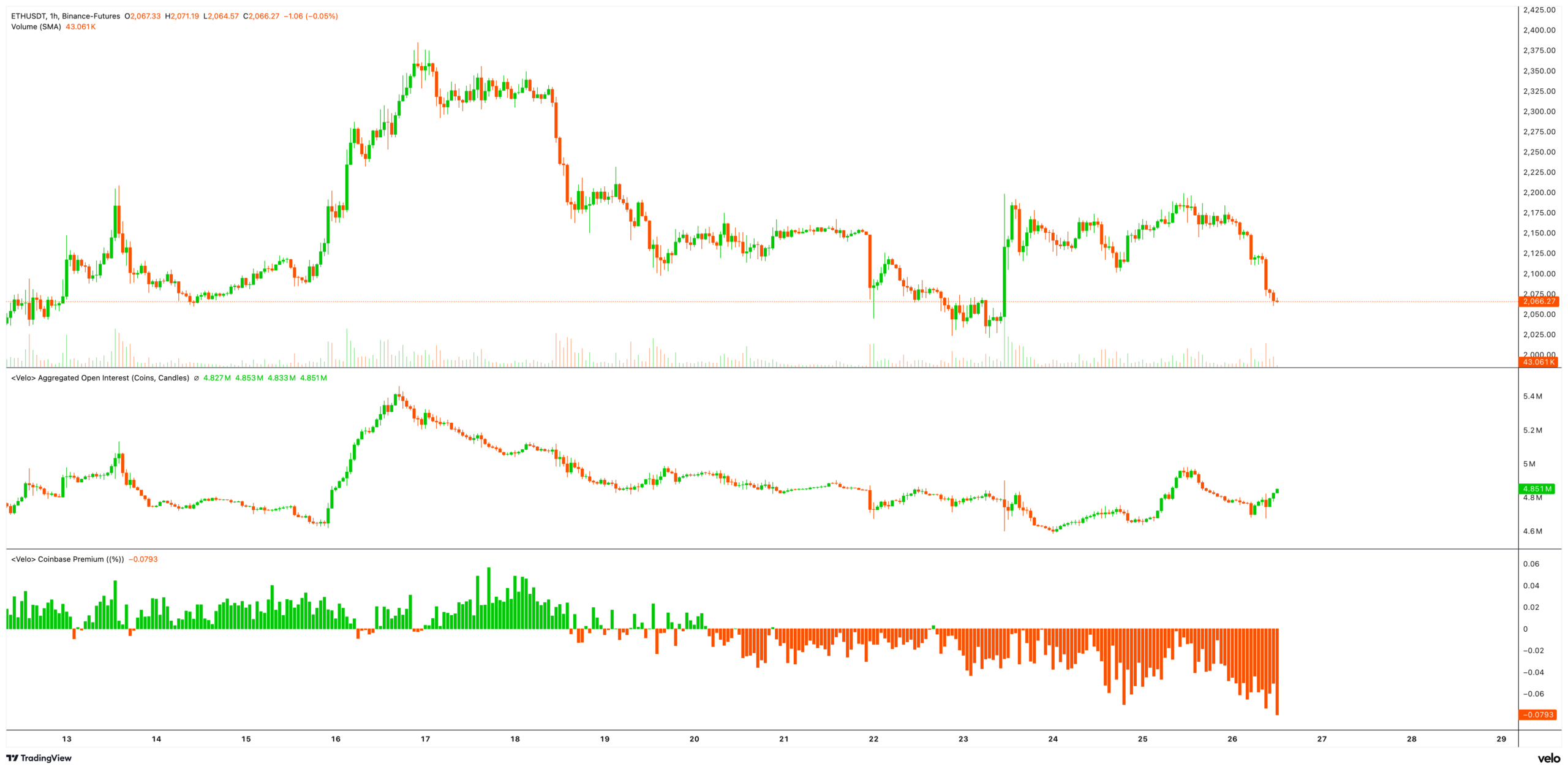
$ETH is losing its weekly support around $2,000, with the next clear local range support sitting near $1,940.
Unlike BTC, the positioning picture is slightly different. CVD remains positive across venues, suggesting that aggressive buyers are still present in the market.
At the same time, open interest is declining together with price, which typically signals longs closing positions rather than new shorts entering. This points more toward position unwinding and de-risking rather than active bearish pressure.
Volume is also fading, reinforcing the idea that the move lower is driven by positioning cleanup rather than strong selling momentum.
In short:
If $1,940 fails, the downside could accelerate. But the positive CVD suggests buyers are still absorbing part of the selling, which could lead to a sharper bounce once positioning stabilizes.
Bitcoin dominance increase to 58.0% (-0.4% weekly).
In traditional markets:
The total crypto market cap stands at $2.28 trillion, down –3.80% from $2.37 trillion. The Fear & Greed Index is up to 12 (Extreme Fear), from last week’s 10 (Extreme Fear).
The Geopolitical Energy Squeeze
The global macroeconomic framework is currently navigating a severe whiplash event as geopolitical de escalation hopes evaporate. Following a highly anticipated address to the nation, the market aggressively repriced risk as expectations for a ceasefire were shattered. Instead of winding down the conflict, the administration signaled two to three more weeks of intensive strikes on Iranian energy infrastructure, including direct threats to power plants and oil wells. Consequently, West Texas Intermediate crude surged above $112 per barrel, registering a 13 percent intraday expansion and pushing Brent crude past $110 per barrel.
This energy shock is forcing a violent repricing in fixed income and equity markets. The benchmark ten year Treasury yield is rapidly marching back toward 4.40 percent, as bond markets price in a structurally higher for longer regime, which now includes a roughly 25 percent implied probability of an interest rate hike later this year. Risk assets are capitulating under this pressure, with the S&P500 closing at a seven month low and the VIX volatility index reaching an 11 month high. A historic divergence is now evident, as the S&P500 and the United States Oil ETF have moved in opposite directions in 76 percent of recent sessions, highlighting the direct tax that energy inflation is levying on broad equities.
The Perpetual Coil and Supply Overhang
Bitcoin has formally entered a profound structural exhaustion phase, currently sitting 175 days and 45.8% below its cycle peak. The asset remains trapped in a volatile consolidation zone between $60,000 and $70,000, having recently slipped below $67,000 as equity futures hit new lows. The market structure is defined by an extreme perpetual to spot volume ratio of 15x, indicating that price action is being heavily dictated by leverage positioning rather than organic capital flows. Concurrently, funding rate volatility has compressed to cycle lows near 2.9 percent, signaling a lack of directional conviction and painting a classic picture of a market coiling for a violent breakout.
From a structural plumbing perspective, the March 27 expiry cleared $14 billion in options notional, removing critical delta hedging flows that previously anchored the spot price. With this passive bid and offer support removed, negative gamma is aggressively rebuilding just below the market, specifically from $68,000 down into the high $50,000 range. This dealer positioning ensures that any downside move will mechanically amplify volatility, as market makers will be forced to sell into weakness.
Overhead, a formidable supply wall remains intact. Roughly 8.4 million BTC are currently held at an unrealized loss, creating a dense distribution cluster between $80,000 and $126,000. Long term holders are actively capitulating, realizing losses of approximately $200 million per day. Until spot demand can reliably absorb this distribution, and institutional flows stabilize from their recent negative trajectory, the asset remains highly vulnerable to liquidity sweeps.
Private Credit Fractures and Asset Tokenization
Underneath the surface of traditional equities, acute systemic credit stress is materializing. We are observing the early stages of a private credit bank run, highlighted by Blue Owl gating redemptions after its OTIC fund received withdrawal requests representing an estimated 40.7 percent of its shares in the first quarter. This staggering capital flight underscores the fragility of alternative credit vehicles in a surging yield environment. Corporate equities are also exhibiting weakness, with major technology and automotive proxies facing immense pressure as Tesla reported a significant delivery miss with only 358,023 vehicles delivered in the first quarter.
Conversely, the convergence between traditional finance and decentralized infrastructure is accelerating at an unprecedented pace. The Active Market Cap of Real World Assets recently shattered the $17 billion threshold, marking a tenfold increase over two years. Furthermore, digital native exchanges are aggressively capturing traditional volume. Binance is currently processing $3.65 billion in daily derivatives volume from precious metals like gold and silver, demonstrating a profound shift in where global liquidity is choosing to transact.
The Volatility Crucible
The global market structure is entirely pinned to a volatile geopolitical timeline and a restrictive monetary reality. Bitcoin is currently sitting on compressed energy, trapped beneath heavy overhead supply and driven by elevated but directionless perpetual leverage. The recent clearing of option gamma has removed the stabilizing buffers, leaving the market highly reactive to macroeconomic catalysts.
Should diplomatic progress materialize and oil pull back toward $100 per barrel, the structural coil could trigger a violent short squeeze back toward the $70,000 to $74,000 resistance block. However, if the current trajectory of kinetic escalation persists and energy inflation forces the Federal Reserve into a tighter posture, Capital preservation and tactical positioning remain the absolute imperatives in this fragile, catalyst driven regime.
We hope you enjoyed this week’s edition of Diary of a Market Maker! Stay tuned for more insights, updates, and market-moving highlights as we continue to keep you informed and entertained in the ever-evolving world of crypto.
In the meantime, follow us on LinkedIn and X (Twitter) for real-time updates and more!
Until next time, happy trading and stay ahead of the curve!
Disclaimer: The information provided in this article is for informational purposes only and does not constitute financial, investment, or other professional advice. All opinions expressed herein are solely those of the author and do not represent the views or opinions of any entity with which the author may be associated. Investing in financial markets involves risk, including the potential loss of principal. Readers should perform their own research and consult with a licensed financial advisor before making any investment decisions. Past performance is not indicative of future results.

Jakob, an experienced specialist in the field of cryptocurrency market making, boasts an extensive international presence. With Orcabay, he has skillfully managed major operations and deals for a wide array of global stakeholders.
Macroeconomic uncertainty continues to dominate global markets. Bitcoin ($BTC) briefly rallied toward $71K early in the week after President Trump suggested the U.S. had positive talks with Iran, but the move faded after Iranian officials denied any contact with Washington. Traditional commodities also saw sharp volatility, with gold dropping 8.19% to $4,100 before rebounding to $4,417, while silver remains down roughly 19% since last Thursday. Crude oil has also cooled, falling 6.86% on the week as markets reassess geopolitical risk premiums.
On the industry side, activity across trading infrastructure and tokenized assets continues to accelerate. Hyperliquid recorded a $5.4B daily volume, driven largely by demand for macro assets such as oil, gold and silver. Franklin Templeton is partnering with Ondo Finance to issue tokenized versions of five ETFs tracking stocks, bonds and gold, while Coinbase is pushing order book, perps and futures market data onchain using Chainlink’s DataLink bridge. Elsewhere, Binance updated trading rules outlining market maker and token launch red flags, and Elon Musk tapped former Base and Aave executive Benji Taylor to lead design at X.
Policy discussions around stablecoins remain a key focus for the industry. Circle shares fell as much as 20% amid concerns over potential stablecoin yield limits proposed in the Clarity Act, while Coinbase reportedly declined to support the latest draft of the Clarity Act. At the same time, U.S. lawmakers introduced a bill that would ban members of Congress, the president and other senior officials from wagering on prediction markets, signaling continued scrutiny of emerging crypto adjacent sectors.
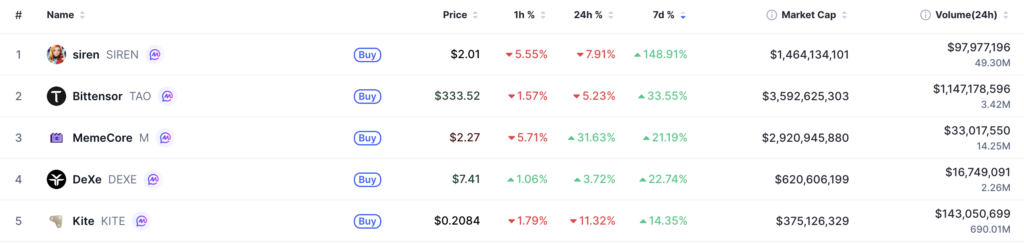
Siren ($SIREN) led the group with a remarkable +148.91% weekly gain, significantly outperforming the broader market and highlighting continued appetite for higher beta tokens. followed with a +33.55%increase, extending its strength as interest around decentralized AI infrastructure continues to build.
MemeCore ($M) advanced +21.19% on the week. DeXe ($DEXE) posted a +22.74% weekly rise, supported by sustained attention toward DAO governance frameworks and onchain coordination tools. Kite ($KITE) rounded out the top five with a +14.35% gain.
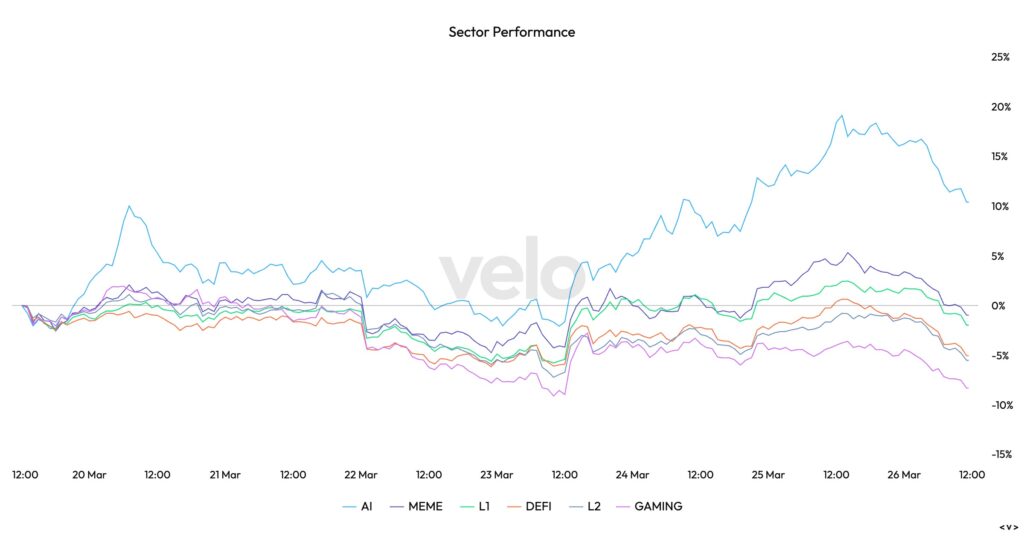
According to GMCI, the GMCI 30, which tracks the top 30 cryptocurrencies, is down 3.12% over the past week. The GMCI Mid Cap is down 4.78%, while GMCI Small Cap is down 5.52%. The rest of the sectors:
Total Assets Under Management (AUM) = $97.60 Billion
Weekly Inflows = -$330 Million
Total Assets Under Management (AUM) = $13.67 Billion
Weekly Inflows = -$280 Million
*The data for BTC / ETH ETFs can vary, so we use Coinglass as our source.
Bitcoin
$BTC rejected the $72K level and is now trading around $69K, printing a lower high on the daily timeframe, which keeps the short term structure weak.
From the flow perspective, CVD remains unstable and recently rolled over, showing that buyers are struggling to maintain control after the initial bounce.
More importantly, open interest is rising while price drifts lower, suggesting that new short positions are building rather than longs driving the move. This type of structure often increases the risk of downside continuation if buyers fail to step in.
At the same time, Coinbase Premium has been positive for only about one hour over the past six days, highlighting the lack of consistent U.S. spot demand.
Overall the setup shows:
Unless demand returns quickly, the market remains vulnerable to further downside pressure.
Ethereum
$ETH is now trading right at the $2,000 weekly support, while also printing a lower high on the daily timeframe, keeping the short term structure weak.
The move is largely correlated with BTC both in price action and open interest behavior, suggesting the broader market is driving flows rather than ETH specific demand.
From the positioning side, CVD has rolled over and turned negative across venues, signaling that sellers have taken control of the tape. At the same time, open interest is starting to rise again while price drifts lower, which often indicates short positioning building into weakness.
This creates a fragile setup:
If $2,000 fails to hold, the next move could accelerate quickly as positioning builds against weakening price. Confirmation of support would require buyers stepping in with sustained spot demand, which is currently missing across the broader market.
Bitcoin dominance increase to 58.4% (+0.3% weekly).
In traditional markets:
The total crypto market cap stands at $2.37 trillion, down –0.66% from $2.41 trillion. The Fear & Greed Index is down to 10 (Extreme Fear), from last week’s 23 (Extreme Fear).
The Geopolitical Whiplash and Rate Reality
The global macroeconomic landscape is currently dictated by extreme geopolitical whiplash and a structurally restrictive central bank posture. A temporary five day pause on military strikes against Iranian energy infrastructure has briefly lowered the geopolitical risk premium, allowing Brent crude to retrace and risk assets to breathe. However, this pause expires within 48 hours, and the Pentagon is actively developing final blow options that include a potential blockade of Kharg Island. This binary geopolitical setup is driving historically elevated intraday volatility across all major indices.
Concurrently, the Federal Reserve has cemented a highly restrictive monetary regime. Holding rates steady at 3.50 to 3.75 percent, the updated dot plot reveals a distinctly hawkish consensus, with 14 of 19 participants projecting zero or only one rate cut through 2026. This higher for longer reality has pushed the 10 year Treasury yield to 4.40 percent, causing the S&P500 to fracture below its 200 day moving average for the first time since May 2025.
Spot Exhaustion and the Gamma Reset
Bitcoin has absorbed the recent macro turbulence, rebounding above the $70,000 threshold. However, this recovery is highly tentative and driven primarily by derivative short squeezes rather than organic spot accumulation. Aggregate exchange spot volumes remain deeply subdued, and negative perpetual funding rates persist, reflecting a crowded short bias and a cautious derivatives backdrop.
From a supply perspective, the network is exhibiting classic late stage bear market exhaustion. Realized profitability has collapsed 96 percent from previous peaks, falling below $0.1 billion per day. Yet, a massive overhead supply ceiling looms. A heavy concentration of short term holder supply is clustered above $84,000, with an even larger resistance block stacked between $93,000 and $97,000.
Institutional plumbing provides a contrasting bullish undertone. Spot exchange traded funds have recorded a notable structural improvement, accumulating roughly 38,000 BTC over the past month, representing $2.6 billion in inbound capital. Ethereum is also capturing institutional mindshare, logging record weekly inflows of $160.8 million as its staking yield gains traction in a restrictive rate environment. Crucially, the derivatives market is approaching a massive structural reset. The upcoming March 27 options expiry will roll off approximately $10 billion in dealer short gamma concentrated between $70,000 and $75,000. Once this mechanical hedging constraint clears, price action will become significantly more responsive to organic spot flows.
Safe Haven Capitulation and Cross Asset Dislocation
Traditional safe haven assets are enduring a violent liquidation cascade as portfolios are forced into rapid deleveraging. Gold just suffered its worst weekly performance since 1983, plummeting over 10 percent, while silver contracted by 15 percent. This precious metals crash was mechanically driven by cascading margin calls as the US Dollar Index broke above 100, forcing leveraged longs into capitulation and driving COMEX open interest to multi year lows.
This traditional finance distress is triggering a profound relative rotation into digital infrastructure. The Bitcoin to Gold ratio surged 27 percent from 12.6 to 16 in a matter of weeks. Furthermore, the boundaries between decentralized and traditional markets continue to blur, as gold and silver perpetual futures are now ranking among the top three traded instruments by volume on crypto native exchanges like Binance and Hyperliquid. Meanwhile, digital asset proxy equities are facing their own regulatory friction, evidenced by Circle equity plunging 25 percent following the CLARITY Act, which signals a fundamental repricing of yield bearing stablecoin business models.
The Volatility Crucible
The market is currently trapped in a volatility crucible, pinned between an uncompromising Federal Reserve and a binary geopolitical deadline. The expiration of the five day strike pause serves as the immediate catalyst for the next directional impulse.
If diplomatic negotiations hold and the Strait of Hormuz stabilizes, the easing of the energy risk premium will provide risk assets the necessary breathing room to absorb the hawkish rate reality. In this scenario, the clearing of $10 billion in dealer gamma will allow Bitcoin to cleanly test the $74,000 to $76,000 resistance zone. Conversely, if kinetic escalation resumes, the resulting inflationary shock will firmly entrench the restrictive monetary policy, likely forcing a swift capitulation back toward the mid $60,000 liquidity floor.
We hope you enjoyed this week’s edition of Diary of a Market Maker! Stay tuned for more insights, updates, and market-moving highlights as we continue to keep you informed and entertained in the ever-evolving world of crypto.
In the meantime, follow us on LinkedIn and X (Twitter) for real-time updates and more!
Until next time, happy trading and stay ahead of the curve!
Disclaimer: The information provided in this article is for informational purposes only and does not constitute financial, investment, or other professional advice. All opinions expressed herein are solely those of the author and do not represent the views or opinions of any entity with which the author may be associated. Investing in financial markets involves risk, including the potential loss of principal. Readers should perform their own research and consult with a licensed financial advisor before making any investment decisions. Past performance is not indicative of future results.

Jakob, an experienced specialist in the field of cryptocurrency market making, boasts an extensive international presence. With Orcabay, he has skillfully managed major operations and deals for a wide array of global stakeholders.
The Federal Reserve kept its benchmark rate unchanged at 3.5%–3.75%, reinforcing a cautious stance as inflation pressures persist and rate cuts remain uncertain. Risk assets reacted negatively, with the crypto market losing over $100 billion in value within 24 hours. Bitcoin ($BTC) is holding near $70,000, while crude oil remains elevated around $119, reflecting continued geopolitical and inflationary pressure across markets.
On the industry side, momentum around tokenized assets continues to accelerate. S&P Dow Jones Indices licensed the S&P 500 to Trade[XYZ] for perpetual trading on Hyperliquid, while Hyperliquid’s HIP-3 markets reached $1.43 billion in open interest, driven by 24/7 access to tokenized equities and commodities. The SEC approved a Nasdaq pilot for tokenized equities trading, Flow Traders entered the space with a 24/7 OTC desk, and GSR expanded into token lifecycle management through a $57 million acquisition of Autonomous and Architech.
FTX is set to repay $2.2 billion to creditors this month, potentially reintroducing liquidity into the market, while Kraken has paused its IPO plans amid challenging market conditions. At the same time, Mastercard continues to deepen its exposure to digital assets, announcing the $1.8 billion acquisition of stablecoin startup BVNK, signaling ongoing institutional conviction in crypto enabled payment infrastructure.
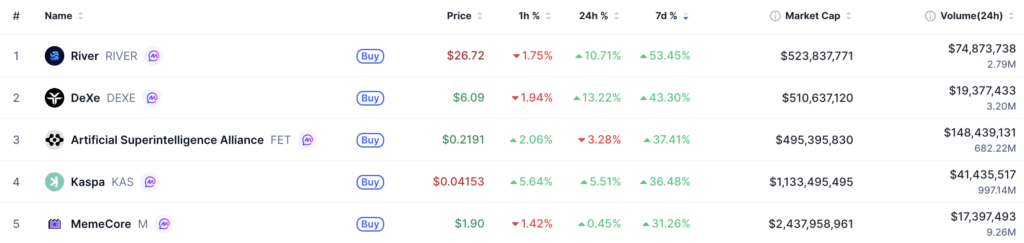
River ($RIVER) led the group with a strong +53.45% weekly gain, continuing its momentum from the previous week. DeXe ($DEXE) followed with a +43.30%increase, as demand for improved DAO governance frameworks remains a consistent theme.
Artificial Superintelligence Alliance ($FET) advanced +37.41%, benefiting from renewed interest in AI related tokens across the market. Kaspa ($KAS) posted a +36.48% weekly rise, extending its steady upward trend amid continued attention on high throughput L1 narratives. MemeCore ($M) rounded out the top five with a +31.26% gain.
According to GMCI, the GMCI 30, which tracks the top 30 cryptocurrencies, is up 3.13% over the past week. The GMCI Mid Cap is up 2.58%, while GMCI Small Cap is more or less the same, with 0.02% gains. The rest of the sectors:
Total Assets Under Management (AUM) = $97.60 Billion
Weekly Inflows = $1.99 Billion
Total Assets Under Management (AUM) = $13.67 Billion
Weekly Inflows = $190 Million
*The data for BTC / ETH ETFs can vary, so we use Coinglass as our source.
Bitcoin
$BTC briefly pushed to $76K, but following hawkish Fed commentary retraced back toward $70K, showing how sensitive the market still is to macro.
From a positioning standpoint, CVD had been strongly positive, especially on Binance, signaling aggressive market buying into the move. However, the recent pullback shows that demand was not strong enough to sustain higher levels once macro pressure hit.
Open interest remains relatively contained, suggesting this was not an overly crowded leveraged push, but rather a mix of spot and moderate positioning. At the same time, the Coinbase Premium has started to recover toward positive, hinting that U.S. spot demand is slowly returning.
From a price action perspective, the key level remains clear: a weekly close above $72K would signal strength and continuation, while failure to reclaim it keeps BTC in a broader range and vulnerable to further chop.
Ethereum
Ethereum is stuck between key levels, with weekly support around $2,000 and monthly resistance near $2,500, keeping price in a broader range.
From a positioning perspective, open interest has been trending higher, meaning new positions are gradually building even as price struggles to break higher. At the same time, CVD remains elevated but has started to flatten, suggesting that the earlier aggressive buying is slowing down.
This creates a mixed structure; positioning is building, but momentum is not accelerating.
For continuation, confirmation of $2,000 as support is key. A clean hold and higher low structure would strengthen the case for a move toward $2,500. Until then, ETH remains in range conditions with risk of chop and fakeouts.
Bitcoin dominance increase to 58.1% (-0.8% weekly).
In traditional markets:
The total crypto market cap stands at $2.41 trillion, down –2.04% from $2.46 trillion. The Fear & Greed Index is up to 23 (Extreme Fear), from last week’s 15 (Extreme Fear).
The Commodities Dislocation and Policy Paralysis
The global macroeconomic framework is navigating a severe dislocation in commodity markets driven by escalating kinetic conflict in the Middle East. Following strikes on Qatar’s Ras Laffan, which accounts for approximately 20 percent of global liquefied natural gas supply, energy markets are exhibiting extreme regional divergence. Brent crude has surged to $119 per barrel, while Oman crude crossed $154 per barrel. Conversely, West Texas Intermediate trades near $93, with this exploding spread actively pricing in the probability of a United States oil export ban. This dynamic threatens to landlock domestic supply while sending global benchmarks soaring.
This inflationary impulse is cementing a stagflationary reality. Core PCE inflation printed at 3.1 percent annualized, colliding with a softening labor market that saw a 92,000 contraction in payrolls and an unemployment rate rising to 4.4 percent. Consequently, the Federal Reserve has officially halted interest rate cuts for the second consecutive meeting, revising its 2026 inflation forecast higher to 2.7 percent and projecting only a single rate cut for the entire year. With a dense slate of central bank meetings ahead, the market is rapidly digesting a structurally hawkish policy regime.
Structural Decoupling and Institutional Absorption
Despite these immense macroeconomic headwinds, the digital asset class is exhibiting a profound structural decoupling. Bitcoin is holding its post conflict range near $74,000, demonstrating relative resilience by outperforming all major asset classes except oil. The underlying market structure indicates a definitive clearing of early bear market selling pressure. The Coinbase premium has logged 25 consecutive days in positive territory, removing a key structural overhang and signaling sustained institutional bid absorption. This is corroborated by a seven day inflow streak into spot exchange traded funds capturing over $734 million.
Derivatives data points to compression and building leverage. Open interest is climbing back near 88,000 BTC. Crucially, a large pocket of negative gamma sits near the $75,000 strike. Because market makers appear structurally short calls at this level, any spot approach toward $75,000 will likely trigger intense hedging flows, mechanically amplifying upside price momentum. Furthermore, foundational liquidity is returning, highlighted by Binance recording a $2.2 billion Tether inflow, the largest single day stablecoin injection since November 2025. This capital formation is heavily supported by emerging regulatory clarity, as new agency frameworks officially classify major assets like Bitcoin and Ethereum as digital commodities, providing a much needed safe harbor for institutional adoption.
Cross Asset Liquidation and Credit Fractures
Traditional risk assets are rapidly repricing the hawkish monetary reality and the threat of prolonged supply constraints. The Dow Jones Industrial Average fell nearly 800 points, posting its lowest close of 2026. Conventional safe haven assets are also experiencing severe distress. Gold dropped below $4,700 per ounce and silver fell below $70 per ounce. This precious metals contraction is being driven by institutional liquidation and widespread margin calls, as Wall Street engages in net selling to rebalance portfolios in response to rising inflation and the pricing out of rate cuts.
Underneath the equity surface, systemic credit stress is materializing. Market intelligence firms warn that the explosive growth in private credit could become the next major fault line. This risk is already surfacing in the United Kingdom, where the owner of a failed private lender was recently hit with a worldwide asset freeze. However, traditional institutions are aggressively bridging into decentralized rails to find efficiencies. United States banks recently launched the Cari Network to bring FDIC eligible tokenized deposits directly on chain, and Moody’s has initiated independent credit analysis for blockchain financial infrastructure.
The Terminal Volatility Regime
The global market is formally transitioning into a structurally driven regime dictated by persistent supply constraints, sticky inflation, and geopolitical fragmentation. The Federal Reserve is trapped in an impossible position where it cannot ease conditions to support a softening labor market without accelerating inflation.
In this environment, digital assets are absorbing institutional capital as a premier hard asset. Because Bitcoin was already structurally oversold prior to the Middle East escalation, it screened as cheap relative to overleveraged conventional stores of value like gold. Until the physical disruptions in global supply chains are resolved or the overhead liquidity walls near $75,000 are decisively cleared, participants should expect traditional equities to remain vulnerable while decentralized infrastructure commands an increasing premium for its immunity to sovereign supply constraints.
We hope you enjoyed this week’s edition of Diary of a Market Maker! Stay tuned for more insights, updates, and market-moving highlights as we continue to keep you informed and entertained in the ever-evolving world of crypto.
In the meantime, follow us on LinkedIn and X (Twitter) for real-time updates and more!
Until next time, happy trading and stay ahead of the curve!
Disclaimer: The information provided in this article is for informational purposes only and does not constitute financial, investment, or other professional advice. All opinions expressed herein are solely those of the author and do not represent the views or opinions of any entity with which the author may be associated. Investing in financial markets involves risk, including the potential loss of principal. Readers should perform their own research and consult with a licensed financial advisor before making any investment decisions. Past performance is not indicative of future results.

Jakob, an experienced specialist in the field of cryptocurrency market making, boasts an extensive international presence. With Orcabay, he has skillfully managed major operations and deals for a wide array of global stakeholders.
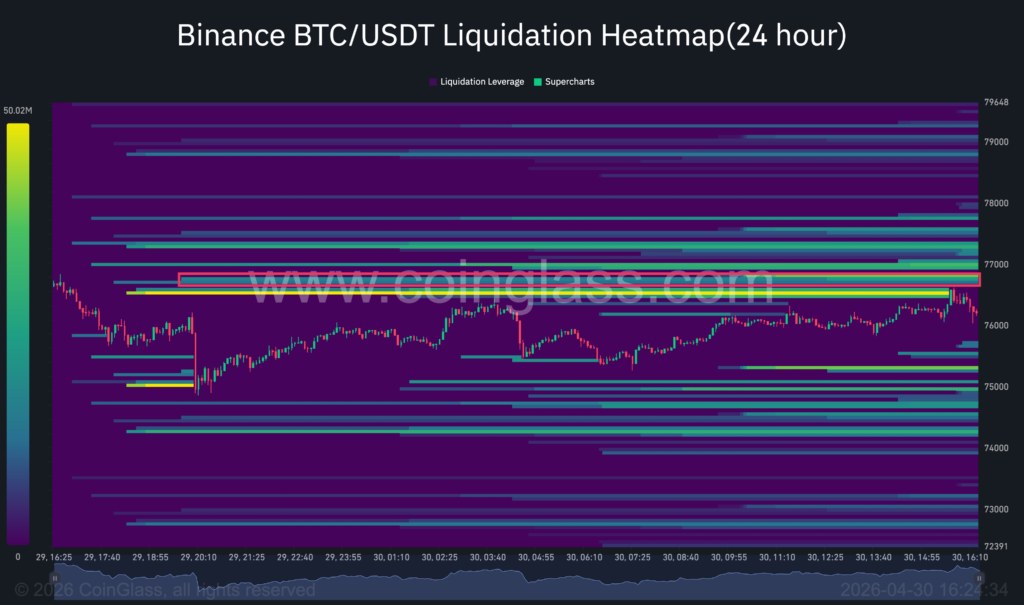
Geopolitical tensions remained elevated as the U.S. Iran conflict entered its third week, yet Bitcoin ($BTC) continued to show relative strength across risk markets. The asset printed five consecutive green daily candles, rallying from around $66K to $72K, outperforming U.S. equities even as the dollar strengthened and oil prices stayed elevated. Capital rotation also became visible across traditional safe havens, with the largest gold ETF, GLD, seeing roughly 2.7% outflows, while BlackRock’s spot Bitcoin ETF, IBIT, recorded around 1.5% inflows over the same period.
On the industry side, developments across infrastructure, payments, and corporate activity continued to accelerate. Pump.fun became Solana’s first platform to surpass $1B in revenue, highlighting the scale of onchain retail activity, while Ripple announced a $750M share buyback at a $50B valuation. Bitpanda reported $430M in adjusted revenue for 2025 alongside a 25% increase in its user base, and Mastercard launched a global crypto partner program with firms including Binance and Ripple. Meanwhile, despite BlackRock’s staked Ethereum ETF generating over $15.5M in first day volume, analysts at CryptoQuant warned that Ethereum ($ETH) could still face downside toward $1,500 amid what they describe as an “adoption paradox.”
On the policy front, regulatory developments continued to shape the outlook for stablecoins and market structure. HSBC and Standard Chartered are expected to become the first recipients of Hong Kong stablecoin licenses, reinforcing the region’s push to build regulated digital asset infrastructure. In the U.S., legislative progress remains slower, with a Senate leader noting that the Clarity Act is unlikely to advance before April. At the same time, a crypto advisor to Donald Trump argued that stablecoins could ultimately drive global deposits into the U.S. banking system, highlighting their growing role within the broader financial landscape.
Pi ($PI) led the group with a +37.12% weekly gain, extending its strong upward momentum. DeXe ($DEXE) followed with a +34.93%increase, as interest around DAO infrastructure and governance frameworks continues to grow.
Bittensor ($TAO) advanced +30.41%, with the move accelerating after its Upbit listing, bringing additional liquidity and regional demand. Render ($RENDER) maintained strength with a +27.95%weekly rise, continuing to benefit from the broader AI and decentralized compute narrative.
Hyperliquid ($HYPE) rounded out the top five with a +22.20% gain, as the platform remains one of the primary venues for trading crude oil related perpetual markets, driving sustained activity on the exchange.
According to GMCI, the GMCI 30, which tracks the top 30 cryptocurrencies, is up 3.81% over the past week. The GMCI Mid Cap is up 2.83%, while GMCI Small Cap is more or less the same, with 1.20% gains. The rest of the sectors:
Total Assets Under Management (AUM) = $95.61 Billion
Weekly Inflows = $2 Billion
Total Assets Under Management (AUM) = $13.46 Billion
Weekly Inflows = -$340 Million
*The data for BTC / ETH ETFs can vary, so we use Coinglass as our source.
Bitcoin
Bitcoin printed five consecutive green daily candles, rallying from around $66K to $72K, outperforming U.S. equities even as the dollar strengthened and oil prices remained elevated. The move pushed BTC back toward the upper boundary of the local range near $72K to $73K.
CVD has turned strongly positive across major venues, particularly on Binance and OKX, signaling sustained market buying rather than passive bid support. At the same time, open interest is rising alongside price, indicating that new leveraged positions are entering the market during the move.
If momentum continues and $72K to $73K is reclaimed on a higher timeframe, the rally could extend further. However, with leverage building during the push, the structure becomes more sensitive to sharp liquidations in either direction.
Ethereum
Ethereum broke above the $2,000 range resistance, pushing toward $2,100, but it is still too early to confirm a successful breakout. A sustained hold above this level would be needed before targeting the next major resistance around $2,500.
From a derivatives perspective, open interest is rising together with price, showing that new positions are entering during the move. At the same time CVD has flipped strongly positive across venues, especially on OKX, indicating aggressive market buying rather than passive bids.
If buying pressure continues and ETH holds above $2,000 on higher timeframes, the breakout structure could strengthen. Failure to hold the level, however, would likely push price back into the previous consolidation range.
Bitcoin dominance increase to 58.9% (0.0% weekly).
In traditional markets:
The total crypto market cap stands at $2.46 trillion, up 2.5% from $2.40 trillion. The Fear & Greed Index is fell to 15 (Extreme Fear), from last week’s 18 (Extreme Fear).
The Macro Landscape: Energy Constraints and Policy Paralysis
The global macroeconomic framework is currently navigating a severe supply shock as the geopolitical conflict in the Middle East enters its third week without a clear path to resolution. With Gulf producers cutting oil production by at least 10 million barrels a day, both Brent crude and West Texas Intermediate are hovering near $100 per barrel. This sustained disruption has driven Brent up 26 percent over the week. Consequently, the United States is rapidly draining its strategic reserves, which are set to decline by 41 percent to reach their lowest levels since the 1980s.
This energy driven inflation is cementing a stagflationary environment, effectively paralyzing the Federal Reserve. Markets are now pricing in zero rate cuts before the fourth quarter, expecting only a single 25 basis point reduction this entire year. This hawkish repricing has triggered a violent tightening of global financial conditions, pushing the US Dollar Index above 100 for the first time since late November. Concurrently, the benchmark ten year Treasury yield has climbed above 4.2 percent, reflecting surging systemic borrowing costs.
Bitcoin and Digital Assets: The Structural Decoupling
Despite these immense macroeconomic headwinds, the digital asset class is exhibiting a profound structural decoupling. While equities and gold face severe sell side pressure, Bitcoin has emerged as the standout performer, gaining 0.4 percent and breaking above the $72,000 threshold. The asset is trading independently, demonstrating resilience against conditions that typically suppress risk exposure.
The underlying market structure reveals that a deep deleveraging event has already occurred. Aggregate crypto leverage currently sits at roughly $60 billion, which represents exactly half of previous cycle peaks. This indicates that forced marginal sellers have been flushed from the system. Order book dynamics show a tight liquidity sandwich, with formidable whale distribution walls stacked between $72,000 and $74,000, while robust bid support anchors the $69,000 to $71,000 zone.
Institutional capital accumulation remains aggressive within this pocket. Strategy, the largest publicly traded corporate holder, acquired roughly 11,000 BTC using proceeds from its perpetual preferred security known as Stretch. Furthermore, the fundamental digital infrastructure continues to expand violently. The Active Market Cap of Real World Assets recently surpassed $16 billion, and on chain holders of the USDT stablecoin have breached the 150 million mark, confirming massive global demand for tokenized dollars.
Traditional Finance: Equity Divergence and Credit Stress
Traditional risk assets are rapidly repricing the hawkish reality and a deteriorating credit impulse. The Russell2000 has contracted by 4.0 percent, the SP 500 by 2.0 percent, and the Nasdaq by 1.2 percent. Even gold traded lower on the week, a dynamic likely driven by structural deleveraging and widespread margin calls across institutional portfolios.
Domestic economic health shows severe fracturing underneath the surface. A record 6.0 percent of workers in managed 401k plans took hardship withdrawals last year, a figure that has nearly quadrupled since 2020 and points to deep consumer distress. Corporate divergence is also widening dramatically. While the automotive giant Volkswagen plans 50,000 job cuts amidst plunging profitability, artificial intelligence infrastructure continues to absorb massive capital flows. Oracle surged 8.7 percent to $162.40 following an 84 percent year over year growth metric in its cloud infrastructure division.
Conclusion: The Terminal Regime Shift
The global market is formally transitioning into a structurally driven regime dictated by persistent energy constraints and sticky inflation. The historic correlation between digital assets and traditional equities is beginning to fracture, validating the store of value narrative as Bitcoin holds firm against a massive risk off catalyst.
With implied volatility remaining elevated and the DVOL index chopping around 60, participants should expect violent price action once the overhead liquidity walls at $74,000 are ultimately tested. Until the physical disruptions in global energy flows are resolved or institutional volumes radically accelerate, the market structure strongly favors hard assets and decentralized infrastructure that remain immune to sovereign supply shocks and monetary debasement.
We hope you enjoyed this week’s edition of Diary of a Market Maker! Stay tuned for more insights, updates, and market-moving highlights as we continue to keep you informed and entertained in the ever-evolving world of crypto.
In the meantime, follow us on LinkedIn and X (Twitter) for real-time updates and more!
Until next time, happy trading and stay ahead of the curve!
Disclaimer: The information provided in this article is for informational purposes only and does not constitute financial, investment, or other professional advice. All opinions expressed herein are solely those of the author and do not represent the views or opinions of any entity with which the author may be associated. Investing in financial markets involves risk, including the potential loss of principal. Readers should perform their own research and consult with a licensed financial advisor before making any investment decisions. Past performance is not indicative of future results.

Jakob, an experienced specialist in the field of cryptocurrency market making, boasts an extensive international presence. With Orcabay, he has skillfully managed major operations and deals for a wide array of global stakeholders.
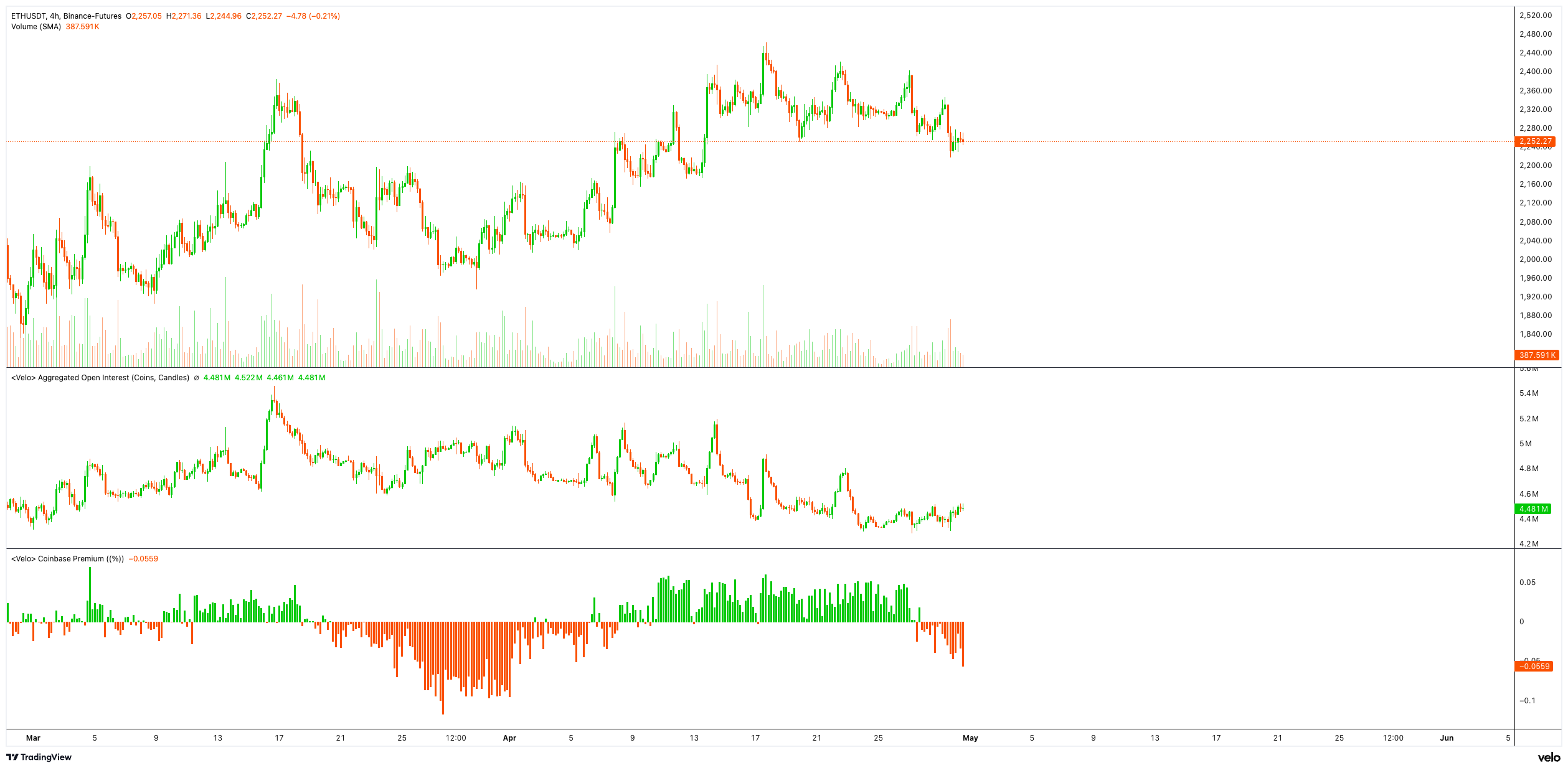
Geopolitical tensions escalated this week as the U.S. Israel conflict with Iran fueled volatility across global markets. Despite the uncertainty, Bitcoin briefly rallied toward $72K before retracing to around $70K, with some market participants reviving the narrative of BTC acting as a hedge during geopolitical stress. However, analysts at CryptoQuant suggest the move looks more like a short term relief rally driven by easing sell pressure rather than the start of a new bullish cycle, noting that macro and on chain indicators remain deeply bearish.
On the institutional and industry side, NYSE parent ICE invested in OKX at a $25B valuation, while Kraken became the first digital asset bank to receive a Federal Reserve master account. Venture activity also remains strong, with a16z reportedly seeking to raise $2B for its fifth crypto fund. Meanwhile, Aave Labs outlined a layered security framework for V4 following its $1.5M audit program, Sui entered the stablecoin race with the USDsui mainnet launch, and Solana stablecoin volume surged to a record $650B in February as on chain payments continued gaining traction. Tether also expanded outside crypto, investing in sleep technology firm Eight Sleep at a $1.5B valuation.
Flows into crypto products showed renewed strength, with Bitcoin ETF inflows surpassing $1B over three days as analysts once again discussed the potential safe haven narrative. At the same time, regulatory and corporate developments continued unfolding: Coinbase CEO Brian Armstrong and several executives face a shareholder lawsuit related to disclosures and compliance failures, while analysts at TD Cowen noted that more crypto firms are likely to obtain Fed master accounts going forward, as traditional banks have limited authority to block approvals.
River ($RIVER) led the group with a sharp +85.45% weekly gain, significantly outperforming the broader market. Humanity Protocol ($H) followed with strong upside, posting a +39.82% advance as interest around identity focused infrastructure continues to build. Kite ($KITE) maintained momentum with a +28.99% weekly rise, continuing the steady strength seen in recent sessions. OKB ($OKB) gained +23.78%, supported by renewed attention after ICE’s investment in OKX, reinforcing the tokenized equities and exchange infrastructure narrative. Pi ($PI) rounded out the top five with a +16.17% weekly increase, extending its gradual upward trend.
According to GMCI, the GMCI 30, which tracks the top 30 cryptocurrencies, is up 1.83% over the past week. The GMCI Mid Cap is down 0.69%, while GMCI Small Cap is more or less the same, with 0.12% gains. The rest of the sectors:
Total Assets Under Management (AUM) = $93.61 Billion
Weekly Inflows = -$240 Million
Total Assets Under Management (AUM) = $13.46 Billion
Weekly Inflows = +$1.1 Billion
*The data for BTC / ETH ETFs can vary, so we use Coinglass as our source.
Bitcoin
Despite ongoing market tensions, $BTC finally showed glimpses of what many holders hoped it would become, digital gold and a hedge against uncertainty. The move briefly pushed Bitcoin to $74K before retracing back toward the $70K area, reflecting both strong reaction buying and nearby overhead supply.
From a positioning perspective, CVD has turned strongly positive across venues, particularly on Binance, indicating aggressive market buying rather than passive bids. At the same time, open interest has started expanding again, suggesting new leveraged positions are entering the market after the initial short covering phase.
Technically, BTC is attempting to stabilize after the sharp selloff and is forming a potential higher low structure. However, confirmation of a bullish continuation would require a weekly close above $72K. Until that level is reclaimed, the current move is better interpreted as a relief bounce rather than a confirmed trend reversal.
Ethereum
From a price perspective, $ETH remains largely unchanged compared to last week. The $2,000 weekly resistance continues to act as the key level, and it needs to be reclaimed before any meaningful move toward higher levels can develop.
From a positioning standpoint, CVD has been mostly positive across venues, indicating steady market buying pressure rather than aggressive selling. At the same time, open interest has been gradually rising while price moves sideways, suggesting new positions are being built during consolidation.
This combination typically signals positioning ahead of a potential breakout, but confirmation still depends on price. Until ETH can firmly reclaim $2,000, the structure remains range bound despite improving derivatives flows.
Bitcoin dominance increase to 58.9% (+0.9% weekly).
In traditional markets:
The total crypto market cap stands at $2.40 trillion, up 1.69% from $2.36 trillion. The Fear & Greed Index is improved to 18 (Extreme Fear), from last week’s 11 (Extreme Fear).
The Geopolitical Liquidity Shock
The global macroeconomic framework is currently navigating a severe kinetic shock following Operation Epic Fury, a coordinated military strike on Iran by the United States and Israel. With the Strait of Hormuz effectively closed, global energy conduits are severely impaired. West Texas Intermediate crude has surged above $83 per barrel, driving a profound inflationary impulse across the commodities sector. The cost to hire a supertanker to transport crude from the US Gulf Coast to Asia has skyrocketed to a record $29 million. This energy shock is forcing capital into defensive postures, evidenced by the SP500 put to call skew steepening to 0.50, which signals extreme institutional demand for downside tail risk protection. Simultaneously, the Dow Jones Industrial Average suffered a violent 1,100 point contraction as volatility metrics like the VIX hit their highest levels of the year.
Fixed Income and Policy Paralysis
This inflationary energy shock is colliding directly with resilient domestic economic data, creating a structurally hawkish environment. Recent prints show ISM Services expanding to 56.1 and ADP private payrolls adding 63,000 jobs. Consequently, the bond market is violently pricing out Federal Reserve accommodation. The ten year US Treasury yield has expanded to 4.16 percent, while the policy sensitive two year yield spiked to 3.60 percent. The probability of two 25 basis point rate cuts this year has collapsed below 50 percent. This policy paralysis is compounded by the recent Warsh nomination, leaving traditional risk assets highly vulnerable to sustained energy supply disruptions. Underlying credit stress is also materializing, highlighted by Blue Owl Capital shedding over 22 percent in its worst monthly performance on record, signaling widening cracks in the private credit sector.
Digital Asset Market Structure
Bitcoin absorbed the initial geopolitical panic via a sharp capitulation down to the $63,000 liquidity pocket, before aggressively rebounding toward $74,000 and currently consolidating near the $70,000 threshold. Price action is presently trapped within a volatile liquidity sandwich. Order book data reveals intense whale distribution walls clustered between $74,000 and $75,000, while strong bid support anchors the $70,000 to $71,000 region. Crucially, a massive cluster of leveraged long liquidations sits precariously at $70,300, leaving the market highly reactive to sudden volatility sweeps. The derivatives landscape reflects this fragility, with the DVOL index spiking to 55 as options markets price in daily swings of 2.5 to 3 percent.
Institutional Plumbing and Capital Flows
We are observing a profound structural divergence between spot exchange traded fund demand and broader institutional derivative yield.Spot funds have officially reversed a five week distribution streak, registering over $1.1 billion in net inflows over a three day window. BlackRock alone has absorbed 21,814 BTC since late February, equating to roughly $1.58 billion in inbound capital.
However, the underlying institutional plumbing indicates a highly defensive posture. Over the counter activity remains notably quiet, and the broader market feels fragile. The CME Basis Yield for Bitcoin has compressed severely from $136.6 million to $38.6 million per month, signaling a distinct contraction in leverage deployment and market neutral cash and carry strategies.
This caution is visibly reflected in fund performance, where directional fund strategies have suffered a 10.68 percent drawdown, while market neutral vehicles have maintained resilience with a 14.84 percent gain. Furthermore, digital asset hedge funds are currently holding average cash levels near 12 percent, prioritizing capital preservation over directional exposure.
Systemic Network Expansion
The market is formally transitioning from a policy driven regime into a structurally driven environment dictated by deglobalization, artificial intelligence disruption, and sustained energy supply constraints. The convergence of sticky energy inflation and resilient economic data ensures the Federal Reserve will remain paralyzed.
Until the physical disruptions in global energy flows are resolved or the banking sector exhibits visible stress requiring liquidity injections, capital will continue rotating into commodities and value equities. Digital assets remain the highest beta growth proxy in this tightening regime. While underlying fundamentals like the $300 billion stablecoin expansion showcase profound and accelerating network value, spot price action will likely remain trapped in a fragile, highly reactive consolidation phase driven by macroeconomic headlines and algorithmic positioning.
Caution and capital preservation remain the dominant institutional strategies.
We hope you enjoyed this week’s edition of Diary of a Market Maker! Stay tuned for more insights, updates, and market-moving highlights as we continue to keep you informed and entertained in the ever-evolving world of crypto.
In the meantime, follow us on LinkedIn and X (Twitter) for real-time updates and more!
Until next time, happy trading and stay ahead of the curve!
Disclaimer: The information provided in this article is for informational purposes only and does not constitute financial, investment, or other professional advice. All opinions expressed herein are solely those of the author and do not represent the views or opinions of any entity with which the author may be associated. Investing in financial markets involves risk, including the potential loss of principal. Readers should perform their own research and consult with a licensed financial advisor before making any investment decisions. Past performance is not indicative of future results.

Jakob, an experienced specialist in the field of cryptocurrency market making, boasts an extensive international presence. With Orcabay, he has skillfully managed major operations and deals for a wide array of global stakeholders.